
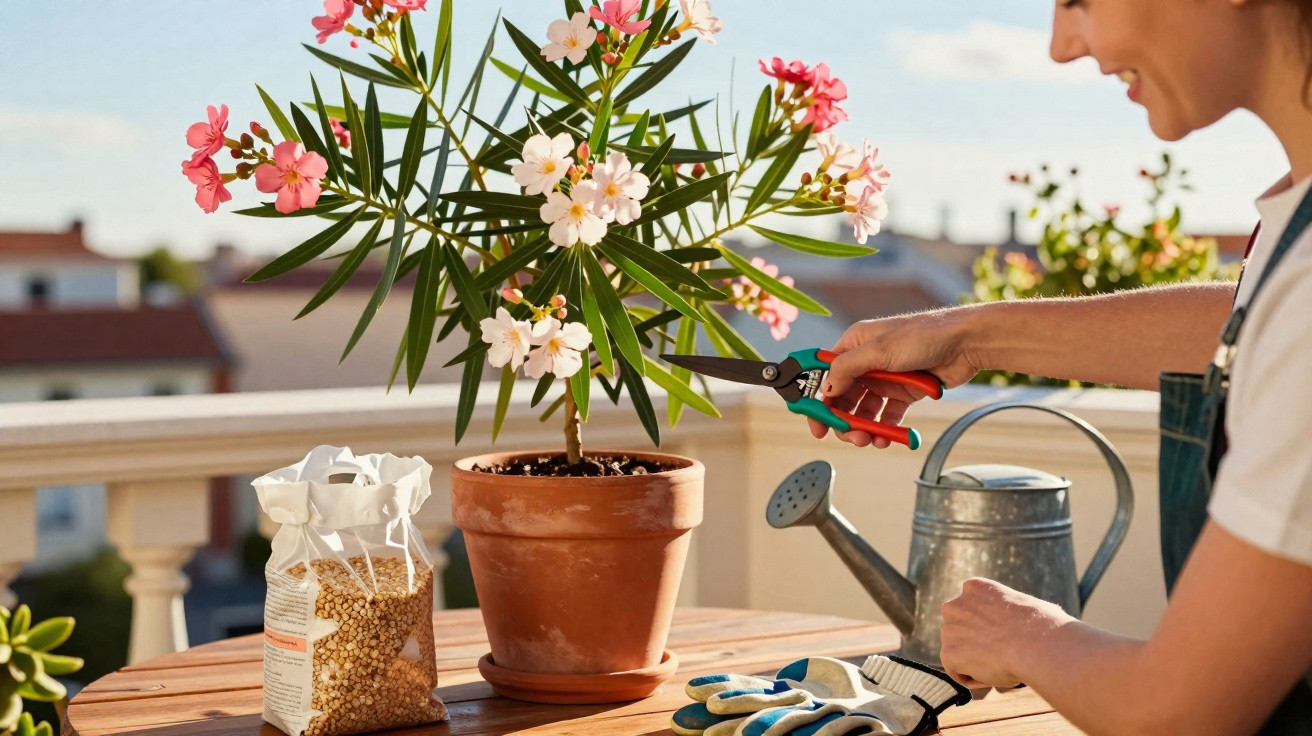
Many amateur gardeners eagerly await the first oleander flowers every year, only to find plenty of foliage but little colour. Professional gardeners and nurseries approach this very differently: rather than waiting, they deliberately manage the start of flowering. The key factors are correct timing, a light pruning treatment, the right nutrient mix and considered watering. Anyone who understands these levers can turn their oleander into an impressive flowering machine as early as this spring.
When an oleander is truly ready to begin
Oleander does not follow the calendar; it responds to the evening air. The plant only really gets going once nights remain consistently mild. This is exactly the point at which nurseries take action.
“The starting signal for the flowering turbo comes when night-time temperatures remain reliably above 10 to 12 degrees.”
While nights are cooler, an oleander's metabolism remains slowed down. Heavy feeding or excessive watering at this stage wastes energy, as the plant cannot yet put it to proper use.
Once this temperature threshold has been reached, follow a clearly structured plan:
- Do not move the plant outdoors all at once; acclimatise it gradually to outside conditions.
- Keep it in partial shade during the first week to prevent leaf scorch.
- Then introduce it to full sunshine step by step.
This brief “intermediate climate” reduces stress and gently prepares the oleander for the high-performance period ahead.
Pruning that produces flowers rather than just leaves
Many people hesitate to prune oleander because they fear removing potential flower buds. Professional gardeners do the opposite, achieving more flowers rather than fewer.
The best time is from around mid-March, once severe frost is no longer expected. Then carry out a targeted stimulating prune:
- Shorten older, woody shoots by around one third.
- Trim back excessively long, ungainly shoots slightly as well, making the plant denser.
- Remove weak branches and those growing inwards.
“Pruning forces the oleander to produce fresh growth on young wood – which is exactly where most flower clusters develop.”
At the same time, the shrub takes on a more compact, stable shape. This not only looks better later on, but also supports its abundance of flowers more effectively.
Renewing the top layer of compost: a small detail with a major effect
A common container-growing mistake is simply to keep watering and feeding year after year without attending to the surface compost. This layer is often depleted and can barely retain nutrients any longer.
For this reason, nurseries use a quick but highly effective routine that takes only a few minutes:
- Carefully remove the top roughly 5 cm of growing medium.
- Dispose of the old, exhausted compost.
- Refill with mature, high-quality compost or well pre-fertilised container-plant compost.
This gives the root zone fresh nutrients and air again. Combined with the correct fertiliser, it forms the basis for plentiful bud production.
Without the right fertiliser, oleander stays green – and nothing more
Perhaps the most underestimated factor is nutrient balance. Oleander is regarded as tough, but it reacts surprisingly sensitively to unsuitable feeding.
To produce plenty of flowers, the plant especially needs:
| Nutrient | Main effect |
|---|---|
| Phosphorus (P) | Encourages bud formation and strong roots |
| Potassium (K) | Strengthens flowers, cell structure and resilience |
| Nitrogen (N) | Mainly promotes leaf and shoot growth |
“Too much nitrogen turns oleander into a magnificent leafy bush – but that is precisely when the flowers fail to appear.”
Balanced complete fertilisers such as NPK 10-10-10, or specialist fertilisers for flowering plants that provide slightly more potassium and phosphorus, are ideal. Anyone who has mainly used grass cuttings, nettle feed or green-plant fertilisers that are very high in nitrogen should change approach urgently.
A typical example is a strong, deep-green oleander on an urban terrace: lushly leafy, yet without a single flower by mid-July. The cause is a continual supply of nitrogen-rich fertiliser. Only when this source is stopped and feeding is consistently switched to potassium-rich products do buds finally appear on the new shoots.
Watering correctly: plenty at once, then a pause
Oleander loves water, but not a constant drenching. A continually light film of moisture in the pot produces sluggish, soft roots. Professionals work with defined watering cycles.
- Water thoroughly until water runs out through the base of the pot.
- Then wait until the top approximately 3 cm of compost has dried out properly again.
- Only then water generously once more.
This encourages the roots to work actively without waterlogging them. For the first watering of spring, many nurseries use lukewarm water at around 20 degrees. This “root wake-up call” gently starts the metabolism moving.
When an oleander does not flower: how to identify the cause
Before hastily adding more fertiliser or repotting the plant, it is worth carrying out a systematic check. Focus on three areas:
- Check the temperature: Are night-time temperatures really remaining consistently above 10 to 12 degrees? If not, be patient and water only moderately.
- Review fertiliser history: Has the plant received plenty of grass cuttings, compost tea or green-plant fertiliser? If so, excessive nitrogen is highly likely to be involved.
- Assess the shoot structure: Is the oleander made up mainly of long, old branches with little younger branching? If so, it needs a targeted stimulating prune.
“The skill lies in ‘waking’ the oleander without overwhelming it: a gentle temperature start, limited pruning and a clear nutrient strategy.”
Working through these points one by one quickly shows which factor needs adjusting. Small corrections are often enough for new buds to emerge within just a few weeks.
Additional professional tips for abundant oleander flowers
The right position makes all the difference
Oleander originates from warm Mediterranean regions and wants as much sun as possible in summer. A fully sunny, sheltered position is ideal, such as beside a house wall that stores warmth. The plant will survive in partial shade, but it will produce significantly fewer flowers.
Pot size and growing medium
In pots that are too small, the root ball dries out quickly; in oversized containers, the compost stays wet and cool for too long. It is better to repot in a few measured stages, moving up just one pot size each time. The growing medium should:
- drain well, for example by mixing in a little sand or expanded clay;
- still be able to retain nutrients;
- not be ordinary houseplant compost, which is too fine and remains too wet.
Risks that many people underestimate
Oleander is highly poisonous in every part of the plant. Wear gloves when pruning, and keep children and pets away from detached leaves or branches. Prunings should not go on the compost heap; dispose of them with general household waste instead.
There is another risk: moving oleander from its winter quarters into intense spring sunshine too early and too abruptly can cause leaf scorch. The brown, dried patches will not disappear and they weaken the plant. That one-week “intermediate stop” in partial shade is therefore genuinely worthwhile.
How oleander can be combined with other plants
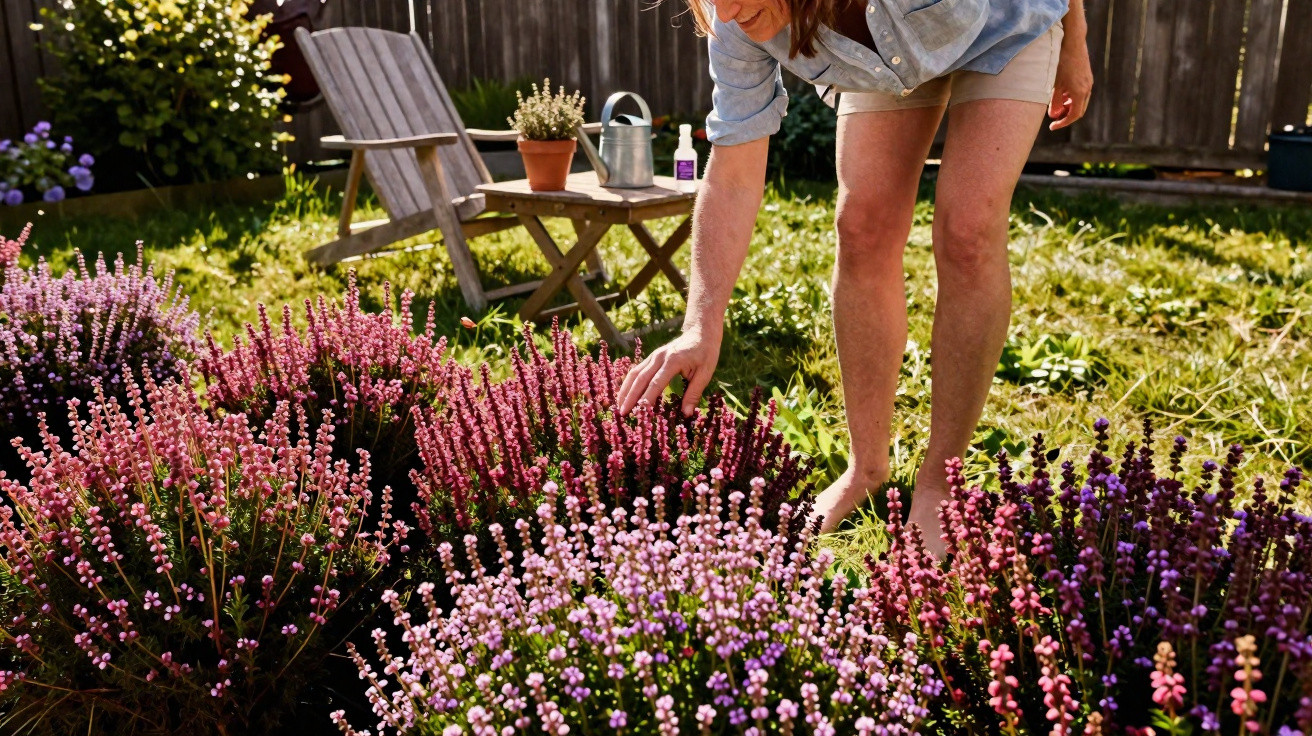
Mediterranean container companions with similar requirements can be placed around an oleander. Suitable options include lavender, rosemary and sage, as they enjoy sunny, warm positions and cope with occasionally dry compost. This quickly creates a Mediterranean feel on a balcony or terrace, while care remains manageable because their needs are comparable.
Anyone combining this professional nursery strategy of timing, pruning, top-layer renewal, balanced fertilising and thoughtful watering will often see a completely different plant in the very same season: less guesswork and more floral abundance.


Comments
No comments yet. Be the first to comment!
Leave a Comment