
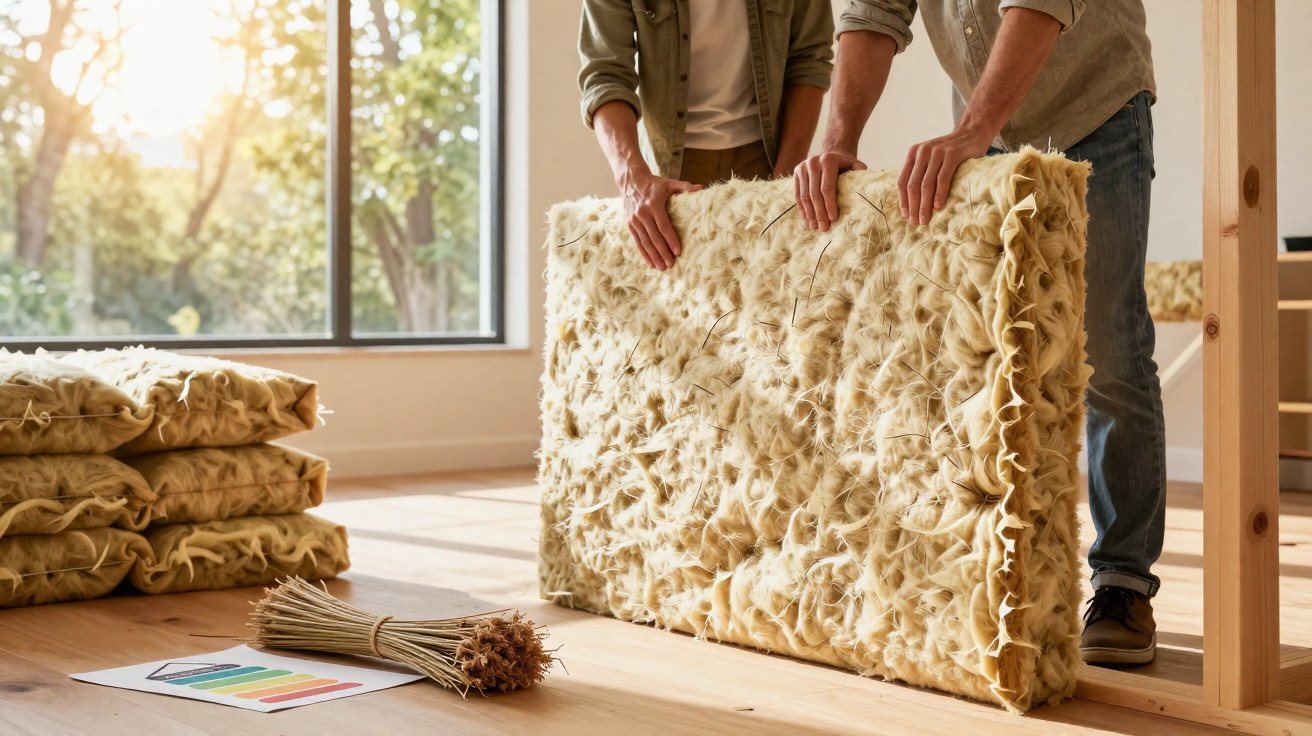
When building or renovating today, the cost per square metre of insulation is no longer the only consideration. The energy crisis, climate debate and tighter requirements have brought a newcomer into focus: insulation made from flax fibres. Previously associated mainly with textiles, it is becoming a serious rival to glass wool and polystyrene – with the potential to significantly disrupt the building-insulation market.
Why effective insulation is now worth real money
Insulation may be out of sight, but it has a major effect on living comfort, energy bills and a property's resale value. Cutting corners at this stage leads to ongoing costs later – year after year.
- It keeps heating inside the home during winter
- It slows the transfer of outdoor heat into the building in summer
- It limits noise from traffic, neighbours and building services
- It reduces energy demand and therefore CO₂ emissions
In many property listings, the Energy Performance Certificate (EPC) is now displayed almost as prominently as the number of rooms. A poorly insulated home can quickly receive a low efficiency rating, which directly affects its market value. Buyers factor the cost of required refurbishment firmly into their calculations.
“Modern insulation is no longer merely a technical detail; it is a tangible value driver for every home.”
Traditional materials such as glass wool and polystyrene have long dominated this area. Although they provide solid insulation, their environmental impact and end-of-life disposal are attracting increasing criticism. Flax fibre insulation is now moving into precisely that gap.
Flax as an insulation material: the reasons behind the trend
Flax has been cultivated in European fields for centuries, particularly in coastal areas. Its fibres are used to make linen, and those same fibres can also be processed into insulation batts, rolls and loose-fill material.
The key factor is that flax is a renewable raw material with a comparatively low demand for resources. The crop requires little water and few plant-protection products, while storing CO₂ as it grows. This gives it a significantly smaller environmental footprint than many synthetic insulation materials, whose production consumes substantial amounts of energy.
Strong thermal performance and impressively effective sound insulation
Its technical properties are particularly noteworthy. Flax fibre insulation performs two roles: it protects against cold and heat while also reducing noise. In practical terms, this means:
- Heat remains in the home for longer in winter, so heating systems run for less time
- In summer, the mass of the fibres acts as a buffer against overheating
- External noise is noticeably softened, which is especially beneficial in urban areas
Flax offers another advantage: it can absorb moisture and release it again without losing its structure. This helps maintain a balanced indoor environment and reduces the risk of condensation within building elements – an important factor in preventing mould.
“Flax insulation behaves in a building somewhat like a breathable coat: it protects without sealing off the structure.”
Healthier homes without chemical emissions
Many conventional insulation products are plastic-based or treated with additives that can release volatile organic compounds. Flax fibre insulation generally does not produce problematic emissions. That is a compelling benefit for families, allergy sufferers and people who are sensitive to odours or irritants.
Where flax insulation can be used
One benefit valued by designers and tradespeople is the versatility of flax insulation. It can be used for both new-build schemes and the refurbishment of older properties.
Typical applications include:
- Between rafters in loft conversions
- Within timber-frame walls or independent lining systems
- In intermediate floors and on top-floor ceiling structures
- In some floor constructions
The material is usually supplied as batts or rolls and can be cut using basic tools. It is comparatively lightweight, causes little itching and is less likely to irritate the skin than some mineral insulation products. This appeals to capable DIY users and can speed up installation for professionals.
“Anyone who has worked with glass wool knows that a material that is pleasant to handle is worth its weight in gold on site.”
How does flax insulation compare with traditional insulation materials?
A direct comparison with glass wool, stone wool and polystyrene presents a mixed picture, depending on which performance criterion matters most.
| Criterion | Flax fibre | Conventional insulation materials |
|---|---|---|
| Thermal insulation | good to very good | good to very good |
| Summer heat protection | strong thanks to mass and heat storage | in some cases weaker, depending on the material |
| Sound insulation | very good | usually good to very good |
| Environmental footprint | very favourable, renewable, CO₂-storing | often energy-intensive production |
| Recycling / disposal | recyclable, biodegradable | sometimes problematic, potentially hazardous waste |
| Purchase costs | above average | usually less expensive |
The main obstacle remains cost. In many projects, natural insulation materials currently still cost more than conventional alternatives. However, grant schemes and rising demand are increasingly narrowing that gap. Those taking a long-term view will assess the figures differently anyway: alongside energy costs, maintenance, disposal and resale value also matter.
Policy support for natural insulation materials
Stricter energy and environmental requirements for buildings are being felt across Europe. National rules are placing greater emphasis on materials with a low CO₂ footprint and better circularity. For flax-insulation manufacturers, this is a clear signal to expand production capacity.
There are also regional grants for energy-efficiency renovations, under which natural insulation materials are often viewed favourably or explicitly mentioned. Homeowners planning a refurbishment can therefore ask an energy assessor specifically about additional support for sustainable insulation materials.
“Regulations and funding are helping sustainable insulation materials move from a niche product to a serious standard.”
How flax insulation can affect property value
For owners, the central question is ultimately whether switching makes financial sense. The answer depends on the individual property, but several effects occur at the same time:
- A better EPC increases appeal when selling or letting
- Lower running costs persuade tenants and buyers
- Sustainable construction is becoming an image factor, particularly in sought-after locations
- The likelihood of future retrofit obligations is reduced
Owners who choose high-quality flax insulation today position their property clearly within the green segment. Estate agents already report that, when comparable homes are available, buyers increasingly favour those with sustainable materials and strong efficiency ratings.
What owners should check before deciding
Before making a commitment, it is worth obtaining a professionally informed assessment of the building. An energy assessor or experienced designer can establish:
- Which building elements are the greatest weaknesses in energy terms?
- Where is flax insulation technically especially suitable, and where is it less appropriate?
- Which grants can be combined with natural insulation materials?
- What does the cost-benefit comparison look like over 20 to 30 years?
Moisture management requires particularly careful planning in older properties. Flax fibre works well with vapour-open constructions, for example when combined with timber or mineral renders. In sensitive areas – such as flat roofs with complex layer arrangements – another insulation material may be more suitable.
Further considerations: fire protection, service life and combinations
A frequent question concerns the fire performance of flax insulation. The fibres can be treated appropriately so that they meet standard building requirements. It is worth checking the manufacturer's technical data sheet closely, along with the relevant national standards.
Experience with natural insulation materials in construction now extends over several decades. Correct installation is crucial: if the material remains dry and properly protected, it can retain its function for a very long time. Hybrid constructions, meaning flax insulation combined with other insulation materials, can bring together the strengths of different products – for instance, flax in a roof for heat protection and another insulation material on the façade where specific fire-protection requirements apply.
Anyone who finds terms such as “thermal conductivity”, “phase shift” or “vapour-open construction” difficult should ask a specialist to explain the basics. This discussion is particularly worthwhile for natural insulation materials because their behaviour in relation to moisture and storage capacity differs somewhat from conventional products. When correctly used, this does not create a risk; it delivers a measurable gain in comfort and a point that can be used very specifically in the next sales discussion.



Comments
No comments yet. Be the first to comment!
Leave a Comment