
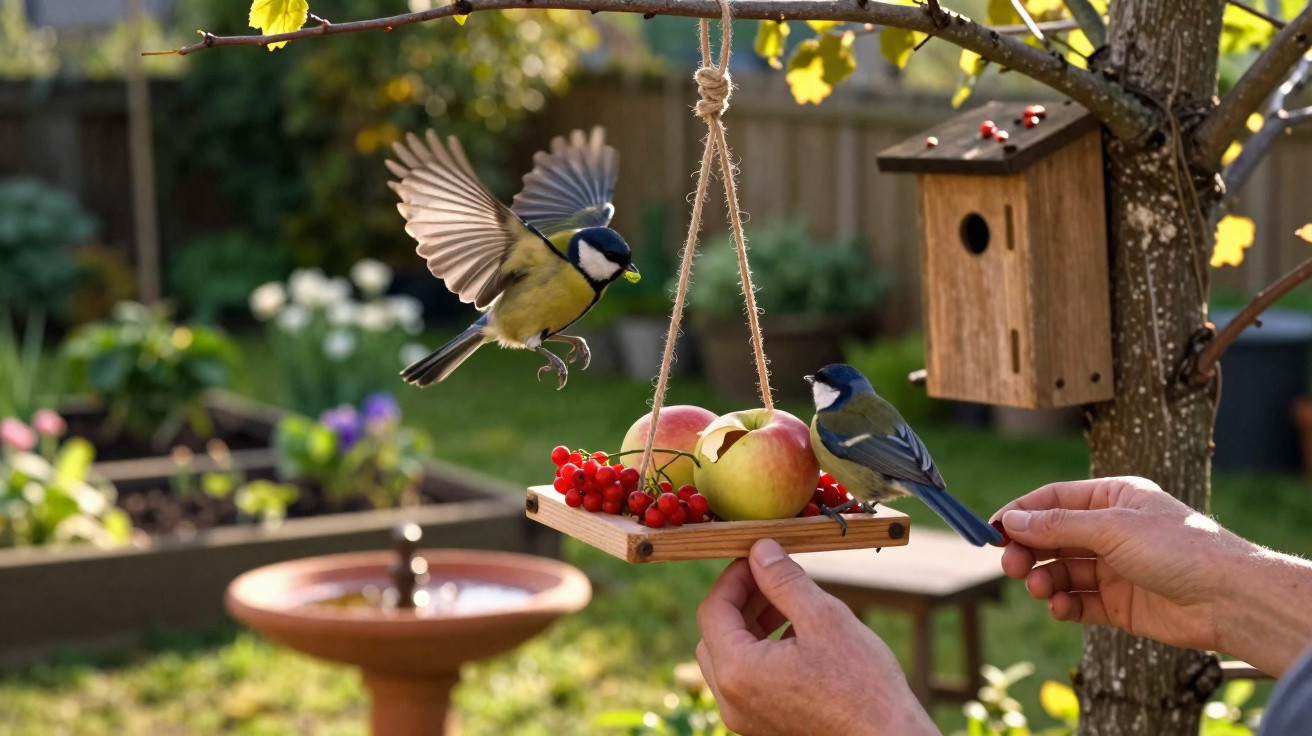
Anyone who gardens in spring will know the problem: as soon as temperatures rise, caterpillars, aphids and other pests seem to be everywhere. Rather than reaching for chemicals straight away, you can enlist a natural ally that already visits many gardens – provided you know how to attract it.
Why tits are so valuable in the garden
Blue tits and great tits are among the most useful garden allies. They tirelessly hunt caterpillars, aphids and other small insects from shrubs, fruit trees and vegetable plants.
“During the breeding season, a family of tits consumes thousands of insect larvae – providing free, round-the-clock pest control.”
However, in late winter and very early spring, these birds can easily struggle to find food. Most insects are hiding away, while seeds and wild fruits have already been eaten. Offering supplementary food at this point makes your garden more appealing to tits – and you will later benefit from their appetite for pests.
The fruit that tits particularly enjoy
The key ingredient may sound unremarkable, but it is highly effective: berries. In autumn and winter, many domestic gardens have little fruit left, even though berry-bearing shrubs are a natural energy boost for birds.
Particularly suitable options include:
- Elderberries (ideally dried or frozen, rather than freshly fermented)
- Rowan berries, also known as mountain ash berries
- Juniper berries
- Rose hips, halved or gently crushed
- Dried fruit-and-berry mixes with no added sugar
These fruits are rich in sugar, providing energy that is quickly available. On cold days in particular, this helps small birds maintain their body temperature and remain active while searching for food.
“Berries give tits a ‘turbo boost’ of energy – ideal during the cold season, when natural reserves become scarce.”
When feeding berries is useful – and when it is not
Providing food is not advisable throughout the entire year. Experts recommend:
| Period | Feed berries? | Note |
|---|---|---|
| Late autumn | Yes | As a supplement to natural wild fruit |
| Winter | Yes | Particularly helpful during frost, ice and snow |
| Early spring, while it remains cold | Limited | Suitable in the short term, until insects reappear |
| Late spring and summer | Generally no | Birds should feed their young insects rather than fatty or sugary food |
For a long-term approach, plant berry shrubs in the garden itself. This creates a natural food source that returns every year, without the need to keep topping up feeders.
How to attract tits reliably
A few well-chosen measures can turn your garden into a regular spot for tits. Three things matter most: food, water and secure nesting places.
Setting up feeding stations properly
Even a simple feeding station on a balcony or patio is often enough. The design is important:
- Keep it covered where possible, so berries and other food stay dry
- Position it far enough from windows to prevent collisions
- Place it at least 1.5 to 2 metres above ground level, out of cats’ reach
- Clean it regularly to prevent disease
If you would rather not offer loose berries, ready-made fat balls for tits or energy blocks containing pieces of fruit are alternatives. Choose versions without plastic mesh, as birds can become caught in it.
Do not overlook water and a bathing spot
A shallow plant saucer or dedicated bird bath will make the garden even more inviting. Tits enjoy bathing, which helps them clean their plumage. The water should:
- Be no more than a few centimetres deep
- Be changed every day
- Not be placed directly beside dense shrubs, where cats may lie in wait
Nest boxes: the foundation for an established tit family in the garden
If you would like to see the same tit offspring in your garden every year, install nest boxes. They compensate for the shortage of hollows in mature trees – an issue in many tidy gardens and new-build areas.
Key points for a nest box include:
- Entrance hole below 28 millimetres in diameter – this keeps out larger birds and some predators.
- Installation height of at least two metres, preferably higher.
- Direction facing east or south-east, so the box is not exposed directly to wind and driving rain.
- A slight forward tilt to stop water getting inside.
“A single nest box can make all the difference – suddenly, an entire tit family is acting as the pest-control team in your own garden.”
Which garden pests tits tackle
The benefits become clear as vegetation starts to grow. Tits continually pick small caterpillars and larvae from fruit and ornamental trees. Their main targets include:
- Aphids on roses, vegetables and fruit trees
- Caterpillars of various butterfly species on fruit trees
- Spiders and other small arthropods on hedges and shrubs
The difference is soon noticeable in the vegetable garden: fewer holes in cabbage leaves, fewer lettuce heads that have been nibbled, and stronger young plants.
Protection from predators: keeping the garden safe for tits
For birds to feel genuinely secure, they need a basic level of protection. Tits themselves are on the menu for other animals. Two risks are especially relevant: cats and magpies.
Keeping cats under control
Domestic cats are skilled climbers and hunters. Hanging feeding stations and nest boxes too low, or too close to walls or trees, makes access easy for them. Helpful measures include:
- Trunks without “climbing aids” such as dense ivy or trellises
- Metal collars or smooth guards fitted around the trunk below the nest box
- A clear safety distance of at least two metres from possible jumping-off points
Deterring magpies and other bird predators
Larger birds readily raid nests and feeding spots close to nests. Simple measures can reduce the risk:
- Reflective items in the garden, such as shiny ribbons or old CDs
- Plain homemade “scarecrows” in the vegetable garden or orchard
- Nest boxes with a small entrance hole and an especially smooth front panel
It is also important not to scatter food openly on the ground. Leftovers attract larger birds and increase pressure on smaller species.
How to turn the garden into a tit paradise for the long term
Those who do more than simply put out food, and instead make their garden generally bird-friendly, will need to provide less supplementary feeding over time. A natural approach pays off:
- Plant native shrubs such as blackthorn, hawthorn or privet
- Leave fallen leaves and some dead wood in one corner of the garden
- Avoid using pesticides and insecticides over large areas
- Choose flowering plants that attract insects – creating more prey for birds to hunt
Knowing how the seasons work makes planning easier: berry shrubs provide food in autumn, carefully offered berries provide extra help in winter, and nature takes over again in spring. This creates a cycle from which everyone benefits: tits, garden plants and, ultimately, the person who has to spray less and gets to hear more birdsong.
Comments
No comments yet. Be the first to comment!
Leave a Comment