
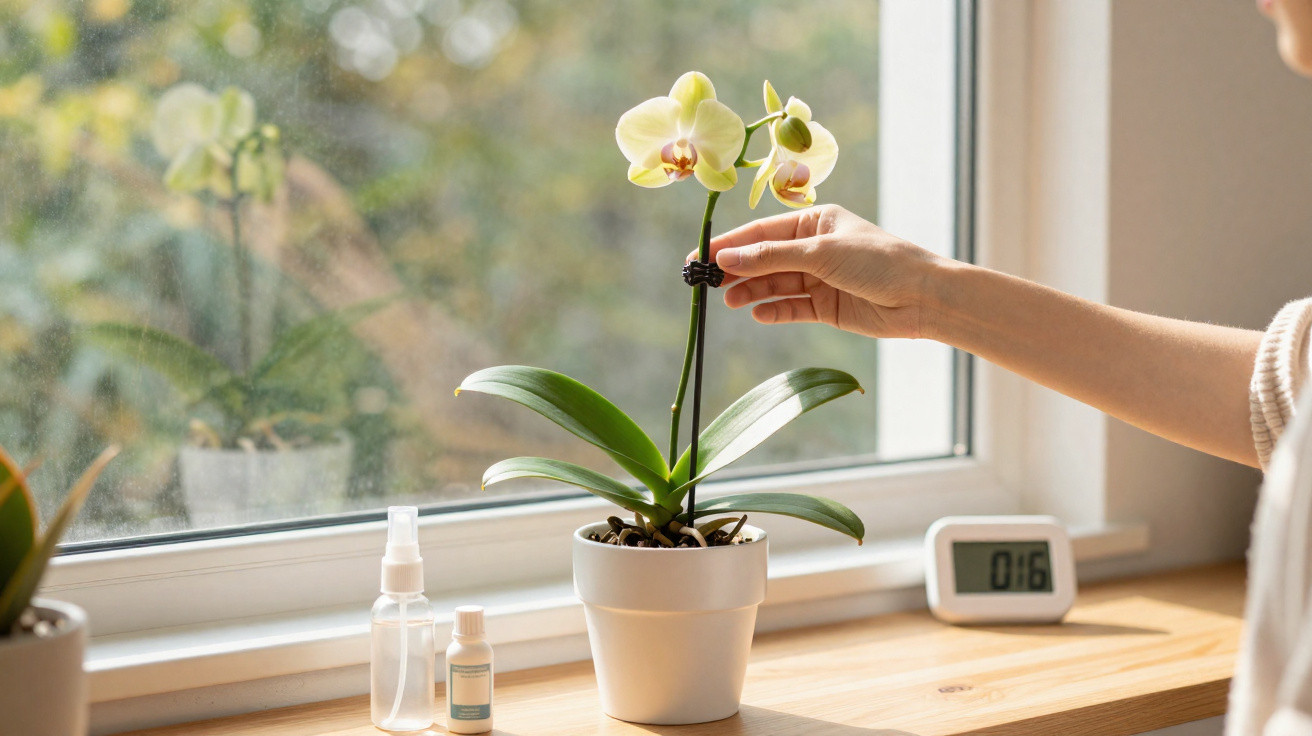
Losing its flowers does not mean an orchid is dying. This is a normal stage in the plant’s life cycle, particularly for popular indoor varieties such as Phalaenopsis. Following a prolific flowering period, the stem may have no buds left, leaving only green leaves and visible roots. At this point, the plant is resting and storing energy to produce another flower spike.
Is an orchid without flowers dying?
Many people mistake the end of flowering for the end of an orchid’s life, then either throw away the pot or place it in unsuitable conditions. In reality, the gap between flowering periods can be lengthy, varying according to light, temperature, watering, feeding and the traits of the variety being grown.
Understanding this cycle makes orchid care more predictable and helps to prevent disappointment. Rather than being treated as a disposable flowering plant after its first display, the orchid becomes a long-term companion, encouraging more regular care throughout the year.
Watch a video from the YouTube channel Life in the Garden on the essential care, growing media and fertiliser needed to encourage orchids to flower again:
https://www.youtube.com/watch?v=kS1z6T6_tO4
How does the right light help an orchid flower?
Light is crucial to healthy orchid growth. Orchids favour bright settings, but their leaves should not be exposed to harsh direct sunlight. Too much sun can lead to yellow marks or scorching, compromising the plant’s overall condition and delaying the emergence of new flower spikes.
A practical approach is to keep the pot close to a well-lit window, softening the light with a lightweight curtain. Where possible, transparent pots can also be used to provide more light to the roots. Wiping dust from the leaves improves light absorption and gives the plant a more vigorous appearance.
Essential watering, temperature and fertiliser care
Watering frequency requires particular attention: the most frequent mistake is keeping the growing medium permanently waterlogged, which causes root rot. Wait until the roots become greyer or the medium feels almost dry before watering again, either by watering from above or through a brief soak.
Temperature also affects flowering, as slight differences between daytime and night-time temperatures provide a natural cue for fresh buds. During the growing stage, orchid-specific fertilisers applied sparingly supply phosphorus and potassium, supporting firm, colourful flowers. A few simple habits help maintain this balance:
- Avoid waterlogging: ensure the pot drains well and that all excess water can run away.
- Check the roots: green roots show recent moisture, while greyish roots indicate it is time to water.
- Manage the temperature: a slightly cooler environment at night encourages spike formation.
- Fertilise carefully: always follow the manufacturer’s recommended doses to avoid burning the roots.
How can you identify a flower spike and keep an orchid healthy for years?
As an orchid comes out of its resting phase, new growths appear that may become either roots or future flower spikes. A spike usually has a narrower, more elongated tip and grows towards the light. Once it has grown a few centimetres, it can be supported with a stake and gentle clips, preventing the weight of the flowers from bending or snapping the stem.
Keeping the pot in a stable position, away from sudden relocations and strong draughts, helps prevent buds from dropping too early. With plentiful indirect light, carefully measured watering, mild temperature variation and balanced nutrition, an orchid can flower repeatedly over the years, proving that the “leaves-only” stage is simply quiet preparation for the next floral display.

Comments
No comments yet. Be the first to comment!
Leave a Comment