
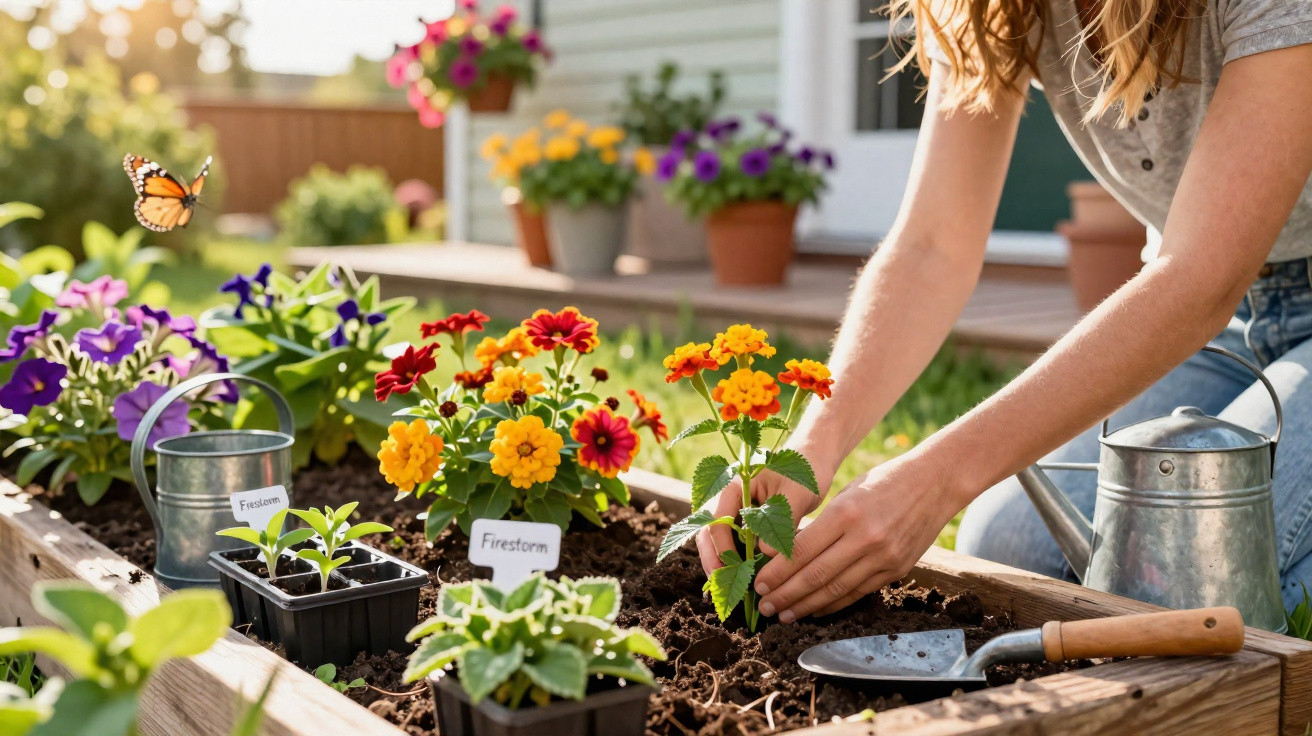
Planting from the beginning of April lays the foundations for months of colour, fragrance and life in the garden or on the balcony. Certain flowers and perennials benefit especially from being planted early, rewarding you with a true riot of colour by high summer. From heat-tolerant repeat bloomers to fragrant favourites, the choice is far wider than many people realise.
Turn a pale border into a summer spectacle
Many amateur gardeners hesitate in spring, waiting “until it is properly warm”. That is a mistake. Planting in early April gives plants a head start, as their roots can establish well in soil that is still cool but moist. This helps them cope far better with dry spells in summer and allows them to begin flowering sooner.
Anyone who plants from 1 April onwards can look forward to a garden that flowers almost without interruption from June into autumn.
The key is a well-chosen mix of annuals that flower throughout one season and perennial plants that return dependably each year. Add several hardy shrubs and climbers to introduce structure and height.
The foundation: long-flowering annuals for a burst of colour
Gaillardia: sunshine in the border
Gaillardia, often known as blanket flower, creates the classic summer look with vibrant red-and-yellow blooms resembling little sun wheels. It thrives in heat, prefers free-draining soil and copes well with relatively poor ground.
- Ideal for sunny borders and dry positions
- Flowers from early summer until autumn
- Attracts numerous insects
Plant young specimens from early April and you can usually expect the first buds just a few weeks later.
Pentas: star flowers for butterflies
Pentas, also called the “Egyptian star”, remains something of an insider’s choice in the UK. Its flowers form dense clusters that resemble tiny stars, making it a magnet for butterflies and other pollinators.
It is perfectly suited to containers and larger window boxes. Give it a warm, sunny position and water regularly, while avoiding waterlogging. For anyone who enjoys watching butterflies, Pentas is a reliable choice.
‘Saucy’ sage: flower spikes without a break
Modern sage varieties such as ‘Saucy’ are true flowering powerhouses. They keep producing long spikes of tubular flowers throughout the summer. Bees and bumblebees are drawn to them too.
Sage varieties for ornamental gardens provide colour, fragrance and food for insects – with minimal maintenance.
Cutting back faded flower stems encourages even more buds. In containers, a quality compost for container plants is sufficient; in borders, choose a sunny site that does not become too wet.
Trailing petunias: a carpet of colour for balconies and patios
Vigorous trailing petunias become covered in countless summer flowers, often in two colours or with striking patterns. They are favourites for hanging baskets, window boxes and the tops of walls.
- Full sun to partial shade
- Regular feeding keeps the flowers coming
- Ideal for turning drab walls and railings into waves of colour
Stay consistent with watering and apply liquid feed every one to two weeks for a dense curtain of blooms.
Endura-type verbena: compact cushions covered in flowers
Modern verbena cultivars, including Endura types, are regarded as especially robust. They form dense, low cushions that continually develop fresh clusters of flowers throughout summer, making them ideal for bowls, boxes and the front edge of borders.
They tolerate heat remarkably well provided the root area never dries out completely. Early planting produces compact, lush plants rather than long, thin shoots.
Cuphea: a surprise for insect enthusiasts
Cuphea offers an unusual appearance: with a little imagination, its flowers look like tiny bats or masks. Bees and other pollinators readily visit it because it supplies plenty of nectar.
In containers, Cuphea combines well with petunias or verbenas. Its slightly unusual shape catches the eye immediately and makes any pot more interesting.
Four more planting stars for a garden like a painting
Lantana ‘Firestorm’: changing colours in each flower cluster
Lantanas rank among the most popular summer-flowering plants for containers. The variety ‘Firestorm’ stands out with yellow-and-red rounded flower clusters that change colour as blooms fade. The result is a bush that appears to conjure up new shades all the time.
Lantanas love heat and sunshine, and can cope with the occasional dry day – just right for hot summers on balconies and patios.
Households with children should make sure no plant parts are put into mouths, as Lantana is considered poisonous – a point that is easily overlooked.
Gardenia ‘Diamond Spire’: a fragrant white dream
Gardenias are renowned for their fragrance. ‘Diamond Spire’ has a relatively slim, upright habit, making it highly suitable for large pots on a patio or balcony. Its star-shaped white flowers release an intense, sweet scent, particularly in the evening.
Gardenias dislike excessive heat around their root ball and need slightly acidic, humus-rich soil. Placing them outside in a sheltered spot from April gives them precisely the transition period they need to adapt to the outdoor season.
Catmint: lavender-like but much easier to grow
Catmint, often bearing delicate lavender-coloured flower spikes, is a real insect magnet. Bees, bumblebees and hoverflies gather on its flowers, while the plant itself is considered extremely drought tolerant.
- Ideal for sunny, relatively lean sites
- Needs little care and responds well to cutting back
- Suitable as border edging or for planting in groups
Its grey-green foliage partners roses beautifully, giving borders a natural, gently Mediterranean feel.
Ground-cover rose ‘It’s a Breeze’: a flowering carpet until frost
Modern ground-cover roses such as ‘It’s a Breeze’ have been bred specifically for abundant flowering and disease resistance. They grow wide while remaining fairly low, producing fresh, usually semi-double flowers in strong colours over many months.
Ground-cover roses are ideal gap-fillers: they cover the soil, suppress weeds and add colourful accents well into autumn.
When planted in early April, they can achieve considerable spread in their first year. A sunny position and free-draining soil are all they need; robust varieties usually eliminate the need for elaborate rose spraying altogether.
How to combine the plants for maximum impact
The ‘festival’ effect depends not only on individual plants but also on how colours and growth habits are combined. A practical approach is to plan around three levels.
| Level | Suitable plants | Effect |
|---|---|---|
| Ground level | Catmint, verbena, ground-cover rose | Broad carpet of colour, calm backdrop |
| Mid-height | Gaillardia, Cuphea, petunias in boxes | Splashes of colour at eye level |
| Height / accents | ‘Saucy’ sage, Lantana, Pentas, gardenia | Vertical structure, focal points |
For a calmer, more elegant garden, choose white, blue and violet, for example gardenia, catmint and blue verbenas. For a bold ‘Warhol’ look, use red, orange and yellow through Lantana, Gaillardia and vivid petunias.
Practical tips for planting from 1 April
Many of these plants are sensitive to frost. In areas where late frosts occur, it is worth checking the forecast. If nights below 0°C are still expected, protect plants with horticultural fleece or an old bedsheet, or bring containers indoors temporarily.
- Plant only into soil that has dried sufficiently and is not icy cold
- Water thoroughly after planting
- Take particular care to maintain adequate moisture for the first two weeks
- Start window boxes with a slow-release fertiliser
Wind is one frequently underestimated factor. Pentas, Lantana and gardenias in particular prefer sheltered positions; otherwise, they dry out quickly in sunny locations and produce fewer flowers.
Why an early start pays off in particularly hot summers
Recent years have shown that summers are increasingly accompanied by prolonged spells of heat and drought. Plants that have developed a stable root system by April cope significantly better with such extremes.
Many of the plants listed here, including Gaillardia, catmint, verbenas and Lantana, are considered true lovers of sun and heat. Combined with ground-cover roses, they create planting that is not only attractive but also functional: the soil remains shaded, less water evaporates, and a dense network of roots helps prevent erosion.
Anyone wishing to go beyond traditional summer flowers can add bulbs of tulips, daffodils or ornamental alliums to these areas in autumn, once flowering has finished. The burst of colour then begins in spring, while the cycle of anticipation, planting and bloom continues year after year – with 1 April as the perfect starting signal.

Comments
No comments yet. Be the first to comment!
Leave a Comment