
If you want fresh, home-grown leaves for the salad bowl in spring, you will often turn to the usual choices: lettuce, loose-leaf lettuce or perhaps rocket. Then come the warm spells, slugs, bolting heads and poorly germinating seeds – and enthusiasm quickly fades. Yet there is a remarkably hardy plant that hardly anyone knows, but which is perfectly suited to window boxes, raised beds and conventional vegetable gardens.
The little-known salad alternative: Claytonia, also called Cuban spinach
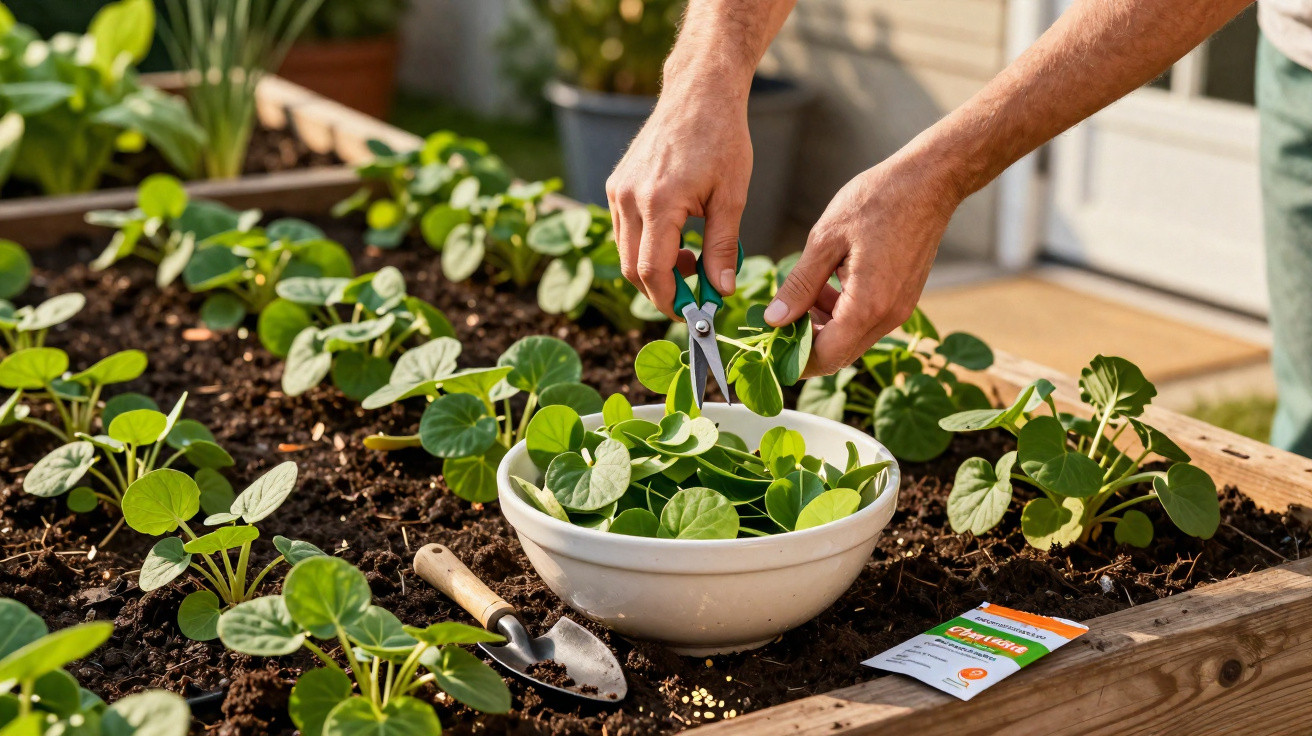
The plant in question is generally known as Claytonia or Cuban spinach (botanical name: Claytonia perfoliata). At first glance, it looks almost delicate, with small, heart-shaped leaves that are pale green, soft and succulent. However, that appearance is very deceptive.
“Claytonia combines the best of two worlds: the tenderness of loose-leaf lettuce with the resilience of a wild plant.”
The leaves have a mild, gently nutty flavour with no bitterness. They work in almost any salad bowl, in sandwiches and bowls, or as a fresh finishing touch on hot dishes. Anyone who likes to eat healthily while watching their budget will find that this is a plant capable of supplying itself for weeks.
Why gardeners so often struggle with traditional lettuce
Traditional headed lettuces have several weak points:
- Sensitive to heat: Just a few warm days can make lettuce bolt, flower and become inedible.
- Delicate germination: Seeds tolerate neither being sown too deeply nor drying out – it is a narrow margin.
- High maintenance requirements: Regular watering, slug protection and shade are needed, otherwise the effort can quickly be wasted.
Claytonia is far more relaxed in these respects. It copes much better with changing temperatures and forgives minor care mistakes without immediately stopping production.
How to sow Claytonia correctly: small bed, big results
The real advantage of this plant is that it can be grown extremely densely, making it ideal for limited urban space. Above all, success depends on preparing the bed or window box properly.
The right sowing depth: just a dusting of soil
Many people make the mistake of sowing salad seeds too deeply. Claytonia is particularly sensitive to this. Its seeds need to remain close to the light in order to get off to a good start.
“Remember: only gently ‘stroke’ the seeds into the soil – no deeper than half a centimetre.”
In practice, this means:
- Prepare finely crumbly soil and press it down lightly.
- Sow the seeds thinly rather than in clumps.
- Use a rake or your hand to roughen the surface to just 0.5 centimetres and cover the seeds lightly.
- Water afterwards with a fine rose so that the seeds are not washed away.
If you are using very coarse soil, add a thin top layer of fine seed compost. This noticeably improves germination.
Row spacing: air rather than fungal disease
Although Claytonia grows densely, it still needs some airflow so the leaves can dry properly. This reduces the risk of fungal disease and keeps the plants vigorous for longer.
A spacing of 15 centimetres between rows is ideal. You can estimate this easily using a wooden stick, a ruler or simply the width of your hand.
“Those who sow too closely harvest lots of small, weak plants – those who allow room get strong rosettes full of leaf growth.”
Thinning feels wasteful – but produces bigger harvests
As the first green dots in the bed turn into small plants, the next key step begins: thinning. Beginner gardeners in particular often find this difficult because they do not want to pull up healthy plants.
Why thinning can double the harvest
If every seedling is left in place, they compete for water, light and nutrients. The result is that everything remains stunted, the leaves stay smaller and the crop becomes more vulnerable.
For this reason, every plant needs a minimum amount of room. For Claytonia, 10 centimetres between plants is a good guideline. This gives the rosettes enough space to spread fully.
There is also a pleasant bonus: the young plants you remove do not need to go on the compost heap, but can go straight onto the plate. They make an especially delicate mini salad, similar to a baby-leaf mix.
How to thin the plants
- Wait until the plants have two to three true leaves.
- Water the soil thoroughly beforehand, as this makes the roots easier to loosen.
- Carefully pull out weaker plants and those growing particularly close together using two fingers.
- Leave only the strongest plants, at roughly the width of a child’s hand apart.
Record speed in the bed: a full bowl in 6–8 weeks
Many lettuces take a long time to become genuinely ready for harvesting. If you do not want to keep sowing successive batches, waiting can quickly become discouraging. Claytonia is in a different league here.
“Depending on the temperature, you can fill your first large bowl with tender greens after just six to eight weeks.”
The timing is measured not from sowing, but from the point at which the seedlings become visible. From then on, it normally takes only 6 to 8 weeks for the rosettes to develop well.
Cut correctly for several harvests
The biggest harvesting mistake is pulling the whole plant out of the soil, roots and all. This wastes its potential because Claytonia grows again after cutting.
A better method is as follows:
- Use sharp scissors or a knife.
- Leave the leaves in the centre of the rosette intact and cut only the outer “collar”.
- Leave one to two centimetres of leaf base on the plant.
- Water lightly after harvesting so that the plant can quickly begin growing again.
This can provide two to three substantial cuts from a single sowing of seeds. That makes the crop particularly cost-effective, including in small spaces.
All the key figures at a glance
| Step | Guideline |
|---|---|
| Sowing depth | 0.5 cm |
| Distance between rows | 15 cm |
| Distance between plants | 10 cm |
| Time to first harvest | 6–8 weeks after emergence |
| Number of possible cuts | 2–3 per sowing |
Who benefits most from growing Claytonia
Urban gardeners and people with limited time in particular benefit greatly from this crop. The plant manages in moderately nutrient-rich soil, does not need a specialist fertiliser programme and is comparatively easy to look after.
Typical places to grow it include:
- A window box on the kitchen windowsill
- A raised bed in the back yard
- Small strips in the family garden between other crops
- A container on the patio, mixed with herbs
There is another advantage that is especially noticeable for people who work: if you cannot get into the garden every day, the crop is not immediately ruined. Established plants cope with brief dry spells far better than many headed lettuces.
How Claytonia shines in the kitchen
The leaves are not limited to being a simple side salad. Their mild flavour makes them versatile:
- Mixed with rocket or lamb’s lettuce for more texture
- As a fresh topping for bread or burgers
- Folded into warm pasta, where they wilt only slightly
- In green smoothies as a mild leafy ingredient
For anyone trying to introduce children to green vegetables, Claytonia is a useful trump card. Its leaves are soft, not bitter and, with their small heart shape, look almost playful.
Risks, limitations and useful combinations
Despite all its strengths, this crop is not entirely without limits. In heavily waterlogged soil, it can rot, particularly when it has been sown very densely and air circulates poorly. During exceptionally hot summers, it is worth trying light shade, for example by growing a taller vegetable alongside it.
The plant becomes especially interesting in mixed planting. Between slow-growing crops such as cabbage or leeks, it fills unused areas without blocking them permanently. By the time the “big” plants really need the room, Claytonia has usually already been harvested.
“Anyone who wants to use their beds all year round can plan Claytonia as a gap-filler – it turns empty patches into productive mini salad factories.”
Anyone who has seen how quickly a small window box can become a source of salad with this plant often changes their garden planning fundamentally. Instead of relying on a few large heads, the focus shifts towards many small, fast-growing leafy crops. That is precisely where the quiet strength of this widely underestimated plant lies.


Comments
No comments yet. Be the first to comment!
Leave a Comment