
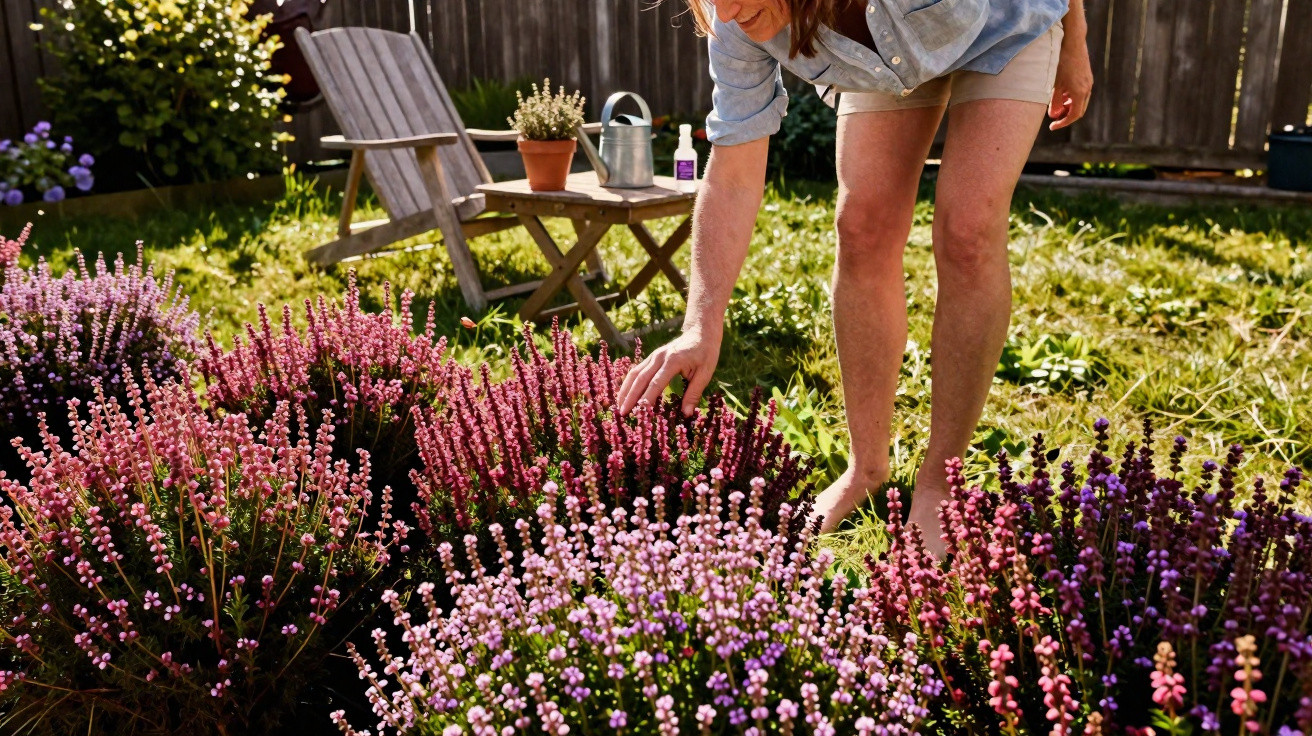
Many people face the same summer dilemma: hours spent mowing the lawn, the hose running constantly, and yet the grass still turns yellow at the height of summer. At the same time, mosquito bites can ruin every pleasant evening outdoors. One rather unassuming ground-cover plant can tackle both issues at once – bringing flowers, fragrance and a highly practical added benefit.
The plant that replaces a lawn and repels mosquitoes
The focus is on a particular variety of wild thyme, often sold as red field thyme or red sand thyme. Botanically, it belongs to the low-growing, creeping thyme species. It reaches only around ten centimetres in height, but gradually forms a thick carpet that can tolerate light foot traffic.
From May through to September, the ground is covered with masses of tiny pink to purple flowers. It is a magnet for insects and creates a far more vibrant splash of colour than an even expanse of grass. Its foliage remains evergreen, retaining its fresh appearance even during dry summers without needing continual watering.
“The major bonus: the essential oils in the foliage disturb mosquitoes – especially in areas where people regularly walk across the thyme carpet.”
Walking over the area briefly before sitting down automatically releases more of its scented oils. Most people find the aromatic fragrance pleasant, whereas mosquitoes tend to find it off-putting. It does not provide flawless protection in the way a chemical spray does, but the number of pests around seating areas is noticeably reduced.
Why field thyme can outperform a conventional lawn
The key advantage is that, once established, this thyme variety requires very little water compared with grass. Amateur gardeners report saving thousands of litres during summer simply because they no longer need to use sprinklers.
Lawns, by contrast, are increasingly criticised because they:
- consume substantial amounts of water, particularly in dry areas
- require regular, time-consuming maintenance and mowing
- quickly become brown and unattractive in hot weather
- offer insects very little food
A carpet of field thyme addresses several of these issues at the same time. It:
- manages with little water once its roots have grown deep enough
- does not need weekly mowing, requiring only occasional shaping instead
- flowers for months and provides food for bees and other pollinators
- creates a pleasant atmosphere around seating areas with its fragrance
The best time to plant red field thyme
Anyone wanting to use red field thyme on a patio or in the garden should not leave it too late. The weeks around spring are particularly suitable, once the soil has warmed up but still holds sufficient moisture. This allows young plants to establish roots quickly and settle in well before summer.
Choosing the right location is crucial. The plant prefers:
- full sun
- poor, relatively dry soil
- free-draining ground with no waterlogging
- places that are not walked over constantly or heavily
Slopes, rock gardens, gaps between stepping stones and patio edges are all ideal locations. For heavy clay soil, a layer of sand or fine gravel helps water drain away more rapidly. Fertiliser is not merely unnecessary; it can even be harmful, as field thyme thrives in lean conditions.
How to create a dense thyme carpet
A single pot per square metre will not be enough if the aim is to create the effect of a living carpet. Garden centres sell small pots known as young plants, and it is best to plant several within the same area.
| Area | Recommended number of plants | Plant spacing |
|---|---|---|
| 1 m² | 9–12 plants | 30–40 cm |
| 10 m² | 90–120 plants | 30–40 cm |
During the first few weeks after planting, the young plants should not be allowed to dry out completely. In an area with little rainfall, use a watering can once or twice until a stable root ball has formed.
After roughly three months, the first cushions will begin to meet. Within a year, more than half of the area will already be green, and after two years a continuous carpet will usually have formed, leaving hardly any space for weeds to grow.
Low-maintenance rather than a maintenance marathon
Compared with a traditional lawn, looking after it is almost effortless. Once established, a thyme carpet can largely manage without extra watering. Chemical fertilisers are unnecessary altogether. Even in exceptionally hot summers, the area generally remains green while grass turns brown.
A light trim at the end of winter is enough to keep the cushions compact. This involves removing old flower remains and dry shoots. There is no need to mow it as though it were a meadow, because the plants naturally stay low and spread along the ground.
“Anyone who puts their nose close to the ground will quickly notice: this area is not only easy to maintain, it also smells like a Mediterranean herb garden.”
Where thyme works well – and where it does not
Despite its many benefits, field thyme cannot replace every lawn. Children who run around barefoot, kick footballs or spread out blankets still need hard-wearing areas. For many gardens, a combination of short grass and thyme islands offers a good compromise.
It is particularly suitable for:
- the edges of patios and seating areas
- paths with loosely laid stepping stones
- sunny front gardens that previously consisted only of gravel
- slopes where lawns are difficult to maintain
It is less suitable for deeply shaded spots beneath dense trees or areas where puddles remain throughout winter. Field thyme struggles in these conditions and gradually becomes sparse.
Mosquito protection: what the plant can and cannot do
Thyme’s fragrance is among the scents mosquitoes dislike. Its essential oils contain compounds that the insects avoid. Surrounding a seating area with a broad strip of thyme can therefore create a type of “scent barrier”.
At the same time, it is important to be realistic: a thyme carpet is not a replacement for insect repellent on the skin. It makes the surroundings less appealing, but will not keep away every individual mosquito. Combined with other measures – such as loose, long clothing or fans on the patio – it can create a noticeably more comfortable evening environment.
Further benefits: biodiversity and climate
Another effect often becomes apparent only on closer inspection: flowering field thyme buzzes throughout summer. Bees, bumblebees and hoverflies collect nectar tirelessly. Anyone hoping to help counter insect decline will therefore make an excellent choice with this plant.
There is also a climate benefit. Any area that no longer needs regular mowing saves energy, regardless of whether the mower runs on electricity or petrol. At the same time, a planted, flowering surface heats up less intensely in sunshine than a closely cut, dried-out lawn.
When the next gardening season begins and the question arises, “Sow a new lawn or try something entirely different?”, it is worth considering field thyme. Its combination of fragrance, flowers, reduced work and noticeably fewer mosquitoes around the patio makes this plant a surprisingly practical substitute for many conventional lawns.




Comments
No comments yet. Be the first to comment!
Leave a Comment