
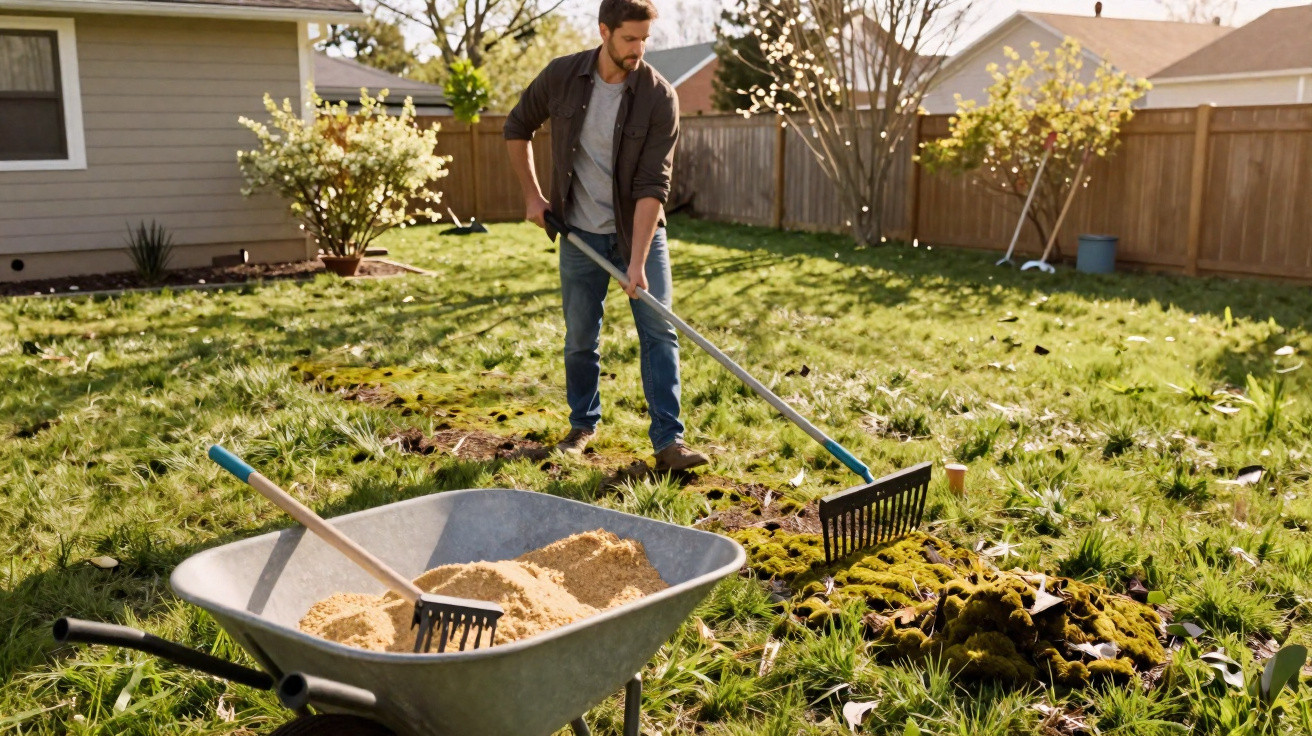
Many garden owners are alarmed when they inspect their lawn in spring: yellow patches, puddles, soft ground and dense cushions of moss in between. The first instinct is often to head for the chemicals aisle at the garden centre. Experts, however, recommend a different and surprisingly straightforward approach: completing three essential jobs in March strengthens the soil enough for the lawn to grow thicker – allowing moss to fade into the background naturally.
Why moss in the lawn is a warning sign
Moss is not an “enemy” in itself; it is a symptom. Its presence indicates that the soil beneath the lawn is depleted, compacted or overly wet. After a wet winter, especially one involving lots of foot traffic, playing children and lingering puddles, the soil structure can suffer badly.
Grasses thrive in ground that is well aerated and free-draining. If water can no longer soak away, waterlogging develops. Moss and algae flourish in these conditions, while the roots of lawn grasses gradually suffocate. The result is that grass recedes and moss spreads.
“A mossy lawn is usually not the result of poor care in summer, but the soil’s call for air and structure – and March is the perfect time to provide it.”
Addressing the underlying cause now means considerably less work for the rest of the year and hardly any need for specialist products. The key is to loosen the soil, improve drainage and supply the grass roots with nutrients.
Task 1: Aerate the lawn thoroughly in March
The first crucial job is aeration: loosening the soil using an ordinary garden fork or similar tool. This also works well in smaller gardens and mainly requires a little physical effort.
How to aerate your lawn correctly
- Wait until the ground has dried out but is not rock hard.
- Push the fork around 8 to 10 centimetres into the soil.
- Gently lever the handle backwards until the soil visibly loosens.
- Move forward one step, leaving roughly 15 centimetres between holes, then repeat.
- Work particularly thoroughly in places where puddles remain after rain.
This creates small channels in the soil, allowing air to enter and water to drain away. The ground becomes looser, roots regain access to oxygen and excess moisture disappears – all bad news for moss.
Anyone caring for a larger area, or wishing to reduce the physical effort involved, can use a hand aerator or an electric scarifier with an aeration function. For spring results, though, a garden fork is usually sufficient, particularly in a typical terraced-house garden.
Task 2: Light topdressing – the secret to a thick lawn
Once the lawn has been aerated, the second and often overlooked step follows: spreading a thin layer of soil and organic material. Known as topdressing, this method combines soil improvement with gentle feeding.
The ideal topdressing mixture
If possible, prepare a loose, well-sieved blend consisting of:
- 1 part sieved garden soil
- 1 part coarse sand (builder’s sand or river sand, not play sand)
- 1 part mature, sieved compost or leaf mould
If you do not have a large supply of these materials, coarse sand alone will also do. It improves drainage, fills the holes and stops them from silting up again immediately.
How to work the material into the soil
Scatter the mixture thinly – only a few millimetres deep – over the previously perforated surface. Then work it into the top layer with a stiff broom, brush or rake so that the holes are filled. The grass blades should remain visible, so the layer must not cover everything like a carpet.
“Topdressing has a double effect: it provides lasting drainage through the filled channels while supplying fresh nutrients to the grass roots – the ideal basis for dense growth.”
Many amateur gardeners report that this is the step that makes the greatest difference. Ground that was previously soft and spongy gradually becomes much firmer and copes better with rainfall.
Task 3: Rake out moss vigorously and mow higher
With the soil prepared, it is time for the visible part of the treatment: mechanically removing moss and thatch. Before the lawn’s first cut of the year, it is worth going over it thoroughly with a leaf rake or wire rake.
The right way to rake out a lawn
- Wait for dry weather so that moss and thatch do not stick together.
- Use a sturdy metal rake, working in every direction.
- Pull out moss cushions, old clippings and matted layers thoroughly.
- Put the removed material on the compost heap rather than leaving it on the lawn.
The first mow of the year should follow immediately afterwards. One important point is not to set the mower blades too low. A higher cutting height – around 4 to 5 centimetres – helps the grass recover quickly after a demanding winter.
“After raking and the first, relatively high cut, the lawn often looks alarmingly bare – that is exactly what is intended. Within one to two weeks, the gaps will fill with fresh, vigorous green growth.”
The right timing: why March is ideal
This treatment works best once the soil is no longer frozen and has reached a little basic warmth. In milder areas, this may be as early as late February, while colder locations may not be ready until mid to late March.
The condition of the soil matters more than the date on the calendar. Pushing a fork into saturated or frozen ground is more likely to damage the structure. Dry, slightly springy soil on a bright, frost-free afternoon offers ideal conditions for completing all three steps in one go.
How the three steps benefit the lawn over time
The combination of aeration, topdressing and vigorous raking acts like a reset button for the lawn. Its main effects include:
- Better water drainage, less waterlogging and therefore less moss.
- More oxygen reaching the roots, encouraging stronger grass growth.
- Improved soil structure, so the lawn copes much better with foot traffic and rain.
- An organic nutrient supply from compost or leaf mould.
- Reduced reliance on chemical moss killers and fertilisers.
Repeating this treatment every spring gradually builds a resilient carpet of turf. Moss will not vanish completely, but it loses its advantage over the grasses.
Extra tips for permanently reducing moss
The three March tasks provide the foundation. A few additional measures can increase their success further:
- Do not cut too short: Lawn grasses do not respond well to drastic treatment. Cutting too low weakens them and gives moss every opportunity to establish itself.
- Fertilise moderately: A balanced lawn fertiliser in spring helps the grass fill bare patches more quickly.
- Adapt shaded areas: Lush grass rarely grows beneath dense trees. In these spots, it is better to switch to shade-tolerant lawn seed or ground-cover plants.
- Avoid walking on wet areas: Less foot traffic in rainy conditions prevents further compaction.
Keeping these points in mind makes the lawn more robust step by step. In particularly wet years, every afternoon invested in March pays off.
What terms such as “aeration” and “topdressing” really mean
Many amateur gardeners regularly come across technical terms in gardening guides. Aeration simply means getting air into the root zone by making holes in the soil. Expensive specialist equipment is unnecessary; a sturdy garden fork is usually entirely adequate.
Topdressing may sound like golf-course maintenance, but it is essentially just a thin layer of sand and compost spread over the lawn and brushed in. This “veil” reaches the pores in the ground, allowing rainwater to drain more effectively in future and giving grass roots more nourishment.
Once these two principles are understood, it quickly becomes clear why moss has fewer and fewer opportunities. A thick, healthy lawn reclaims the space – achieved with just three well-planned jobs on a single dry afternoon in March.

Comments
No comments yet. Be the first to comment!
Leave a Comment