
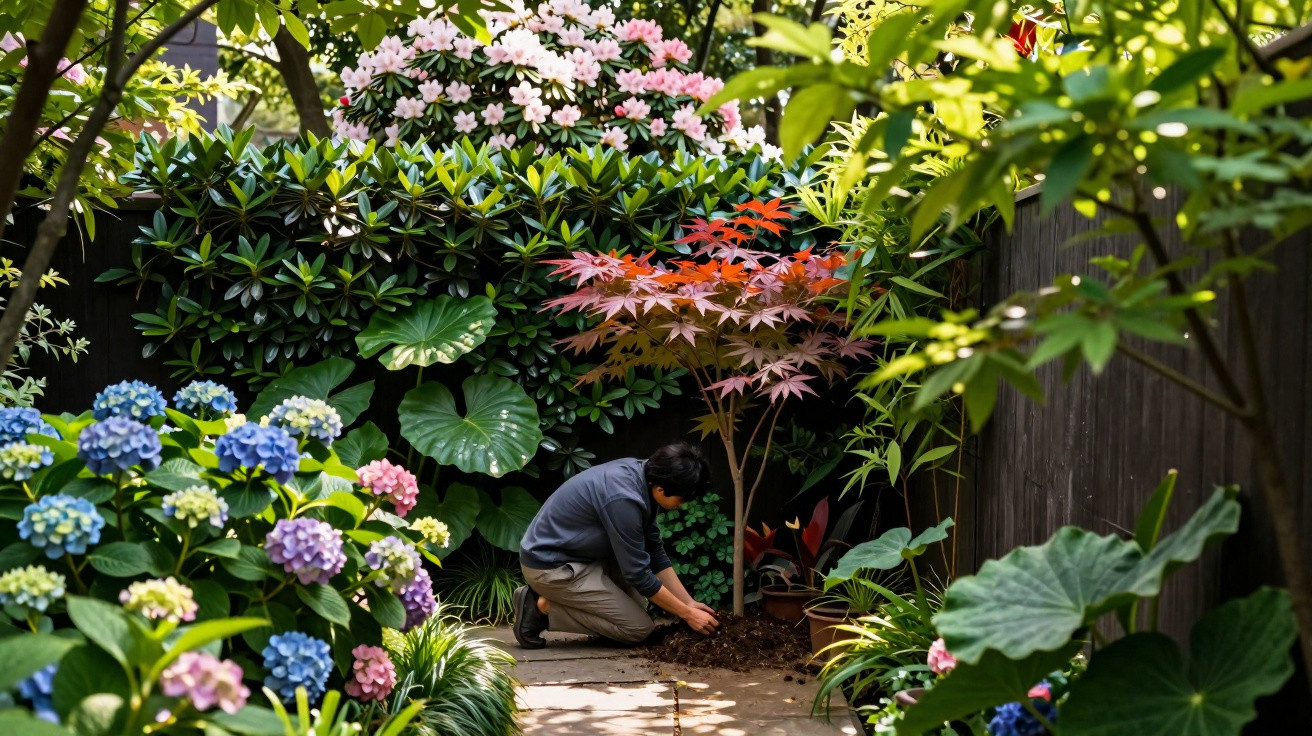
Many amateur gardeners mentally write off the darker parts of the garden: there is too little sun, it is too dry, it seems too difficult. Yet these are often the areas with the greatest potential. By choosing shade-tolerant shrubs carefully, you can turn an apparent problem into a cool, green comfort zone – perfect for hot summers and shielding you from neighbours’ curious eyes.
Why shade in the garden is an opportunity, not a problem
Beneath an old tree, on the north side of a house wall or between closely built-up plots, it is easy to see a space as a “dead corner”. It may appear that only moss or ivy will grow there, with nothing flowering or distinctive.
“Shaded areas provide summer cooling, protect the soil and create space for plants that would simply scorch in blazing sunshine.”
Before putting new shrubs into the ground, assess the site closely:
- Type of shade: light shade, partial shade or full shade
- Soil: more acidic or chalky, heavy or sandy
- Moisture: consistently damp, fresh or relatively dry
- Wind: a sheltered corner or an exposed, draughty position
Knowing these details makes it easier to choose well and prevents disappointing purchases at the garden centre. Many shade shrubs grow a little more slowly or flower less generously than their sun-loving counterparts, but they create a pleasant microclimate and extend the season during which the garden can be enjoyed.
The 5 shrubs that turn shade into a luxury corner
1. Cherry laurel: a living wall for privacy and structure
Cherry laurel is one of the traditional choices for dense, evergreen hedges. It copes easily with partial shade and can also manage relatively dark positions.
- Benefit: very fast growth and year-round privacy screening
- Position: sun to full shade, with soil that is not excessively wet
- Care: prune once or twice a year, preferably using hedge shears rather than a brushcutter
In a shady garden corner, cherry laurel provides the “backbone”: a green wall against which other plants stand out like a stage set. The important thing is to keep it under control in good time, otherwise the shrub will claim every available bit of space.
2. Hydrangeas: bursts of colour for dark garden rooms
Hydrangeas are the stars of partially shaded to shady borders. Their large, rounded or airy flower heads bring colour and volume to corners that might otherwise barely draw attention.
Different types can be used to suit the setting:
| Hydrangea type | Light requirement | Special feature |
|---|---|---|
| Mophead hydrangeas (Macrophylla) | Partial shade to shade | Classic, large flower balls; colour partly depends on the soil |
| Velvet hydrangeas (Aspera) | Shady to partially shaded | Highly decorative foliage and elegant, flat flowers |
| Oakleaf hydrangea (Quercifolia) | Partial shade, with morning sun preferred | Foliage colours in autumn and cone-shaped flower panicles |
| Panicle hydrangea (Paniculata) | Partial shade, needs some sun | Robust, long flowering period and tolerates pruning well |
Hydrangeas prefer humus-rich soil that stays evenly moist, and they dislike stagnant heat. In shade, their leaves remain fresh and the blooms often last longer. They also provide food for bees and butterflies.
3. Japanese maple: delicate colour for refined shady spots
The Japanese maple has an almost sculptural presence. Its finely cut foliage, graceful branches and frequently spectacular autumn colour give character even to the darkest courtyard corner.
It is particularly suited to:
- north-facing front gardens
- sheltered courtyards
- partially shaded patios
- large containers on a balcony or patio
This maple does not tolerate direct midday sun well, as its delicate leaves can quickly become scorched. In bright shade or dappled partial shade, however, its colouring is shown to particularly good effect. Loose, free-draining soil prevents waterlogging, which can damage its fine roots.
“Anyone with limited space can plant a Japanese maple in a large container and use it as a focal point in a shaded seating area.”
4. Fatsia japonica: tropical flair despite a north-facing aspect
Fatsia japonica, often sold as Japanese aralia, immediately lends a holiday feel to any dark corner with its large, glossy leaves. It resembles a tropical plant, yet it copes remarkably well with the UK climate, especially in mild regions or sheltered courtyards.
Typical locations include:
- shady urban courtyards
- north-facing patios with little direct sun
- sheltered house walls, for example beneath a porch canopy
The plant grows fairly quickly and gradually develops a strong, bushy framework. It may require some protection during particularly cold winters. One important point: its black autumn berries are considered poisonous to people and pets. Where there are young children or dogs that roam freely, it is better to place Fatsia where nobody can easily reach the fruit clusters.
5. Rhododendron: a spring firework display in acidic shade soil
Rhododendrons flower with an intensity in spring that is especially striking in darker areas. Their large clusters of blooms shine in pink, white, purple or red, while providing plentiful food for insects.
The crucial factor is the soil: rhododendrons need distinctly acidic, humus-rich earth. In many areas with chalky ground, it is worthwhile preparing a dedicated planting hole with specialist rhododendron compost.
- Position: partial shade, without harsh midday sunshine
- Soil: acidic, loose and consistently slightly moist
- Care: carefully snap off faded flower trusses so new buds develop more strongly
Combining several varieties with different flowering times brings a long spring display to the shady area, while also creating a valuable refuge for beneficial insects.
How to care for shade shrubs so they really thrive
Although these five shrubs tolerate shade, they will not turn into a dream backdrop without help. A few simple measures will keep them healthy for many years:
- Water thoroughly during the first two years: Hydrangeas in particular respond sensitively to drought.
- Apply a mulch layer of composted bark or leaves: This retains soil moisture and encourages soil life.
- Prune regularly but moderately: Do not allow cherry laurel, Fatsia or rhododendrons to become overgrown.
- Feed when needed: Hydrangeas and rhododendrons benefit from specialist fertiliser for ericaceous plants.
“Shade shrubs improve the local microclimate, trap dust, stabilise the soil and make even small urban gardens noticeably more pleasant.”
Many garden owners underestimate how much dense foliage can reduce the temperature. In July, sitting beneath hydrangeas, rhododendrons or a Japanese maple is often considerably more comfortable than sitting beside a sun-scorched rose bed.
How a problem border becomes a “green room”
Rather than planting individual specimens at random, a little planning is worthwhile. A proven arrangement for a shady border is:
- tall at the back: cherry laurel or rhododendrons as the backdrop
- the middle zone: hydrangeas and Fatsia for volume and structure
- low at the front: hostas, ferns, epimediums or woodland grasses as ground cover
- as a specimen plant: Japanese maple in the most prominent position
This creates a layered composition like a small woodland. Foliage, flowers, leaf sizes and colours provide contrasts that are especially compelling in shade. Mixing different shades of green and leaf textures is essential – the large, glossy leaves of Fatsia look even more dramatic beside the fine foliage of a Japanese maple.
Practical advice on risks, combinations and care mistakes
Some of the shrubs listed also come with challenges. Without pruning, cherry laurel can quickly become too large and crowd out other plants. Fatsia and cherry laurel are considered mildly poisonous, while Fatsia berries should clearly be avoided. Pet owners should choose positions that prevent repeated nibbling.
The effect becomes particularly interesting when these shrubs are paired with classic shade perennials. Hostas emphasise the tropical appearance of Fatsia, woodland grasses create a calm carpet beneath hydrangeas, and fern species reinforce the woodland-like impression in front of a rhododendron. The result is a coherent overall look that remains attractive throughout the year, including in winter through its structure and evergreen foliage.
One further point surprises many people: shaded areas often need less irrigation than sunny borders, but they can still dry out on hot days because large shrubs use substantial amounts of moisture. A quick finger test in the soil prevents stress – if it feels dry a few centimetres down, it is time to use the hose.
By taking these particular needs into account, you can gradually transform a seemingly hopeless shady spot into a green retreat that becomes the most sought-after place in the entire garden at the height of summer.



Comments
No comments yet. Be the first to comment!
Leave a Comment