
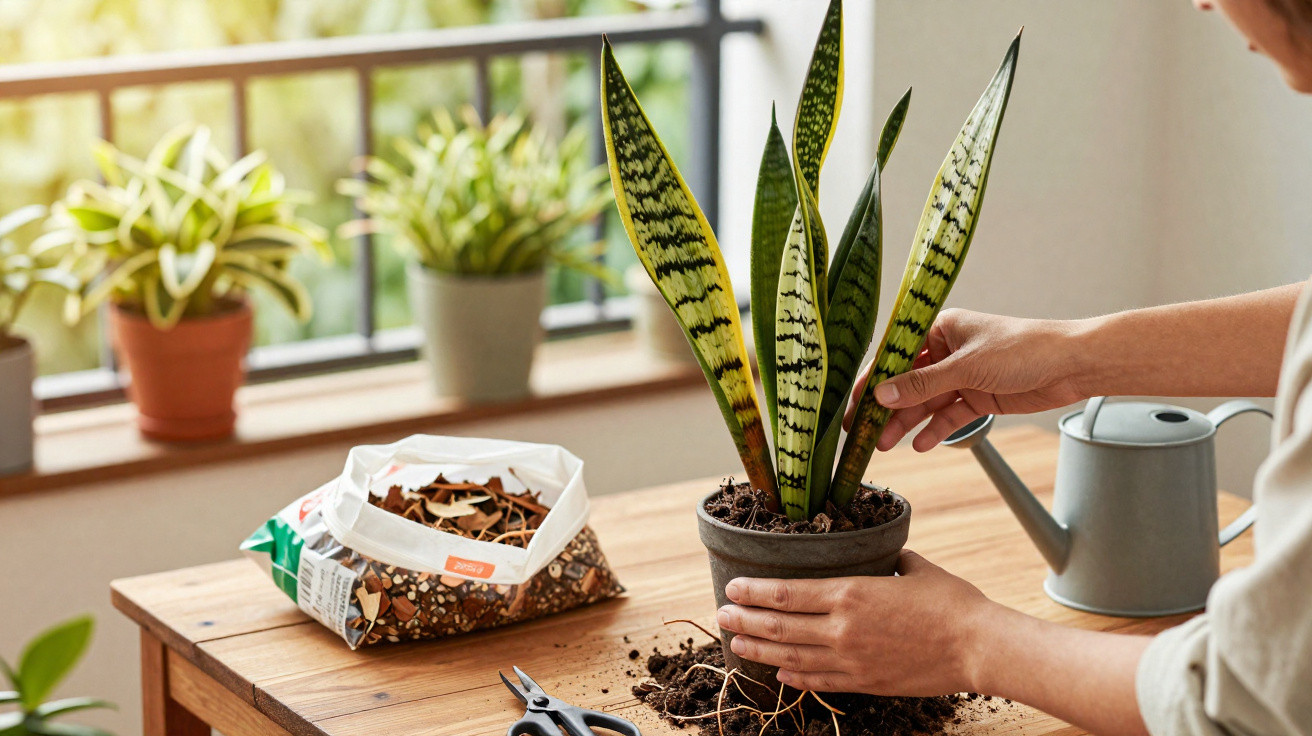
Many people bring a snake plant (Sansevieria) into their living room because it is regarded as easy to care for and almost indestructible. That is precisely why it comes as a surprise when this normally tough houseplant visibly starts to decline. If you recognise the early warnings correctly, you can usually still save it – but react too late and you may eventually be left with a soft, rotten cluster of leaves in the pot.
Early warning signs: what weakened snake plant leaves look like
The quickest way to assess a snake plant is to inspect its leaves. A healthy specimen grows upright, with firm leaves in rich green and clearly defined markings. Even slight changes can reveal that something is wrong.
Yellow leaves – the classic cry for help
On a snake plant, yellowing leaves are nearly always a sign of overwatering. This is especially obvious when it is not merely one older outer leaf turning yellow, but several leaves throughout the whole clump.
- Yellowing often starts low down at the base.
- The colour gradually moves upwards.
- Leaves feel soft or spongy.
- There may be a faint rotten smell.
“When yellow leaves are soft, mushy and foul-smelling at the same time, root rot is usually already present – so you need to act quickly.”
An individual yellow outer leaf may simply be showing its age. It becomes a concern when younger leaves in the centre are affected too, or when a complete ring of yellow leaves forms around the plant.
Brown tips, edges and patches
Brown colouring does not automatically mean “too little water”. Where the discolouration appears can tell you a great deal:
- Brown leaf tips: often caused by irregular watering, dry central-heating air or mineral-rich tap water.
- Brown leaf edges: stress from major fluctuations in water, temperature or humidity.
- Large brown patches: possible causes include fungal infection, sun scorch or pest damage.
If small brown spots appear, spread, or look sunken, inspect the plant more closely for fungal diseases or spider mites and similar pests.
Wrinkled, sunken leaves
Crinkled leaves that appear slightly folded point to a lack of water. Unlike many other houseplants, a snake plant copes fairly well with dry spells, but eventually it will begin using up its reserves.
Typical signs of severe dehydration include:
- Leaves lose their firmness and lean to one side.
- The surface looks wrinkled, as if slightly dented.
- Leaves are not mushy, but they are flexible and soft.
Once the leaf base feels dry and hollow, the damage is already quite advanced. The plant may still recover its stability, although individual leaves often remain permanently misshapen.
A soft leaf base – the critical warning
It is particularly serious when the snake plant becomes soft, slimy or grey-brown where the leaf emerges from the soil. This is a clear indication of severe root rot.
“A softening base is the clearest signal that the roots are effectively drowning in constantly wet soil – only a drastic rescue attempt can help now.”
At this stage, an entire leaf may sometimes detach from the rootstock with only a gentle pull. At the latest, this is the point at which you should remove the plant from its pot and inspect it.
What is happening in the pot: assessing roots and soil correctly
Whether a snake plant survives is generally decided out of sight, around its roots. A brief check is worthwhile as soon as obvious damage is visible above the soil.
How to identify healthy and damaged roots
Carefully lift the plant from its pot and shake away any loose soil. You will then be able to see the condition of the root system.
- Healthy roots: white to pale beige, firm, with a pleasant earthy smell.
- Unhealthy roots: dark brown to black, slimy or mushy, with a rotten smell.
- Dried-out roots: pale, hollow, brittle and sometimes completely shrivelled.
- Very little root mass: suspicious if almost only rhizomes, with no fine roots, are visible.
“The more dark, mushy roots there are in the pot, the further the rot has progressed – the snake plant then needs a drastic trim and fresh soil.”
The right soil: why standard potting compost often causes harm
Snake plants are succulent houseplants and prefer an airy, free-draining growing medium. Ordinary potting compost holds moisture for a long time and becomes compacted over time – neither is suitable for this species.
For a stable plant, the substrate should:
- dry out quickly;
- allow plenty of air to reach the roots;
- not clump together or become compacted.
Suitable options include mixes of cactus compost, perlite, coarse sand or pumice. If watering remains on the surface of the pot for several minutes, the substrate is too dense or has already broken down considerably.
Spotting the difference: a thriving vs dying snake plant
| Feature | Thriving snake plant | Dying snake plant |
|---|---|---|
| Leaf firmness | taut, upright, stable | mushy, badly bent or severely wrinkled |
| Colour | rich green with clear markings | yellowish, brown patches, faded patterns |
| Roots | pale, firm, odourless | dark, slimy or completely dried out |
| Growth | new leaves appear over the course of the year | no new leaves for months |
| Soil | dries out between watering intervals | permanently wet or constantly bone-dry |
Rescue plan: practical steps to take
Once it is clear that your snake plant is deteriorating, a structured approach matters. Panicked watering or indiscriminate fertilising will cause more damage than good.
Stopping overwatering and root rot
An overly wet pot is the most common reason for a dying snake plant. Acting promptly gives you a good chance of saving it.
- Take the plant out of its pot and carefully loosen the soil.
- Remove all dark, soft or foul-smelling roots with clean, sharp scissors.
- Cut back mushy leaf bases until only firm tissue remains.
- Leave the plant to dry in the air for several hours.
- Replant it in fresh, highly free-draining substrate, using a pot with drainage holes.
- Water only lightly, then wait until the soil has dried out completely.
If root damage is extreme, sometimes only a few healthy pieces of leaf remain. You can use these as cuttings to grow new plants from what is left.
Gently restoring an underwatered snake plant
A snake plant tolerates too little water far better than too much. Even so, after a prolonged dry spell it needs a gentle restart.
- Water the pot thoroughly and remove excess water from the saucer.
- Keep it slightly moist for the next few days, but never soaking wet.
- Avoid harsh direct sunlight during this period to reduce stress.
Older leaves that are severely misshapen will usually not become attractive again. What matters is whether new, firm leaves emerge from the centre. This indicates that the roots are recovering.
Location, light and temperature: underestimated sources of stress
Focusing only on the watering can makes it easy to overlook the effects of the surrounding environment and climate. Snake plants are considered tolerant of low light, yet their position still makes a major difference.
The right level of light for a snake plant
A snake plant can survive in corners with little daylight, but it will grow much more slowly there and is more likely to become soft. A bright position without direct midday sun is ideal, such as near a north- or east-facing window.
- Position too dark: longer, weaker leaves and hardly any new growth.
- Too much direct sun: faded, scorched patches, especially in summer.
Temperature and draughts
The plant originates from relatively warm regions. Constant draughts, cold windowsills in winter and stagnant heat above a radiator all put it under strain.
As a guide, normal living-room temperatures are comfortable for it. It can cope with brief rises or drops in temperature, but prolonged cold periods combined with wet soil quickly lead to rot.
Watering, fertilising and repotting: small care details with major effects
Many problems arise from well-meant care. Treating a snake plant like a tropical foliage plant will weaken it in the long run.
How often it really needs watering
Rather than following a calendar, use a simple finger test: water only when the upper layer of soil is completely dry. In winter, particularly in cooler locations, it can often go several weeks without water.
Any water left standing in the saucer should be poured away after a few minutes. Constantly wet roots are toxic to a snake plant.
Fertiliser? Use it sparingly
Snake plants grow relatively slowly and need few nutrients. A lightly dosed succulent fertiliser during the growing season is entirely sufficient. Too much fertiliser can burn the roots and discolour the leaves.
When a new pot makes sense
If the roots are extremely crowded in the pot or are already creeping out at the top, it is time to repot. A slightly larger pot is enough; a huge container can easily cause waterlogging because the larger volume of soil remains wet for longer.
Why snake plants develop problems despite their “indestructible” reputation
The myth of an unbreakable plant often leads people in exactly the wrong direction: some ignore warning signs for months, while others keep adding water out of guilt. The truth lies somewhere in between. Snake plants favour clear, simple routines: little water, good light, free-draining soil and infrequent moves.
Anyone who has consciously noticed and interpreted the usual symptoms – from slight yellowing and wrinkled leaves to a mushy base – will recognise future problems much earlier. A seemingly dying specimen can often still produce a robust new clump that lasts a long time, provided the warning signs you have learned are taken seriously.

Comments
No comments yet. Be the first to comment!
Leave a Comment