
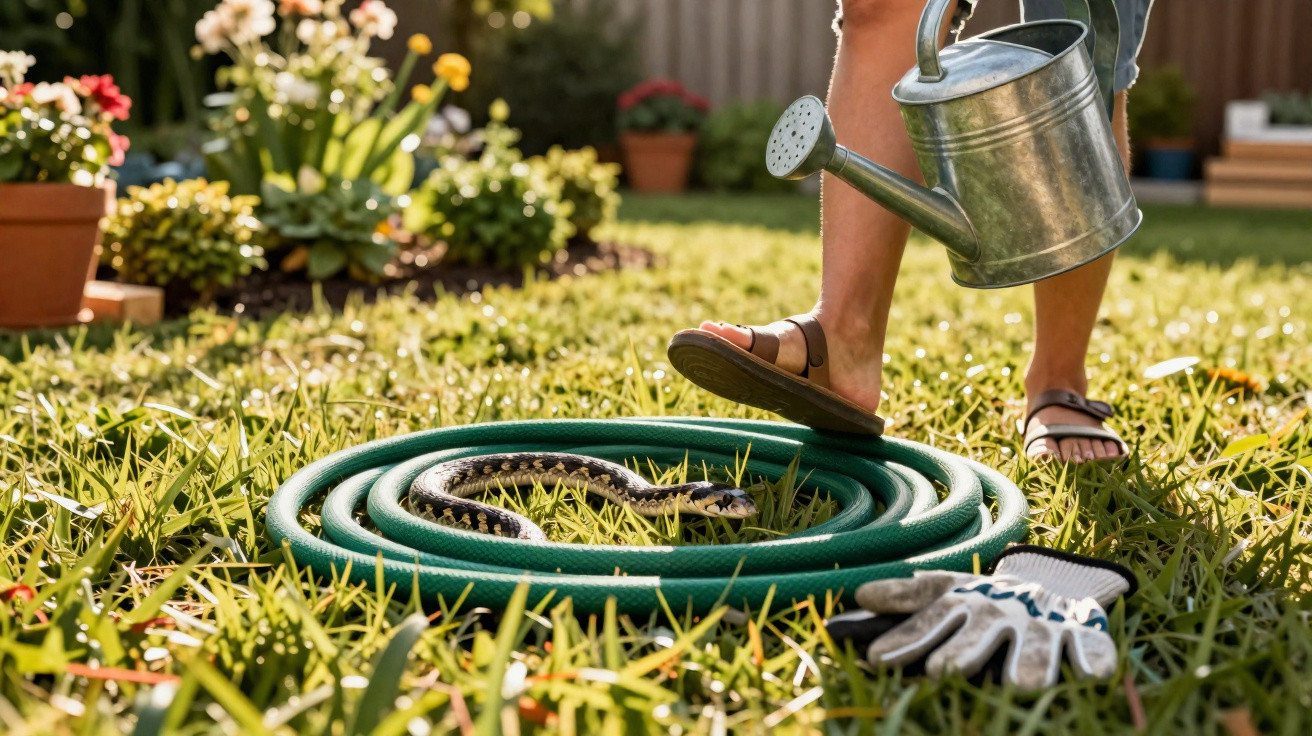
With the first warm days of the year, many amateur gardeners take the strimmer, wheelbarrow and watering equipment out of the shed. What few people realise is that one seemingly harmless item can become a real magnet for snakes. If you are unlucky, in spring you may reach not only for a tool, but straight into a reptile hiding place.
Spring marks snake season in the garden
From around March, many native snake species emerge from hibernation. They need warmth as quickly as possible to get their metabolism working again. To do this, they deliberately seek out places that heat up in the sun while also offering protection from disturbance.
Common hiding places in a garden include:
- dense hedges or shrubs
- piles of wood and leaves
- stone walls and dry-stone walls
- long grass and unmown corners
In many European countries, including German-speaking regions, encounters with snakes are becoming more frequent. Hot summers and changing habitats are bringing the animals closer to residential areas. Most reported bites involve venomous snakes such as vipers, although serious cases remain relatively uncommon.
“Snakes are not looking for a fight; above all, they want one thing: a warm, safe place – and they find one surprisingly often right in the middle of the garden.”
The overlooked risk: the garden hose left on the ground
The real garden problem is a familiar watering item: a garden hose left coiled up or loosely lying on the ground. This is an everyday sight for many people, but for snakes it is an invitation.
Why garden hoses attract snakes
A hose made from plastic or rubber warms up quickly in sunlight. The material holds heat considerably longer than bare soil or grass. If water remains inside after watering, it also creates a slightly damp, warm microclimate – from a snake’s perspective, an excellent place to rest.
When a hose is coiled on the ground, it forms narrow cavities and gaps. This combination of:
- warmth
- moisture
- darkness
- and protection from view
makes it an ideal shelter.
“A harmless-looking hose lying beside a flowerbed can turn into a comfortable snake home within a few hours.”
Snakes are ectothermic animals, meaning that they depend heavily on the outside temperature. They must regulate their body temperature by choosing suitable places to stay. That is why they take every opportunity to recharge on warm, sheltered surfaces – including garden equipment.
How to protect yourself while watering
Before picking up the hose in spring or summer, it is worth carrying out a quick safety check:
- Look closely from a distance of one to two metres: is the hose completely still, or does part of it look suspiciously “alive”?
- Use a long stick or broom handle to move the end of the hose before lifting it by hand.
- When working close to the ground, wear sturdy shoes rather than sandals.
It takes only a few seconds, but it can prevent direct contact with a snake.
Other garden objects that strongly attract snakes
Alongside the hose, many other objects in the garden provide excellent hiding places. Flat, dark materials lying directly on the ground are particularly critical.
Common snake hiding places around the home
The most frequent “snake hotspots” include:
- dark tarpaulins covering wood or soil
- metal sheets and old pieces of corrugated metal
- slabs or leftover fibre-cement pieces
- roof tiles and paving slabs left lying around
- larger sheets of plastic spread across the ground
These materials retain the sun’s warmth while creating shaded areas underneath. The result is a sheltered space with a comfortable climate, where snakes can hide and warm themselves during the day.
“Anything flat, dark and lying directly on the ground has the potential to become a snake lodge.”
How to reduce possible hiding places in the garden
A few straightforward steps can greatly lower the chance of snakes settling permanently in your garden:
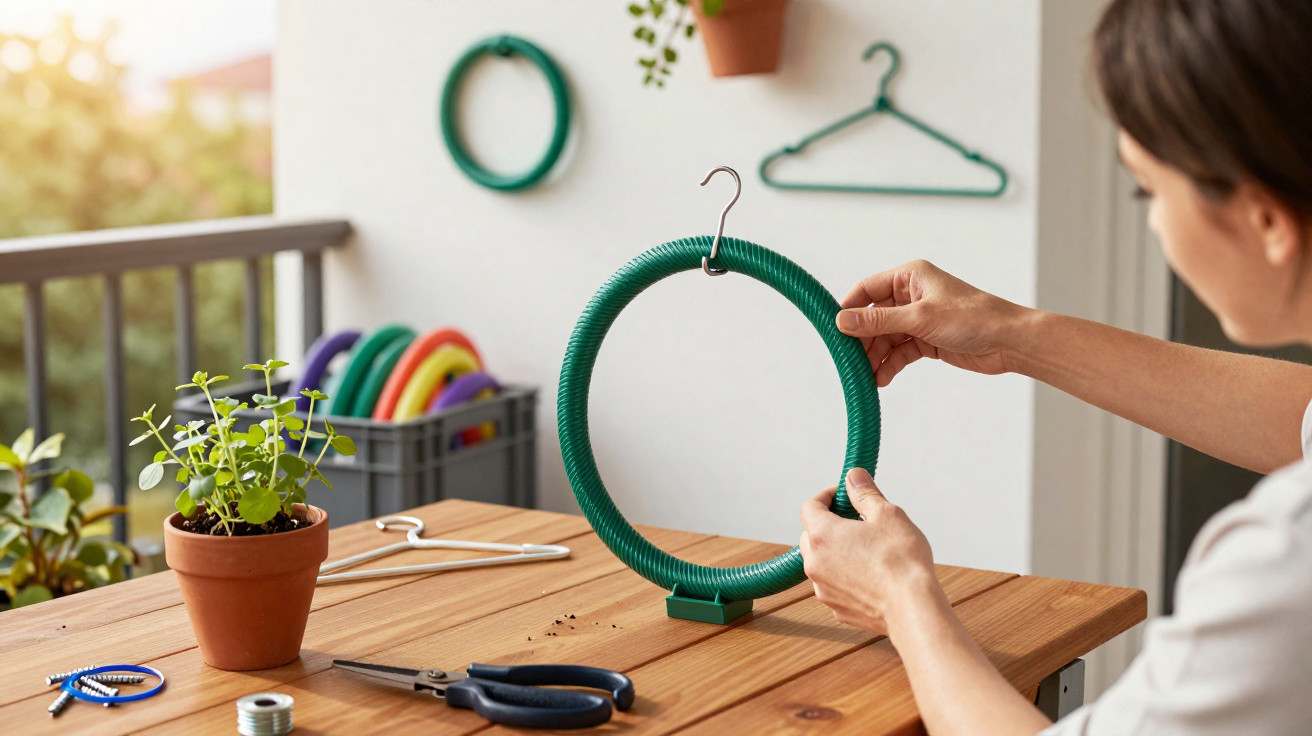
- Hang hoses on a hose reel or against a wall after use.
- Store tarpaulins and plastic sheeting raised off the ground, for example on a pallet.
- Lean metal sheets and fibre-cement offcuts upright instead of laying them flat.
- Reduce or clearly organise piles of stones, wood or building rubble rather than allowing them to grow unchecked.
- Regularly cut back long grass near paths, seating areas and patio edges.
Keeping the garden generally tidy removes a large proportion of potential snake shelters without requiring every natural corner to be destroyed.
How dangerous are snakes in the home garden really?
Many people react with obvious alarm at the very word “snake”. In Central Europe, there is a health risk from a bite, but it is limited. In most cases, snakes bite only when they feel threatened or their escape route has been blocked.
Following a few basic rules greatly reduces the likelihood of a bite:
- Never reach blindly into dense bushes, beneath tarpaulins or into woodpiles.
- Wear sturdy shoes and, ideally, long trousers when gardening.
- Tell children not to touch unfamiliar animals.
If a bite does occur despite every precaution, remain calm, keep the affected area as still as possible and seek medical help. With medical treatment, most people affected make a full recovery.
Why snakes can also be useful
Although an encounter may feel unpleasant, snakes play an important role in the garden. They mainly eat mice and rats, and sometimes slugs and other small animals. Trying to remove all snakes from the surrounding area often indirectly encourages rodent numbers to rise.
The most practical approach is usually somewhere in the middle: reduce hiding places close to the patio, play area and seating space, while allowing some nature in a more secluded part of the property. There, snakes can hunt without coming too close to people.
Practical additions for a safer garden
Anyone wishing to make their garden less appealing to snakes can take this into account when planning it. Gravel strips next to the house, paths with clear sightlines and well-defined beds make the area easier for people to see and less attractive to snakes.
A particular routine is helpful too: take a quick check in the evening to ensure hoses, tarpaulins and tools have genuinely been put away. This prevents a “heat store” from being created for the night in the first place. Especially during warm spells, this one habit can make all the difference.
“A tidy garden with deliberately positioned tools reduces the risk from snakes – and makes working outdoors far more relaxing.”
The key message is simple: not panic, but caution. Anyone who knows which objects attract snakes will automatically store watering and garden equipment differently, preventing many unwelcome encounters before they begin.



Comments
No comments yet. Be the first to comment!
Leave a Comment