

The morning after rain has its own soundtrack. Drops still run from the leaves, a garden gate clatters somewhere, and you look at the bed you planted so lovingly in spring. Roses, perennials, perhaps a few tomato plants. And weaving through them is a green uprising of weeds that seems to have appeared overnight. Again.
We all know that moment when the pleasure of gardening suddenly disappears. Your knees ache from weeding, your fingernails are black, and three weeks later everything is overgrown again. You begin quietly resenting the very thing you love.
This is exactly when a simple trick emerges, one neighbours whisper about as if it were a grandmother’s secret recipe: mulch, applied thickly, once a year. And the weeds fall silent. Almost entirely.
Why a simple mulch blanket can transform entire beds
When people first see a freshly mulched bed, they often think: “Oh, just a bit of bark, fair enough.” They have no idea what will happen beneath that brown covering over the coming weeks. The air seems calmer, the soil below stays dark and moist, and the familiar green intruders simply fail to appear.
Where new shoots once burst through every few days, the surface remains quiet and almost clear. The plants you deliberately chose stand out more sharply and somehow seem more important. It is as though somebody has turned down the noise in the garden.
Mulch is not a decorative feature; it acts more like a protective shield. It deprives weeds of light, moderates temperature changes and retains water in the soil. It also gives you something gardens often lack: time.
A few years ago, an amateur gardener from a terraced housing estate near Cologne told me her story. She worked full-time, had two young children and a 10-square-metre flower bed that mainly cost her one thing: her nerves. Every spare minute went into pulling weeds, yet by July the garden looked as though nobody had ever tended it.
She was close to covering everything with gravel when the elderly neighbour next door advised her: “Cover everything with mulch, at least five centimetres deep. Do it properly, once.” One Saturday afternoon, he helped her lay newspaper between the perennials, spread bark mulch on top and tidy the edges. The job took two hours and seemed entirely unremarkable.
The following summer, she only needed to make three quick rounds and pull out a few isolated blades. That was all. No more marathon weeding sessions, no more despair at the greenery. She laughed as she said: “The mulch gave me my garden back.” It sounded dramatic, perhaps, but it was remarkably close to the truth.
How can such a straightforward layer make such a difference? Fundamentally, the mulch trick follows simple logic: weed seeds need light, contact with the soil surface and, often, open spaces between plants to establish themselves. Mulch intervenes at precisely that point. It covers the surface, blocks the light and forms a physical barrier. Seeds land on top of the mulch, dry out or germinate only weakly.
At the same time, the soil underneath stays cooler and retains moisture more evenly, strengthening the roots of the plants you actually want to grow. Healthy, living soil with strong root systems generally gives weeds fewer opportunities. There is another benefit too: organic mulch gradually breaks down, feeding soil organisms and improving the soil structure over time.
Let us be honest: nobody enjoys kneeling between beds for hours every week. The mulch trick will not remove every task, but it shifts the balance firmly in your favour. Suddenly, gardening feels less like a battle.
How to use the mulch trick that suppresses weeds for almost a year
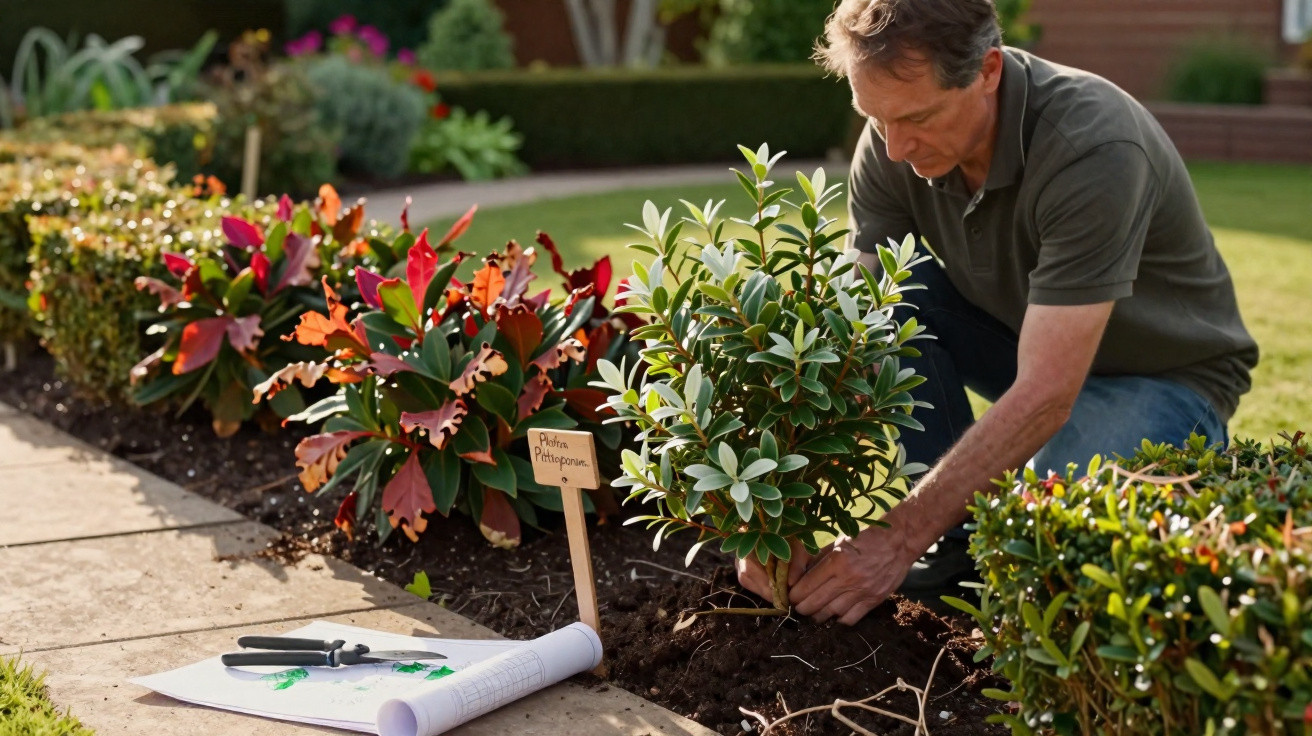
The effect starts before the first piece of mulch is laid. Begin by thoroughly clearing the bed: remove existing weeds with their roots, ideally after rain when the soil is soft. Next, lightly loosen the surface without digging deeply. The less you disturb the soil, the fewer old weed seeds you bring up to the surface.
For the second step, lay a layer of cardboard or several sheets of newspaper between the established plants. Let the edges overlap by a few centimetres so that no gaps allow light through. This layer is the true barrier against weeds emerging from below. Apply the mulch immediately afterwards: at least five, preferably seven centimetres deep, spread evenly but not pressed directly against plant stems.
You can use bark mulch, woodchip, shredded branches or a mixture of leaves and straw. The trick works most reliably when you apply it thoroughly once and ensure the layer is genuinely dense. A properly laid mulch blanket will often last for an entire season, sometimes longer.
Many gardeners do not fail because of the mulch itself, but through small oversights that are very understandable. You are tired, it is getting dark, the mulch layer becomes thinner in places because the bag is empty – and those are exactly the spots where weeds find their way back. Another classic mistake is mulching too early in the year over a bed that still contains plenty of perennial root weeds, such as couch grass or ground elder. They can force their way through even thick layers with surprising strength.
The choice of material matters as well. Fresh bark mulch can temporarily take nitrogen from the soil as it decomposes, which may slow sensitive plants down. If you are growing particularly hungry perennials or vegetables, partly decomposed compost mulch is a better option, or you can combine different materials. Yes, the mulch trick needs a little preparation – but it saves hours of frustration later.
It is also important to set realistic expectations: a few individual blades will still appear, carried in by the wind or brought in by birds. The difference is the effort involved. Instead of a sea of green, you will have only a few intruders that are easy to pull out.
“Since I started mulching, I do not weed any more – I only inspect,” an older allotment holder told me. “It is a completely different kind of peace of mind.”
Anyone wanting to make the mulch trick work can follow a few simple guidelines:
- Clear the bed thoroughly of perennial root weeds before mulching
- Add a layer of cardboard or newspaper as a light barrier
- Apply a consistent mulch layer of at least 5–7 cm
- Take the time to finish edges and spaces around plants neatly
- Check once or twice a year and top up any thin areas
What a quiet, almost weed-free bed does for us
A mulched garden affects us differently. It feels calmer, more focused and almost tidy. The plants you selected with intention move further into the foreground. The gaps disappear without looking filled in. Instead of seeing “work in progress” everywhere, you see a scene that holds together.
In many conversations with amateur gardeners, a similar sentence comes up: “Since I started mulching, I enjoy walking through my garden again.” It may sound ordinary, but it marks a small psychological turning point. The constant feeling that you “really ought to weed again” loses its hold. Suddenly, beds are allowed simply to exist without you constantly chasing after them.
The mulch trick is not magic, but rather a quiet agreement between you, the soil and time. You invest a few focused hours and receive months of considerably less work in return. Perhaps something else happens along the way: you start looking more closely. At the texture of the bark, the moisture below the surface and the earthworms gratefully working in the dark. A bed like this invites you to pass the idea on – to neighbours, friends and anyone who is overwhelmed by weeds every year.
| Key point | Detail | Benefit for the reader |
|---|---|---|
| Mulch as a weed barrier | Light deprivation, a physical barrier and fewer viable seeds | Less weeding, more time for the enjoyable parts of gardening |
| Cardboard/newspaper beneath mulch | An additional layer against weed roots coming up from deeper down | Longer-lasting effect, sometimes almost a year of relief from heavy growth |
| Organic material | Bark mulch, woodchip, leaves and straw break down slowly | Improved soil, more soil life and better water retention |
FAQ:
- Will no weeds really grow for an entire year with mulch? No bed will be completely weed-free, but growth is drastically reduced. With a thick, neatly applied mulch layer, you will often have only isolated plants that are easy to remove for a whole season.
- Which mulch material is best for preventing weeds? Bark mulch and coarse woodchip suppress weeds particularly well because they are dense and block light. They are ideal for ornamental beds; in vegetable gardens, straw, thin layers of grass clippings or mixtures of leaves also work well.
- Can mulch harm my plants? Very fresh bark mulch can temporarily bind nutrients if it is worked directly into the soil. Problems are rare if it simply sits on the surface. Make sure not to press mulch directly against trunks and delicate shoots, so that nothing rots.
- When is the best time to mulch? Late spring is ideal, once the soil has warmed a little and most persistent perennial root weeds have been removed. Autumn is also a good time for mulching, protecting the soil through winter and leaving less work for spring.
- Can I simply mulch over weeds that are already there? Shallow-rooted young weeds often disappear beneath a thick layer. Deep-rooted species such as couch grass or ground elder should be removed as thoroughly as possible first, otherwise they will fight through the mulch and quickly return.


Comments
No comments yet. Be the first to comment!
Leave a Comment