
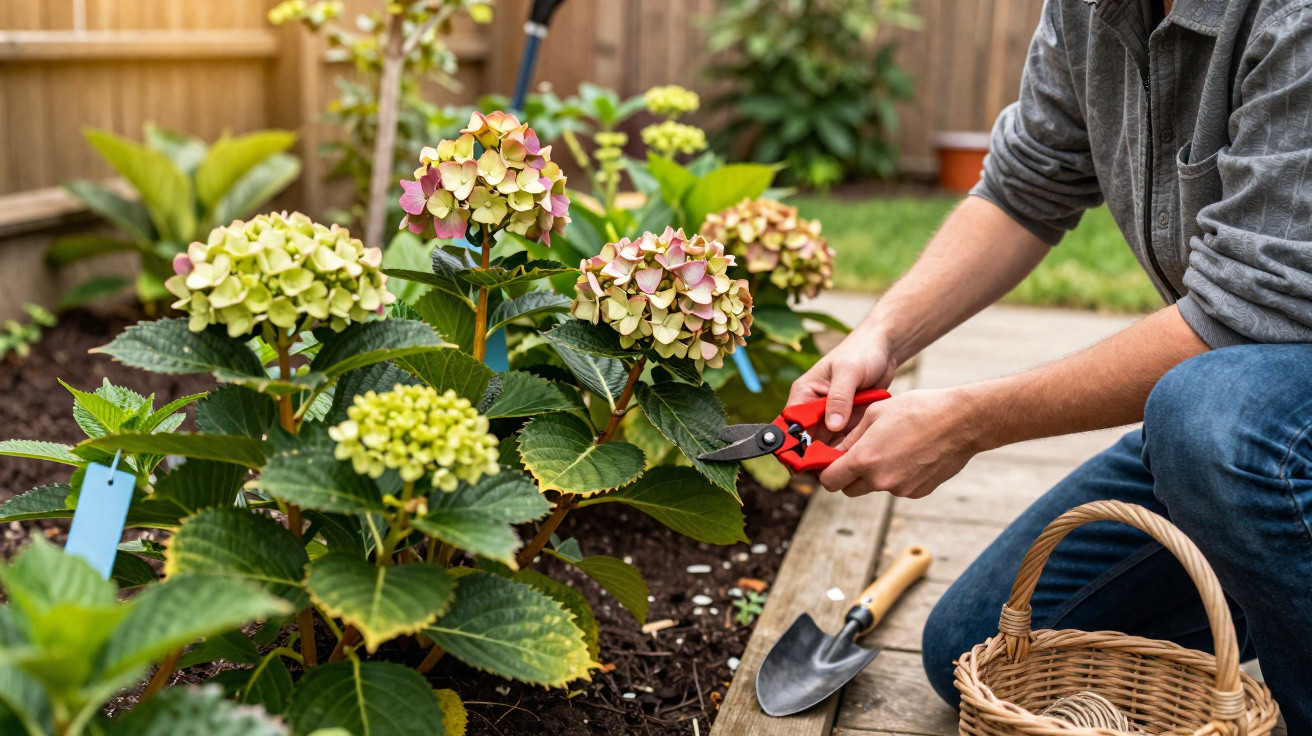
Many hydrangea owners confidently reach for the secateurs in late winter – and unknowingly destroy the entire summer display.
Anyone wanting tidy borders in February or March will often cut back every brown stem without hesitation. For some hydrangeas, this causes no harm; for others, it is disastrous. That distinction determines whether the shrub produces abundant flowers in summer or none at all.
Why pruning at the wrong time leaves your hydrangeas without flowers
Hydrangeas are among the garden’s most popular flowering shrubs, yet they are also frequently pruned in the wrong place and at the wrong time.
The crucial point is that there are two entirely different groups:
- Varieties flowering on the current year’s wood
- Varieties flowering on the previous year’s wood
Anyone who does not know which group their hydrangea belongs to could lose the entire following season’s flowers with one winter pruning session.
On many varieties, the flower buds have already formed by late summer of the previous year, beneath the dried flower heads. If these shoots are cut down close to ground level in late winter, or exposed to frost through heavy pruning, the shrubs will remain disappointingly green in summer – with no flowers.
Before pruning: does the hydrangea flower on new or old wood?
A quick look at its growth habit and flowers will usually give you a good idea of which group your hydrangea belongs to. If you are unsure, it is better to proceed cautiously and thin it out only very lightly.
How to identify hydrangeas that flower on the current year’s wood
Only two species commonly grown in home gardens belong to this straightforward group:
- Panicle hydrangea (Hydrangea paniculata)
- Smooth hydrangea / wild hydrangea (Hydrangea arborescens, for example ‘Annabelle’)
Both grow vigorously in spring and produce flowers only on their fresh shoots. Pruning in late winter actually encourages new, strong growth rather than destroying buds.
How to identify hydrangeas that flower on old wood
Far more commonly, gardens contain hydrangeas that form buds on the previous year’s shoots. These chiefly include:
- Mophead hydrangeas (Hydrangea macrophylla) with rounded or flat flower heads
- Mountain hydrangeas, which have a more compact habit
- Oakleaf hydrangeas (Hydrangea quercifolia)
- Climbing hydrangeas (Hydrangea petiolaris)
- Repeat-flowering, so-called remontant varieties
For these types, the developing flowers are already positioned beneath the previous year’s dried flower heads. Severe winter pruning simply removes the basis for flowering in the coming season.
These 2 hydrangeas can be cut back hard in late winter
Panicle hydrangea: perfect for confident pruning
The panicle hydrangea bears long, conical flower panicles, usually white to cream at first and often lightly tinged with pink later. It has a strongly upright form, tolerates more sun than traditional mophead hydrangeas, and is well suited to sunny beds or front gardens.
Because it flowers on the current year’s wood, hard pruning in late winter is not merely acceptable but beneficial. Proceed as follows:
- Timing: from late February to mid-March, before the buds begin to grow
- Cut all faded panicles just above a strong pair of buds
- Shorten shoots substantially overall, to around one-third to one-half of the previous year’s height
- Remove weak, inward-growing or crossing branches completely
Hard pruning produces larger, more striking flower panicles – and a stronger, better-structured crown.
Smooth hydrangea ‘Annabelle’ & Co.: pruning for sturdier shoots
The smooth hydrangea, including varieties such as ‘Annabelle’, develops large, spherical flower heads that can easily flop over in rain. It too blooms on new wood and copes with hard pruning without difficulty.
For successful late-winter pruning:
- Timing: late winter to very early spring
- Cut the shrub back to around 30–50 centimetres above ground level
- Where possible, make cuts above outward-facing buds
- Remove very thin or damaged shoots entirely
This pruning results in fewer but sturdier stems. Although the flowers are often slightly smaller, they are much less likely to collapse – a clear advantage in a herbaceous border.
These 5 hydrangeas should be left alone in late winter
For every hydrangea that flowers on old wood, the late-winter rule is simple: keep your hands off drastic pruning.
Mophead and mountain hydrangeas: classic plants with vulnerable buds
The familiar mophead hydrangea, with rounded flower balls or flat lacecap blooms, is a standard feature in many gardens. Its close relatives, the mountain hydrangeas, also carry their flower buds from the previous year.
What you can do in late winter:
- Remove ONLY the dried flower heads, cutting directly above the first healthy pair of buds
- Cut out dead, frost-damaged or clearly diseased wood
- Do not cut deeply into old wood or reduce the shrubs heavily
The best time for light shaping or rejuvenation pruning is immediately after flowering in summer, and no later than the end of July. After that, the plants begin forming their new flower buds for the following year.
Oakleaf hydrangea: delicate flowers and decorative foliage
The oakleaf hydrangea stands out for its large, deeply lobed leaves and elongated flower panicles. It blooms on shoots that grew in the previous year. Heavy late-winter pruning would therefore sacrifice many flower buds.
Only gentle thinning is suitable: remove dead or inward-growing branches, and shorten long shoots only minimally.
Climbing hydrangea: floral abundance on walls
Climbing hydrangeas attach themselves to walls and fences with aerial roots, often reaching several metres in height. They produce flowers on older shoots. Severe pruning early in the year removes many of the points from which the next display would develop.
In late winter, care should be limited to:
- Removing dead or damaged climbing stems
- Lightly cutting back areas where the plant is growing into gutters, window frames or a neighbour’s garden
Remontant varieties: several flowering flushes, sensitive pruning
Remontant hydrangeas flower several times a year. They use both shoots from the previous year and fresh growth from the current season. As a result, they are particularly sensitive to poor timing and excessive pruning.
By late winter, remove only dried flower heads and clearly dead wood. More extensive pruning, if required, belongs after the first flowering flush.
If you do not know the variety: the safest approach
In older gardens especially, it is often no longer clear which hydrangea species was originally planted. In that situation, one simple rule is the safest option:
When in doubt, treat the hydrangea as a variety that flowers on old wood – in other words, clean it up very carefully and do not cut it back hard.
Watch the plant for one season to see when and where its flowers develop. If blooms appear mainly on long, already woody shoots from the previous year, the shrub belongs to the old-wood group. If flowers form only on fresh, soft new growth, you have one of the pruning-tolerant types.
Practical tips: frost protection, tools and common mistakes
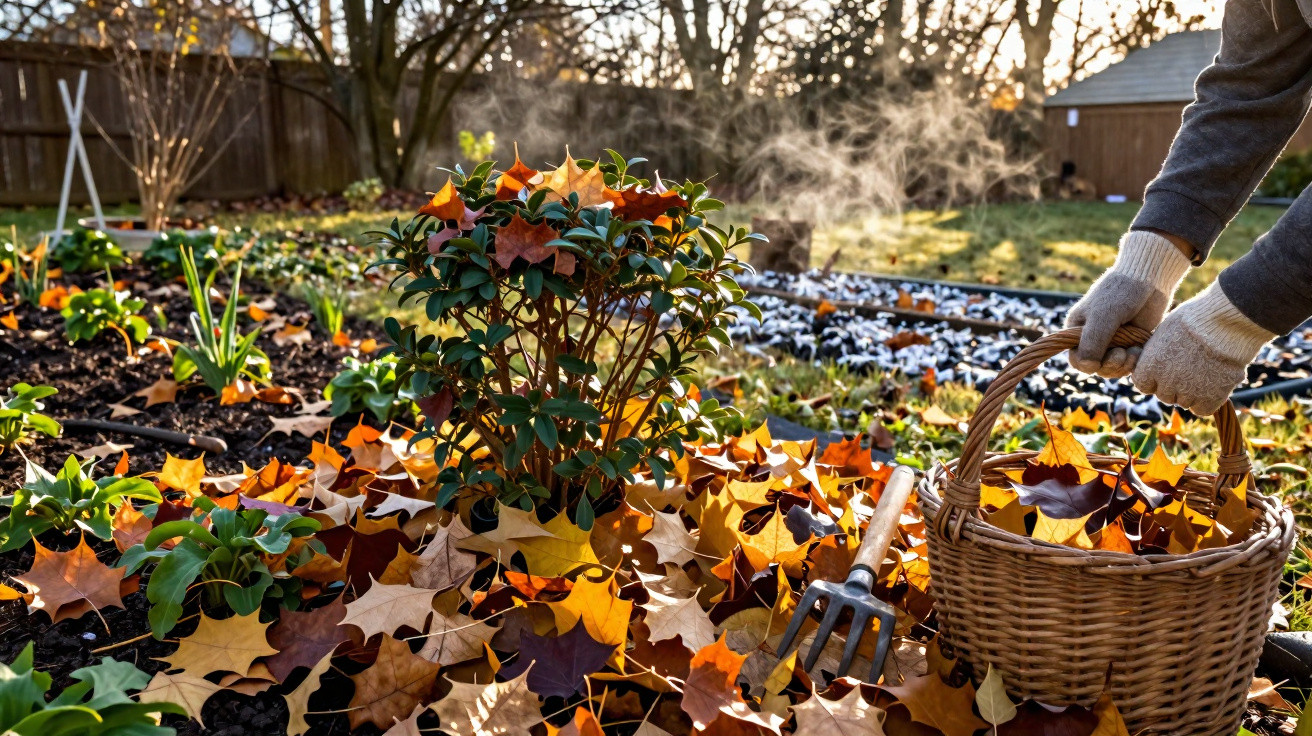
Extra winter protection is worthwhile, particularly for sensitive varieties. A loose mulch of leaves, bark compost or straw around the root area protects the base of the plant from severe frost. The dried flower heads act like small hats, sheltering the buds beneath them – another reason not to remove them too early.
Clean cuts require sharp, sanitised tools. Blunt secateurs crush stems, making it easier for germs to enter. Many amateur gardeners briefly clean their secateurs with alcohol before pruning sensitive ornamental shrubs.
Typical mistakes include:
- Treating every hydrangea in the bed in exactly the same way
- Hard pruning mophead hydrangeas in January
- Removing all old flower heads in autumn
- Not applying mulch even though the variety is considered frost-sensitive
Taking a little time to inspect your plants more closely will save a great deal of disappointment in summer. An extra two or three minutes of thought before pruning can often decide between weeks of flowers and a green but sad-looking hydrangea shrub.
Comments
No comments yet. Be the first to comment!
Leave a Comment