
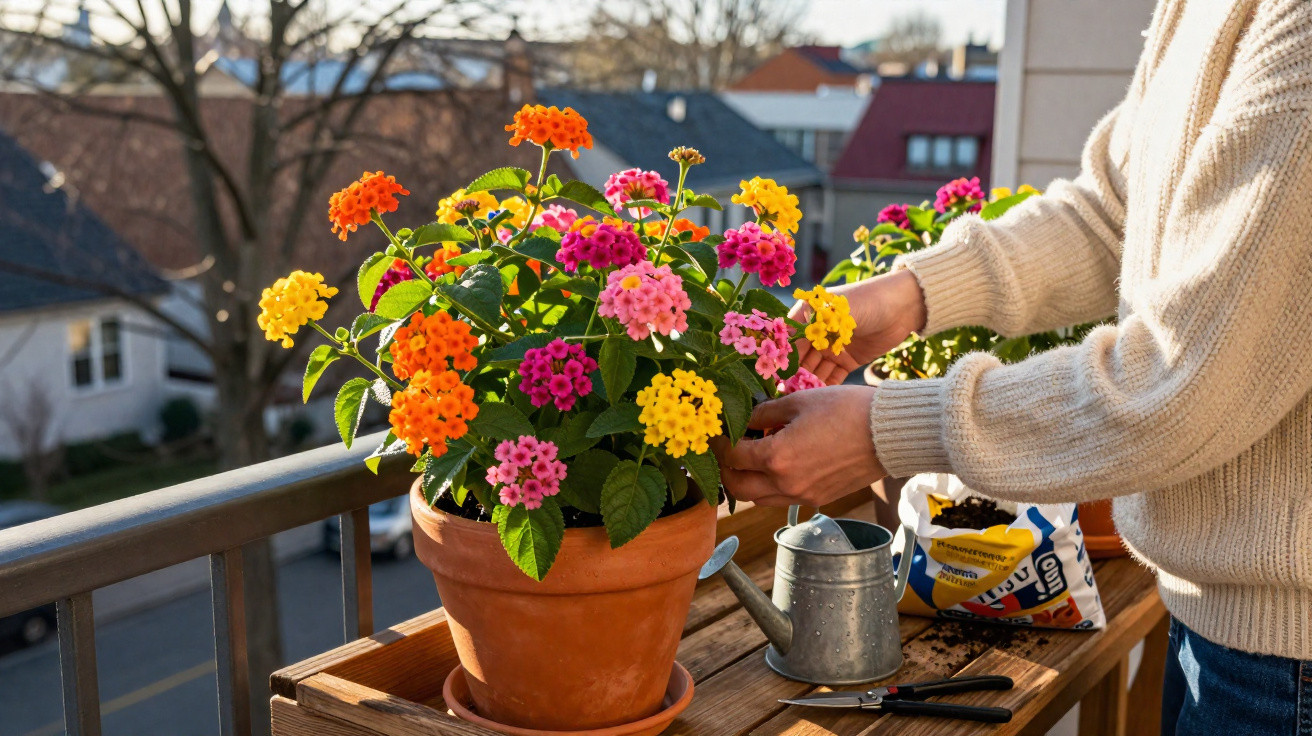
For anyone who does not want a high-maintenance show garden but one that more or less looks after itself, evergreen hedges or gravel areas are often the obvious choice. Yet there is a plant that flowers for months – and even throughout the year in mild areas – attracts insects in droves and is remarkably tough: the Lantana shrub, often sold simply as lantana.
What lies behind this modest name
Lantana is a small shrub, usually with a bushy habit, originating in tropical parts of the Americas and Africa. In the UK, it is chiefly known as a lavishly flowering container plant for balconies and Mediterranean-style gardens.
Its dense flower heads are particularly distinctive. Numerous tiny individual blooms cluster closely together, forming colourful balls or domes. Their special feature is that the flower heads change colour as they mature.
“A single shrub can display yellow, orange, pink and violet at the same time – within just a few square centimetres.”
The flowers contain plenty of nectar. Honeybees, solitary bees and butterflies use them as an important food source, especially when little else is flowering in the garden. Small berries develop after flowering and attract birds.
Why this plant transforms everyday gardening
Lantana’s greatest advantage is its almost continuous flowering in warm, frost-free locations. Although it has a dormant period during the depths of winter in a typical central European climate, it generally blooms from spring well into late autumn – far longer than many perennial plants.
It also has a number of qualities that appeal to gardeners who want low effort without compromising on standards:
- Long flowering period: colourful flower clusters for months on end
- Drought tolerance: once established, it manages with little water
- Excellent for insects: a valuable food source for pollinators
- Robustness: it copes surprisingly well with poor soils and heat
- Versatility: suitable for window boxes, containers or beds
Anyone who is away for several weeks during summer will benefit from this resilience: lantana tolerates short gaps between watering far better than many traditional balcony plants, such as petunias or fuchsias.
Position and soil: where Lantana thrives
Full sun gets the flowers going
The ideal position can be summed up simply: the more light it receives, the more it flowers. A spot in full sun on a patio or a south-facing balcony is ideal. In partial shade, the plant flowers far less freely.
The soil or compost in the pot should be:
- loose and free-draining,
- unable to hold standing water,
- preferably slightly sandy or lightly humus-rich.
Heavy soil that stays wet for long periods quickly leads to root rot. In borders, coarse sand or fine gravel can improve the soil structure. In pots, good-quality container compost mixed with a little sand or expanded clay is sufficient.
The right pot size for balconies and patios
For growing in containers, pots holding around 7 to 10 litres have proved effective. They offer sufficient room for roots and water without becoming difficult to handle.
Anyone planting the shrub in the garden should leave 50 to 100 centimetres between individual plants, depending on the variety. More vigorous varieties need more room, while compact ones require less.
Watering, feeding and pruning: easy Lantana care
Watering properly – especially during establishment
For the first three to four weeks after planting, lantana needs regular watering so that it can establish a strong root system. During this period, the root ball must not be allowed to dry out completely.
Once it has settled in, water thoroughly in one go, then allow the compost or soil to dry somewhat between waterings rather than giving frequent small amounts. Waterlogging is harmful, whereas the plant copes well with short dry spells.
Pruning produces more flowers
Because lantana grows quickly, it can soon appear somewhat straggly or become too sprawling without attention. Cutting it back in spring, once there is no longer a risk of frost, keeps the shrub compact and encourages new flowering shoots.
If it is grown in a container all year, it can also be lightly trimmed into shape after strong periods of growth. This restricts its height and stops it from overwhelming neighbouring plants.
“Every bold cut in spring is rewarded with fresh, dense growth and plenty of new flowers.”
Easy propagation: new plants from cuttings
Anyone who becomes fond of the plant does not need to buy fresh specimens every year. Lantana is easy to propagate from cuttings.
Here is how to do it step by step:
- Choose healthy, semi-ripe shoots in spring.
- Cut sections measuring around 8 to 12 centimetres long.
- Remove the lower leaves, leaving only a small pair of leaves at the top.
- Insert them into small pots filled with loose, sandy growing medium.
- Keep them slightly moist and place them somewhere bright but out of intense midday sun.
After a few weeks, the cuttings will have formed roots and can be moved into larger pots or planted in a bed.
Limits to consider and points to watch
Its exceptional vigour has a downside: in small beds, lantana can quickly crowd other plants. The shrub spreads particularly rapidly in mild conditions and nutrient-rich soil.
A thorough annual cutback, along with some monitoring around the edges of the bed, prevents the shrub from pushing out its neighbours.
There is also a safety consideration: many varieties are considered poisonous to pets and children. Leaves and unripe berries should not be put in the mouth.
“Anyone with curious children or free-roaming dogs and cats should place the plant out of their direct reach.”
In areas with very mild winters, lantana can become problematic if it is allowed to naturalise unchecked. It self-seeds, with young plants appearing in paving cracks, beds and along path edges. It is worth keeping a close eye on it: pull out or dig up unwanted seedlings early, before they become large.
How to showcase Lantana attractively
For balconies and patios
In large containers or planters, lantana works like a small shrub that flowers continuously. It combines well with trailing or lower-growing plants that soften and cover its base.
Popular companions include:
- fragrant herbs such as thyme or rosemary,
- silver-leaved plants such as dusty miller,
- foliage plants that provide a calm background.
In garden beds and front gardens
In a sunny perennial border, lantana pairs beautifully with plants that have a Mediterranean character. It is often combined with lavender, sage or types of geranium. The contrasting leaf textures and scents add interest to the planting.
The shrub can also serve as a loose, flowering “hedge” along a bed edge. A slightly staggered planting pattern creates a colourful border that attracts insects for months.
Practical tips for living with the plant
Anyone living in an area prone to frost is best advised to treat lantana as a container plant. Before the first hard frosts, move the pot to a cool, bright location, such as a frost-free stairwell or conservatory. There, the plant takes a rest before resuming growth in spring.
In very mild areas, lantana can overwinter in a bed if it is protected. A thick mulch of leaves or bark pieces helps shield the roots from cold. Year-round flowering is mainly possible in genuinely warm coastal areas or sheltered courtyards.
It is particularly useful for people who enjoy gardening but have little time: once the plant is properly established, the work is largely limited to occasional watering, a little fertiliser during the growing season and one annual prune.
Lantana is therefore an excellent starting point for anyone wishing to turn their outdoor space into a lively, insect-friendly and colourful place without having to spend every weekend carrying a watering can. With the right position and careful attention to children, pets and possible spread, this unassuming shrub becomes a long-lasting splash of colour – even when the rest of the garden has long since entered winter mode.

Comments
No comments yet. Be the first to comment!
Leave a Comment