
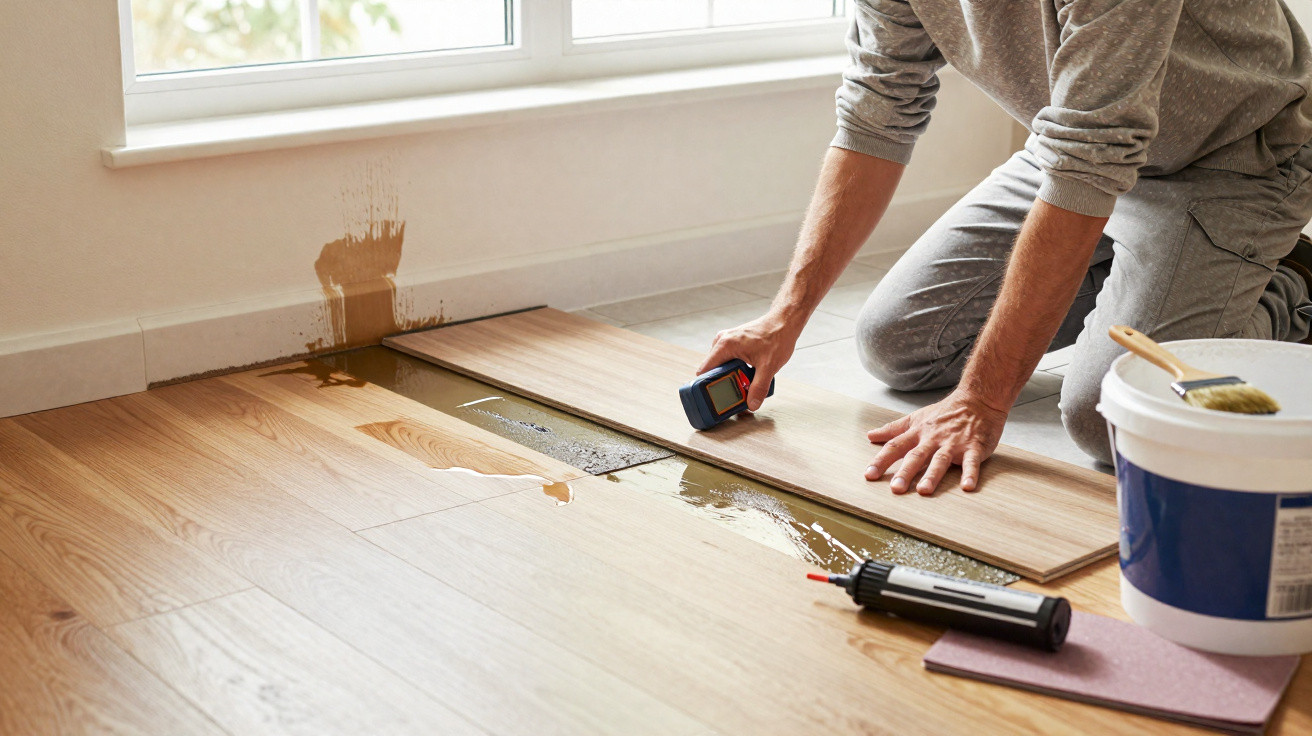
A floor with damp stains must be assessed before it is cleaned, regrouted or has any tiles replaced. The marks may be caused by external water ingress, an internal leak, moisture in the subfloor, open grout joints or missing waterproofing. Each source requires a different repair to prevent the floor covering from becoming stained again.
How can you tell whether the moisture is coming from inside or outside?
An internal source typically shows up near bathrooms, kitchens, utility rooms, skirting boards and plumbing points. If the stain spreads even when it has not rained, there may be a leak in a pipe, drain, trap, access chamber, or damaged grout in a wet area.
An external source is usually more noticeable after rain, patio washing, contact with damp ground, or failed waterproofing on a balcony, garage or ground-floor area. Where moisture rises from below, the floor may develop white marks, darkened grout, hollow-sounding tiles and a mouldy smell.
What should you check before starting the repair?
Before replacing tiles or applying a sealant, establish whether the floor is still receiving water. Repairing only the surface while the base remains damp traps moisture underneath, speeding up staining, blistering, detachment and grout deterioration.
- Check whether the stain becomes larger after rain, showering, washing or using the sink.
- Look for broken grout, cracks, hollow-sounding tiles or swollen skirting boards.
- Check drains, stop valves, traps and nearby pipework for leaks.
- Allow the area to dry before applying filler, grout, resin or waterproofing.
- Remove dirt, mould, white salts and loose material before treatment.
How do you treat stains on ceramic tiles, porcelain tiles and stone?
For ceramic and porcelain tiles, begin the repair with the grout. If it is darkened, cracked or missing, remove the damaged section, clean the joint and apply grout suitable for wet areas. Observe the curing time before washing the floor again.
With natural stone, including marble, granite, slate and São Tomé stone, moisture can enter through the pores and create deeper stains. Cleaning should therefore be carried out with a product suitable for stone, without strong acid. Final protection will normally require a waterproofing treatment or water repellent designed for porous materials.
How do you repair wooden, laminate, vinyl or cement floors?
Wooden, laminate and vinyl floors are more severely affected when moisture is trapped underneath. Swollen sections, raised edges, a strong odour and dark stains show that water has reached the base. In this situation, it may be necessary to remove only the affected boards, dry the subfloor and fit replacement pieces in the damaged section.
- For wood, sand surface stains only when the board is dry and stable.
- For laminate, replace swollen boards, as the core rarely returns to its original condition.
- For glued vinyl, lift loose tiles or planks and check the subfloor for moisture.
- For polished cement, repair cracks and apply protection appropriate for the level of foot traffic.
- In ground-floor areas, assess the waterproofing before refitting the floor covering.
How do you seal and protect the floor after repair?
The final protective treatment must suit both the floor type and the already-corrected source of moisture. New grout, joint sealer, a stone water repellent, wood varnish, cement resin or subfloor waterproofing will only work properly when the surface is clean, dry and free from an active leak.
After the repair, monitor the area for a few weeks, especially after rain or heavy cleaning. If the stain returns in the same place, water is still entering from below, the side or through the joints. Once the cause has been resolved and the correct protection applied to the material, the floor will retain its colour, grip and finish for longer.




Comments
No comments yet. Be the first to comment!
Leave a Comment