
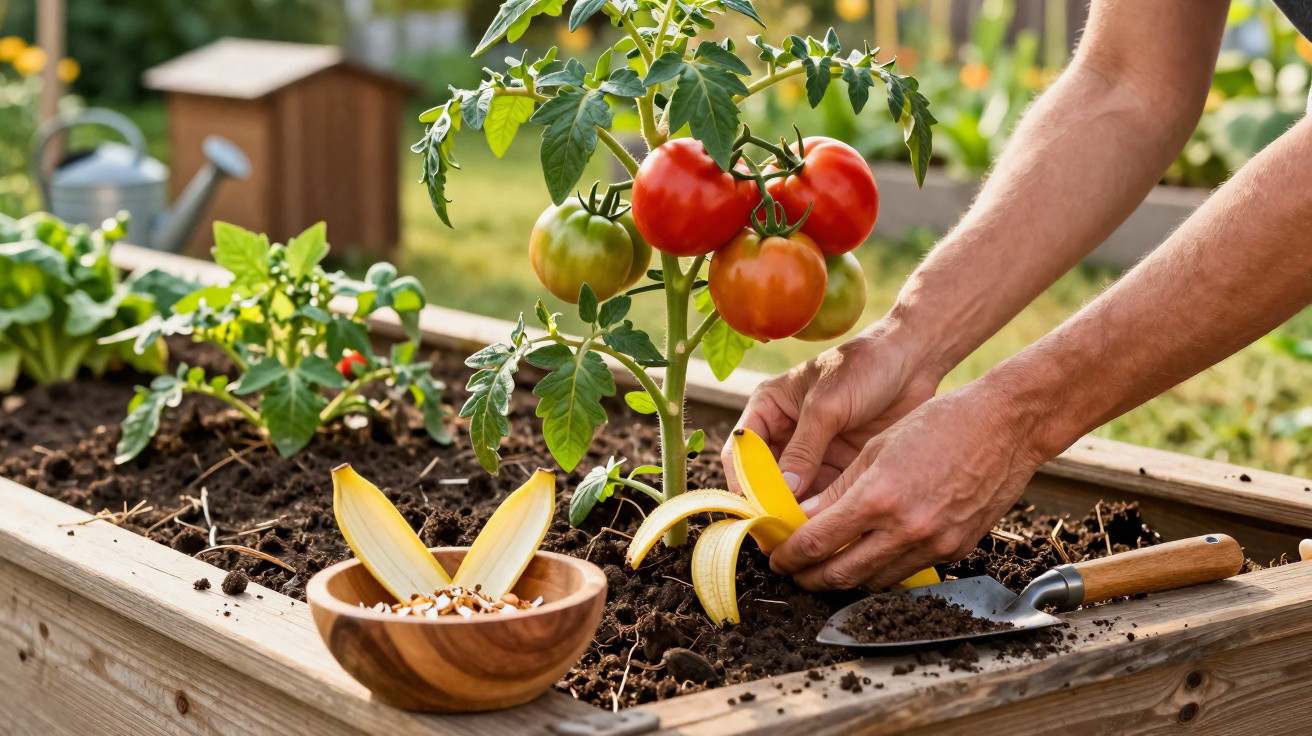
For years, a tip has circulated online for anyone hoping to harvest plump, sweet tomatoes in summer: simply push a banana peel into the soil beside the plants and they will supposedly grow faster and stronger. It sounds like a miracle solution, costs nothing and is already produced in almost every kitchen. But is it smart use of leftovers, or merely a romantic gardening myth?
Why tomatoes have such high nutrient needs
Tomatoes are heavy feeders. They produce plenty of foliage, numerous flowers and, ideally, a large crop of fruit. That demands energy and, above all, nutrients. Alongside nitrogen and phosphorus, potassium is particularly important.
- Potassium helps to support flower production.
- It strengthens plant cells, making tomato plants more resilient.
- It improves the plant's water balance.
- A good potassium supply can have a positive effect on fruit quality.
Anyone growing tomatoes in poor soil without extra feeding will soon notice the consequences: weak growth, few flowers, and small or split fruits. This is exactly where the banana peel tip comes in.
What banana peels actually provide
Banana peels naturally contain a reasonable amount of potassium. Once placed in moist soil, microorganisms begin breaking down the tissue. As this happens, minerals are gradually released into the soil around the roots.
“Banana peels act like a slow-release, very mild potassium fertiliser – not spectacular, but useful in the right conditions.”
As well as potassium, they provide small quantities of other minerals and a little organic matter. That organic material can slightly improve soil structure, especially in very sandy or heavily depleted beds.
How quickly a banana peel breaks down
Decomposition does not happen overnight. Depending on soil and weather conditions, whole peels can take weeks or months to break down substantially. The process is slower in cool, dry soil and faster in warm, moist, humus-rich ground.
To speed up the effect, chop up the peel. This increases the surface area on which soil organisms can work.
How to use the banana peel trick for tomatoes correctly
The method is straightforward, which is part of its appeal. Essentially, the peel should be worked into the soil near the roots without damaging the plant.
- Cut up the peel: Chop it into small pieces, around one to two centimetres in size.
- Dig a hole: Make a small hole in the tomato's root zone, a few centimetres away from the main stem.
- Add the pieces: Place the banana peel pieces in the hole.
- Cover with soil: Pull soil over them and press it down gently.
- Water lightly: Give a small amount of water to help activate soil life and decomposition.
Gardeners can use this method when planting young tomatoes or add the peels later in the season. One point matters: peels should always be covered, so they do not attract insects or other animals.
The limits of banana peel as a fertiliser
However appealing the idea of free banana fertiliser may be, one peel cannot replace a well-planned nutrient programme. Tomatoes need far more than a small dose of potassium.
“Anyone relying solely on banana peels risks stunted plants – the trick is a supplement, not the main source of nutrition.”
The key remains soil enriched with compost or well-rotted manure. Many gardeners work plenty of organic material into the ground in spring, then also use tomato fertiliser or liquid feeds made from nettles, comfrey or other plants.
Possible drawbacks and risks
- Pests: Partly exposed peels may attract ants, wasps or even rodents.
- Uneven distribution: One spot close to the roots receives many nutrients, while other areas receive almost none.
- Effect is too slow: Slowly decomposing peels are of little help when there is an acute deficiency.
- Pesticide residues: Conventionally grown bananas may carry traces of pesticides on their skins.
Anyone using banana peels regularly in the garden is better off choosing organic fruit, or at least avoiding placing heavily waxed, unusually shiny peels directly beside sensitive crops.
How banana peels fit sensibly into garden practice
Rather than burying individual peels beside every tomato plant, there is another approach that gives a far more even result: adding them to the compost. There, banana peels mix with kitchen scraps, leaves and other organic materials.
In a compost heap, microorganisms have plenty of time to break down the peels completely. The released minerals later end up in the finished compost, where they can be spread much more evenly across the bed.
“Anyone who composts banana peels consistently strengthens the soil in the long term – and therefore their tomatoes too.”
Banana peel directly or compost – which is better?
Working peels straight into the soil creates a small, localised effect and suits anyone who does not compost at home. Compost, by contrast, is the more sustainable option for gardens with several beds or raised beds.
Many gardeners use both methods: most peels go into the compost, while a small proportion is placed directly in the tomato bed when young plants are planted out in May.
How to tell whether tomatoes need more potassium
Not every flaw in a plant is linked to potassium. However, certain signs occur more often when the potassium balance is not right:
- Leaf edges become discoloured and dry out.
- The plants appear generally soft and lack sturdiness.
- Fewer flowers form, and the fruits remain small.
- Tomato plants react more sensitively to heat and drought.
If these symptoms are clearly present, a single banana peel will not be enough. In this situation, a more targeted potassium fertiliser is needed, for example a specialist tomato feed or plant-based liquid feeds. The banana peel then remains a small bonus rather than a solution to the problem.
Other kitchen scraps that tomatoes like
Banana peels are not the only kitchen leftover that can be useful in the garden. Here are a few examples:
- Coffee grounds: Provide a little nitrogen and help loosen heavy soils, but should be spread evenly.
- Eggshells: Add lime to the soil over time and can buffer acidity, although they need to be crushed first.
- Vegetable scraps: In compost, they contribute a variety of nutrients.
None of these leftovers replaces a balanced fertiliser, but they do help keep soil alive and diverse. Tomatoes repay this living soil with steadier growth and fewer stress responses.
A practical conclusion for the tomato bed
Anyone who eats bananas and grows tomatoes can use the peels with a clear conscience. Used properly, they can make a small long-term improvement to nutrient levels around the roots and add a little extra organic matter to the soil.
Gardeners should nevertheless temper expectations of a miracle cure. The biggest difference in the bed comes from well-prepared soil, plenty of compost, suitable watering and a balanced fertiliser designed for heavy feeders. Within this overall approach, the banana peel is a small, likeable component – no more, but no less.
Comments
No comments yet. Be the first to comment!
Leave a Comment