
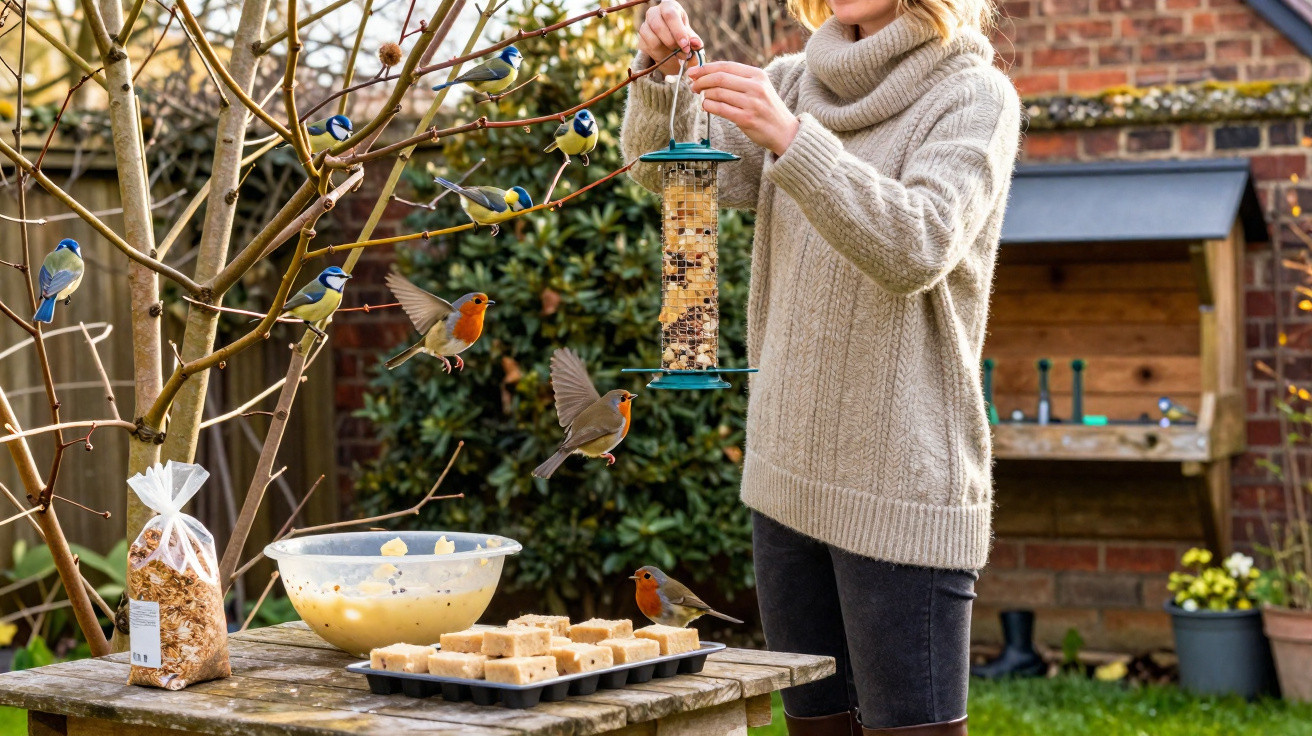
Anyone walking through an English housing estate in winter notices it immediately: a constant chorus of chirping carries above many gardens. Tits, finches and robins crowd around feeders, suet blocks and bird baths as though food were in endless supply. This is not simply a charming scene, but the result of a highly consistent approach – one that German amateur gardeners can learn a great deal from.
A different approach: feeding as part of the garden, not a whim
Across large parts of England, feeding birds is considered an ordinary element of garden care. Rather than being an occasional winter treat, it is an established routine, much like mowing the lawn or pruning plants. The principle is simple: regularly providing nutritious food supports songbird populations while bringing more wildlife into the garden.
Winter in particular creates an energy challenge for birds. Cold nights, short daylight hours and limited natural food sources drain their reserves. For small species, every night can become a genuine test of survival. English householders address this deliberately with calorie-rich food rather than scattering any cheap seed mix from the supermarket.
Well-planned winter food acts like a safety net: birds use less energy searching for food and enter the breeding season in better condition.
Where this “safety net” is maintained year after year, birds do not merely stay; they repeatedly return with their young. Gardens become reliable miniature habitats – and the difference is noticeable.
What English gardens provide for birds – and what they avoid
The key distinction lies in the food itself. Rather than relying on inexpensive seed mixtures containing large amounts of wheat or maize, many Britons choose genuine energy-rich foods with high fat and protein levels. Four ingredients appear especially often:
- Shelled sunflower hearts – rich in oil, easy to eat and a quick source of energy; suitable for almost all garden birds.
- Suet blocks or fat cakes with insects – these replace the animal proteins that are difficult to find in winter.
- Unsalted, unroasted peanuts – exceptionally energy-dense and popular with tits, nuthatches and woodpeckers; ideally offered chopped.
- Nyjer seed – tiny, oil-rich seeds that particularly attract goldfinches and siskins.
One item is consistently absent from many English gardens: dry leftover bread. Bread may fill a bird’s stomach, but it offers very little nutrition. It swells in the crop, can spoil and may simply attract rats. Bird conservationists are equally critical of cheap seed mixes padded out with ingredients such as wheat, barley or maize. These are often left uneaten, encourage mould and pests, and provide birds with little useful energy.
Make your own suet blocks: simple, affordable and transparent
A popular English practice is to make suet blocks at home. This makes it clear exactly what they contain and can save money. A common basic recipe can also be used without difficulty in Germany.
Basic recipe for around 8 to 10 blocks
- 200 g unsalted vegetable fat, such as block coconut fat
- 150 g shelled sunflower hearts
- 50 g porridge oats
- 50 g unsalted peanuts, roughly chopped
Melt the fat gently in a saucepan, remove it from the heat and thoroughly mix in the dry ingredients. Spoon the mixture into small moulds – muffin tins, empty yoghurt pots or cups all work well. Leave everything to set in the fridge or outside in cold weather until firm.
To hang the blocks, press short lengths of string into the mixture while it is still soft. Alternatively, place the blocks in dedicated holders or simply put them on a sheltered feeding spot, depending on the species being targeted.
Homemade suet blocks can be tailored to the needs of garden birds: more nuts for tits, more oats and smaller seeds for finches.
Location matters too: plan a feeding station like a professional
In England, many bird-feeding enthusiasts focus not only on what they offer but equally on where it is placed. A few straightforward principles can determine whether feeders remain quiet or attract a constant stream of visitors.
Variety at different heights
Different bird species feed at different levels, and British gardeners deliberately cater for this:
- raised seed feeders for tits and nuthatches
- hanging peanut feeders positioned safely away from shrubs, making it harder for cats to stalk birds
- flat ground trays or low dishes for blackbirds, robins and thrushes
A balance between clear visibility and cover is important. Birds need to spot predators such as cats or sparrowhawks early, but they also require nearby bushes or hedges in which to take refuge.
Less food at a time, but every day
Rather than filling bowls to the brim, many English gardeners provide smaller amounts on a regular basis. During frosty spells, a typical guide is just under 50 to 150 grams per feeding station each day, depending on visitor numbers. This means there is very little food left behind to spoil.
Water is also surprisingly important. Many gardens have shallow dishes or small bird baths, ideally with water that flows gently all the time. Those with a garden pond keep a small section free of ice. During freezing conditions, drinking water is almost more important than extra food.
Cleanliness as a health factor
English media and garden guides repeatedly stress one issue: hygiene. Feeding stations visited by numerous birds can quickly become sources of infection if they are not cleaned.
- Remove droppings and leftover food regularly, ideally once a week during the main season.
- Rinse feeders and dishes every one to two weeks with hot water and a splash of vinegar, then allow them to dry thoroughly.
- Dispose of damp or decaying seeds immediately, as they become mouldy quickly.
- Move feeding areas occasionally so that no permanent “droppings hotspot” forms beneath them.
Timing matters as well. Towards the end of winter, especially around February, many birds face particularly strained energy reserves. Natural stores have largely been exhausted, while insects are still barely active. Consistently offering fat and high-quality seed food at this stage gives birds a head start for the approaching breeding period.
What you can put into practice in German-speaking countries
You do not need an English cottage garden to benefit from these observations. A balcony, a small terraced-house garden or a back yard is enough to make a noticeable difference for birds.
A possible introduction to the “British method”:
- Remove cheap seed mixtures and leftover bread entirely.
- Choose one or two high-quality food types, such as sunflower hearts and suet blocks.
- Position feeders so cats have no opportunity for surprise attacks.
- Offer water throughout the year and clear ice from it regularly in winter.
- Clean briefly once a week – it is better to wipe surfaces quickly than deal with disease later.
Anyone wishing to do more can adapt the food supply to the seasons: favour grains and seeds in late summer and autumn, concentrate on fats and nuts in winter, then offer smaller amounts and reduce feeding somewhat in spring once insects are plentiful.
Why the garden benefits from bird feeding too
The effect goes beyond pleasant birdsong. In the long term, a thriving bird population acts as a natural pest-control team. Many species feed their young almost exclusively on caterpillars, beetles and other insects in spring. Helping these birds through winter can mean fewer aphids and caterpillars on the apple tree in return.
Birds also spread wildflower seeds, bring hedges and meadows to life, and create movement throughout the garden ecosystem. Particularly in densely built-up neighbourhoods, a private garden can quickly become a small refuge with considerable biodiversity. This interaction is clearly visible in many English housing estates – and that is precisely where the secret of its success lies.
So, anyone dreaming of the English winter bird atmosphere does not need to emigrate. With a few well-considered feeding stations, some fat, quality seeds and a careful approach to cleanliness, a garden in Central Europe can become a similarly welcoming bird paradise – step by step, season by season.

Comments
No comments yet. Be the first to comment!
Leave a Comment