
Spring onions in pots can keep producing for many months when they receive the right care during cutting, watering and substrate management. With a few simple adjustments, you can keep the leaves looking fresh, prevent the plant from weakening after each harvest and ensure a steady supply in limited space.
How do spring onions regrow in a pot?
Spring onions regenerate from small “eyes” at the base of their leaves, close to the bulb. If this area is protected and kept healthy, the plant quickly sends out fresh leaves after cutting, allowing the pot to remain productive for many months.
The substrate has a direct effect on this cycle. Dense soil that holds excess water suffocates the roots and causes the base to rot. By contrast, a light, airy and free-draining substrate lets the plant direct its energy towards producing strong new shoots.
Watch a video on the Spagnhol Plantas YouTube channel explaining the ideal cutting point for spring onions in pots, helping to ensure an endless harvest and consistently thick leaves:
https://www.youtube.com/watch?v=pYq7M_eS1p0
What specific care helps spring onions regrow vigorously?
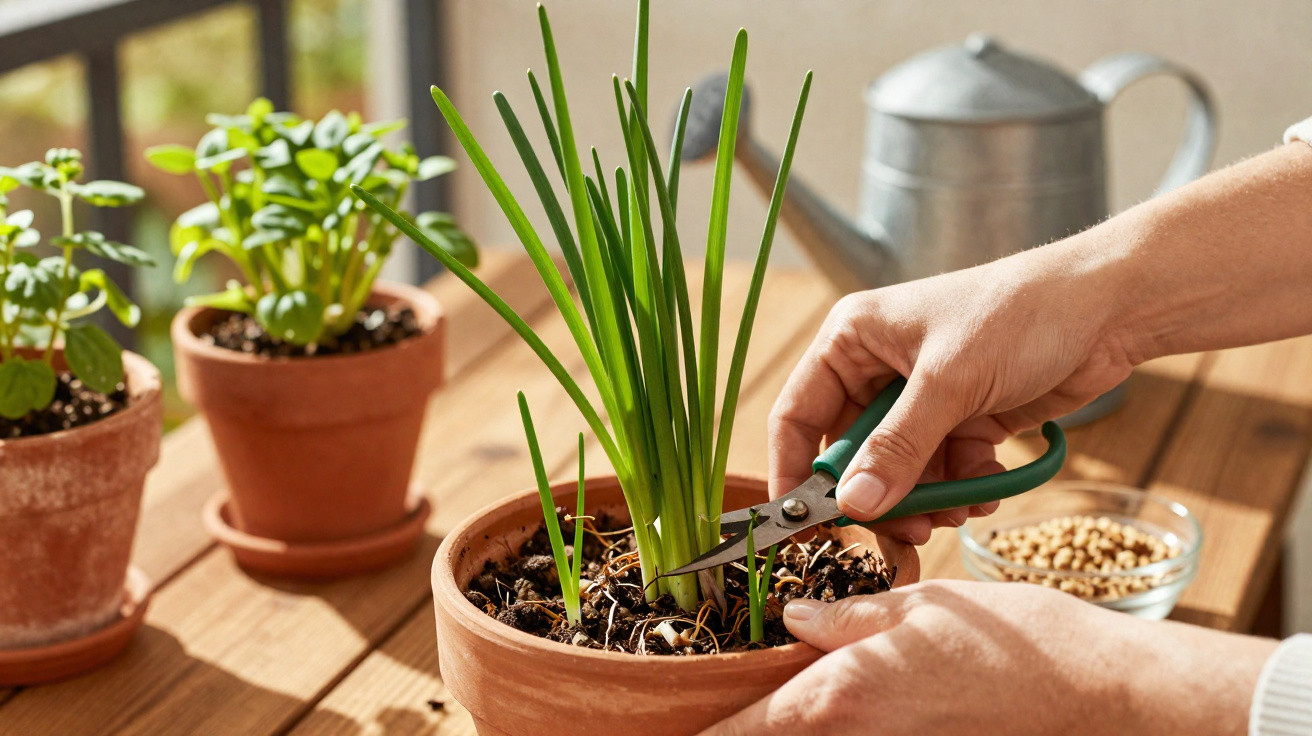
The key practice is never to cut spring onions level with the substrate. Always leave 2–3 cm of green stem above the surface of the pot, so the growth points that produce new leaves after every harvest are retained.
Cutting height is not the only consideration: avoid tearing or crushing the leaves as well. Clean, sharp scissors minimise stress to the tissues and support healing. Leaving some young leaves on the plant also ensures it has enough energy for ongoing growth.
- Cutting height: leave 2–3 cm of leaf above the substrate.
- Sharp tool: use clean scissors to prevent damage.
- Partial harvesting: do not pick 100% of the leaves from the same clump.
How should you adjust the substrate, watering frequency and light feeding?
For spring onions to respond well to correct cutting, the substrate needs to drain surplus water while retaining a moderate amount of moisture. A common mix uses one part topsoil, one part well-rotted organic compost and one part looser material, such as coarse sand or perlite, to keep the root system aerated.
Water according to how the substrate feels to the touch, avoiding both severe drying out and waterlogging. After each harvest, add a thin layer of organic compost over the surface. This replaces nutrients and helps the plant restore the energy used to produce the harvested leaves, extending the pot’s vigour.
How can you harvest spring onions at the right stage without stressing the plant?
Spring onions are ready to harvest when the leaves are around 15 to 20 cm long and have an even green colour, with few yellowed tips. Cutting them too early limits the yield, while waiting too long can leave you with fibrous, less flavoursome leaves for cooking.
To avoid stressing the clump, harvest the outer leaves first and retain the younger inner ones. These maintain photosynthesis and support regrowth. With suitable light, water and nutrients, the same pot can commonly be harvested every 10 to 20 days; alternate between clumps to maintain continuous, vigorous production.
Comments
No comments yet. Be the first to comment!
Leave a Comment