
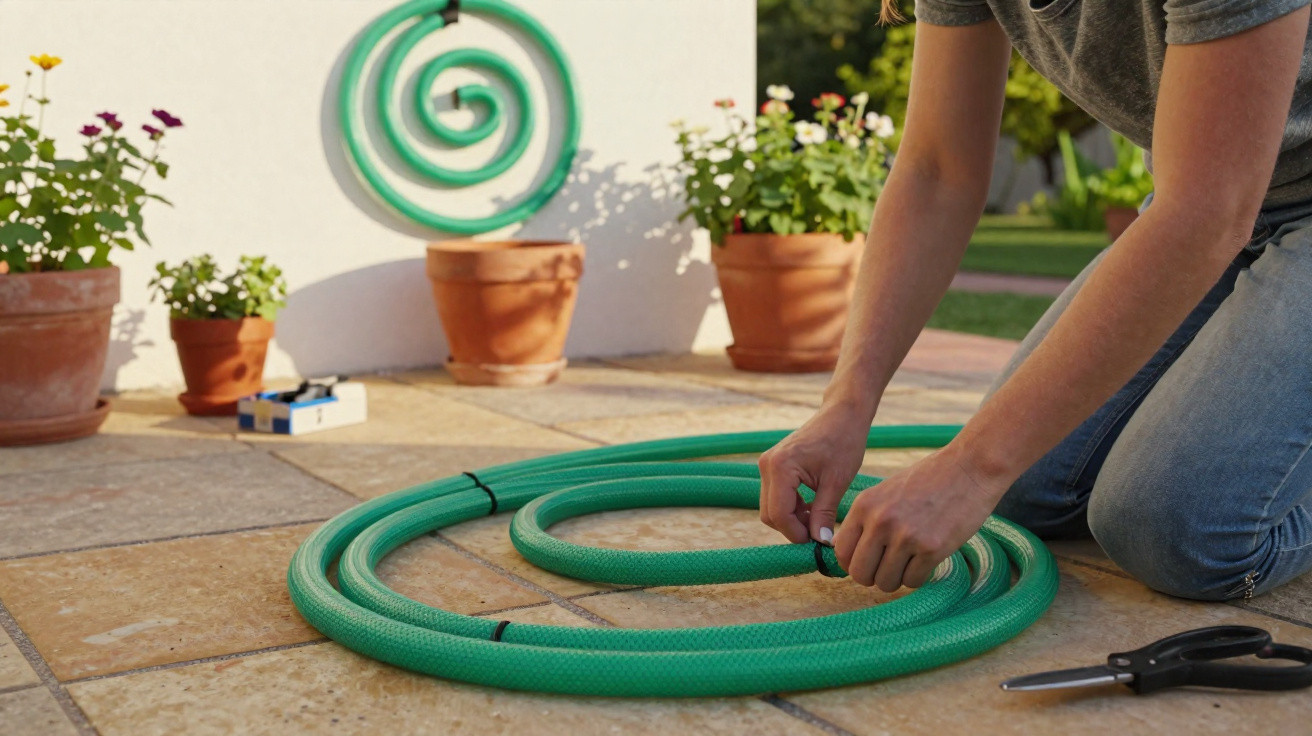
A broken hose does not have to go straight into the bin once it loses pressure, splits or can no longer be used to water the garden. Made from rubber or PVC that resists water, sunlight and abrasion, it can be repurposed for straightforward recycling projects, including an outdoor mat or a decorative wall display.
Why repurpose an old hose rather than throw it away?
A broken hose is generally made from materials that take many years to break down. Sending it to general waste uses up landfill space, wastes raw material and prevents it from being used around the home where flexibility and durability are useful.
This kind of reuse is particularly suitable for gardens, balconies, garages and utility areas. The hose withstands damp conditions, is easy to wash, and can be cut, bent and joined without the need for complicated tools.
How can you turn a hose into an outdoor mat?
An outdoor mat is among the most practical options, as it makes use of the hose's naturally flexible shape. When coiled into a spiral and secured with cable ties, it becomes a sturdy surface for doorways, gardens and spaces near an outdoor tap.
- Remove metal fittings and damaged sections from the ends.
- Start by coiling one end into a circular or oval shape.
- Secure every coil with durable plastic cable ties.
- Join shorter pieces using a slim PVC tube or a suitably sized piece of wood.
- Trim off the excess from the cable ties to prevent uncomfortable sharp ends.
How do you make a decorative wall display with a hose?
A decorative wall display works best when the hose is cut into sections or bent into continuous lines. It can be used to create geometric patterns, leaf outlines, waves, circles or abstract shapes on balcony walls, outdoor entertaining areas or studio walls.
- Sketch the design on the wall in pencil before sticking anything in place.
- Wash and dry the hose thoroughly before painting it.
- Choose paint suitable for plastic, rubber or PVC.
- Attach the sections with a strong adhesive intended for walls.
- Press each section down until the adhesive starts to set.
Which precautions make the project safer and longer-lasting?
Before cutting, inspect the hose for mould, oil, deep cracks or a strong smell. Very dried-out sections may snap when bent, so they should only be used in short lengths that will not be subjected to bending.
It is also worth testing the adhesive and paint on a small section before assembling the finished piece. For mats, all joins must be firmly secured; for wall displays, the wall needs to be clean, dry and dust-free so that the material does not come loose over time.
When is a broken hose genuinely worth repurposing?
A broken hose is worth repurposing if it remains flexible, does not crumble when handled and can be cleaned without leaving sticky residue. In this condition, it becomes a durable material for items exposed to water, mild sunlight and everyday use outdoors.
The best outcome comes from choosing a project that suits the condition of the material. Long, pliable lengths work well for coiled mats, while short offcuts can create details for a wall display, decorative edging or small home recycling arrangements.
Comments
No comments yet. Be the first to comment!
Leave a Comment