
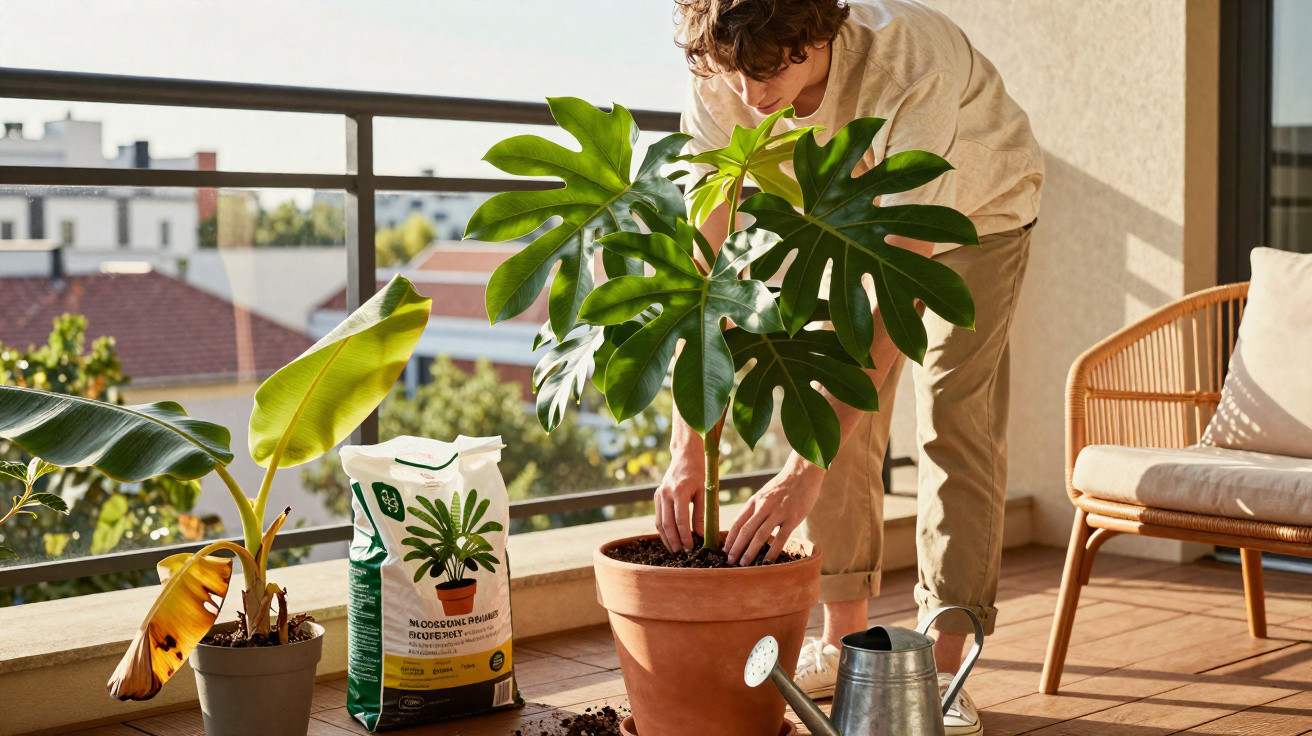
Many balcony owners dream of a jungle feel – yet repeatedly come unstuck with the delicate banana tree.
Another exotic plant offers the answer.
Large, glossy leaves, a dense green backdrop and the sense of being on holiday: that is exactly what many city dwellers want for their balcony or roof terrace. Yet once winter has passed, they are often left with battered banana plants, brown foliage and soggy stems. There is, however, a little-known shrub that creates a tropical atmosphere throughout the year while coping remarkably well with cold, wind and restricted space.
Why the banana tree fails on many terraces
Visually, a banana tree is an instant winner: enormous leaves, immediate holiday vibes and a touch of the Caribbean above the rooftops. On many terraces, though, the reality looks rather different.
- Powerful gusts shred its thin leaves like paper
- Cold weather and late frosts turn the foliage black
- Persistent winter wet causes the water-filled “trunk” to rot
- In spring, the plant starts the season weakened and takes a long time to look attractive again
The explanation lies in its botany: the familiar banana tree is not a hardy woody plant, but a herbaceous perennial with a moisture-rich pseudostem. It is extremely frost-sensitive. Damage can begin even at around freezing point, particularly in exposed locations on upper floors.
“Anyone planting a banana tree on a windy urban terrace often buys themselves the same frustration every year: shredded leaves, brown stems and feeble new growth.”
Garden specialists therefore recommend exotic-looking but considerably more frost-hardy alternatives for balconies and terraces. This is where a shrub enters the picture that many amateur gardeners have not yet considered.
The quiet star: Fatsia japonica delivers a jungle look without the fuss
The shrub is Fatsia japonica, often sold as Japanese aralia. At first glance, it can look like an XXL houseplant, but it is actually a surprisingly tough exotic plant for outdoor spaces.
Hardy like a shrub, exotic like a tropical glasshouse plant
Because Fatsia develops genuinely woody shoots, it withstands wind and cold far better than a banana plant. It tolerates temperatures down to around minus 15 degrees Celsius, as long as the soil does not remain permanently waterlogged. That is easily sufficient for many regions, especially on sheltered urban terraces.
Typical characteristics of Fatsia japonica:
- In a container, it usually reaches between 1.5 and 2 metres, and up to 3 metres in ideal conditions
- Large, hand-shaped lobed leaves measuring 30 to 40 centimetres across
- Thick, leathery foliage with a glossy surface
- Stays stable even in frequent wind and draughts
- Prefers partial shade and manages with little direct sunlight
The result is an instant “jungle feeling” without the need to recreate tropical conditions. Placed in a large container in front of a wall or balcony balustrade, a single specimen quickly forms a green backdrop that frames furniture, lanterns and decorative pieces perfectly.
An ideal match for an urban terrace
Many city terraces share the same conditions: they are windy, often shaded, short on space and surrounded by surfaces that become intensely hot in summer. These are precisely the conditions in which Fatsia shows its strengths. It enjoys partial shade, copes with reflected heat from concrete and walls, and does not need constant staking or tying in.
“Where banana leaves hang in tatters, Japanese aralia often remains remarkably unblemished – a clear advantage for anyone looking for easy-care terrace planting.”
How to plant Fatsia japonica properly in spring
Late spring, when there is no longer a risk of night frosts, is the best time to plant. Many amateur gardeners use mid-May as their guide. From then onwards, Fatsia is happiest in its pot.
The right container and compost
- Choose a large, heavy container: Its diameter should be around 20 to 30 per cent larger than the nursery pot currently holding the plant. A sturdy, relatively weighty pot prevents it from blowing over in the wind.
- Add a drainage layer: Put 3 to 4 centimetres of expanded clay or coarse gravel in the base so surplus water can drain away quickly.
- Prepare the growing medium: Use two thirds high-quality houseplant compost and one third garden soil or mature compost. This blend retains nutrients without becoming too wet.
- Plant it out: Gently loosen the rootball, position it in the centre, fill around it with compost and water thoroughly so that no air pockets remain.
The pot should never be left standing in water for extended periods. A saucer is useful, but excess water must be emptied regularly in winter to prevent root rot.
The perfect position on a balcony or terrace
Fatsia appreciates light but not blazing sunshine. A spot with morning or evening sun, protected from intense midday rays, is ideal. A wall or glass balustrade providing wind protection at the side also helps the large leaves stay attractive for longer.
- A partially shaded spot, ideally near a house wall
- No constant through-draught, although normal air movement is not a problem
- Raise the container so water can drain freely from the base
“On very windy roof terraces, the benefit of its woody growth becomes clear: Fatsia may sway, but it keeps its leaves – unlike many tropical perennials.”
Everyday care: little effort, impressive impact
Compared with many exotic container plants, its care requirements are manageable. Follow a few basic rules and you can enjoy your “terrace aralia” for a long time.
Watering, feeding and pruning
During summer, the plant needs regular watering; in winter, it needs much less. The simplest check is to feel the top centimetre of compost with a finger. Water when it feels dry, and wait if it is still damp.
- Summer: water every few days, depending on the weather
- Winter: water very sparingly, just enough to stop the rootball drying out completely
- Feeding: two applications of slow-release or liquid fertiliser in spring are usually enough for container plants
- Pruning: remove only brown or damaged leaves; trim lightly if needed to maintain its shape
For winter, it is best to move the pot close against a sheltered house wall. During cold spells, simply wrapping the container in horticultural fleece helps; in exceptionally low temperatures, the plant can temporarily be moved into a cool hallway or a bright, frost-free room.
Glossy foliage with simple household remedies
Fatsia makes its impression above all through its broad, shiny leaves. Dust from urban air and pollen can gradually make their surface appear dull. A short monthly routine preserves its characteristic “glossy look”.
A soft cloth lightly dampened with a mixture of still mineral water and stale pale beer is entirely sufficient. The thin layer conditions the leaf surface, removes dirt and is valued by many amateur gardeners as a light deterrent to some pests. The key point is not to soak the leaves, but simply wipe them gently.
“Clean, glossy leaves greatly enhance the jungle effect – especially on small terraces, where every plant matters visually.”
Who benefits most from Fatsia
Japanese aralia is particularly suitable for people with limited space but high aesthetic expectations. One or two large containers can turn an entire terrace into a green lounge, without the need for constant clearing, staking or overwintering.
For families with children, the shrub is often more appealing than prickly woody plants. Its leaves look exotic, yet remain robust enough if a ball hits them during play. It is also an appealing choice for working people because it allows for brief care sessions: those who set aside a few minutes at the weekend to water and inspect it will generally manage well.
Anyone who already keeps container plants such as hydrangeas, olive trees or ornamental grasses on the terrace can incorporate Fatsia easily. It creates a rich green background against which flower colours and light materials appear brighter. It looks particularly harmonious alongside:
- Grasses in pots, which add movement to the setting
- Light-coloured terrace furniture or lounge sets
- Lanterns, fairy lights and warm-white lighting
There is another benefit for those thinking long term: unlike many annual or frost-sensitive exotic plants, Fatsia does not need replacing every year. It becomes denser and fuller with each passing year, so the “rainforest effect” actually increases. For urban amateur gardeners seeking a green retreat without having to start again continually, this is a compelling argument.

Comments
No comments yet. Be the first to comment!
Leave a Comment