
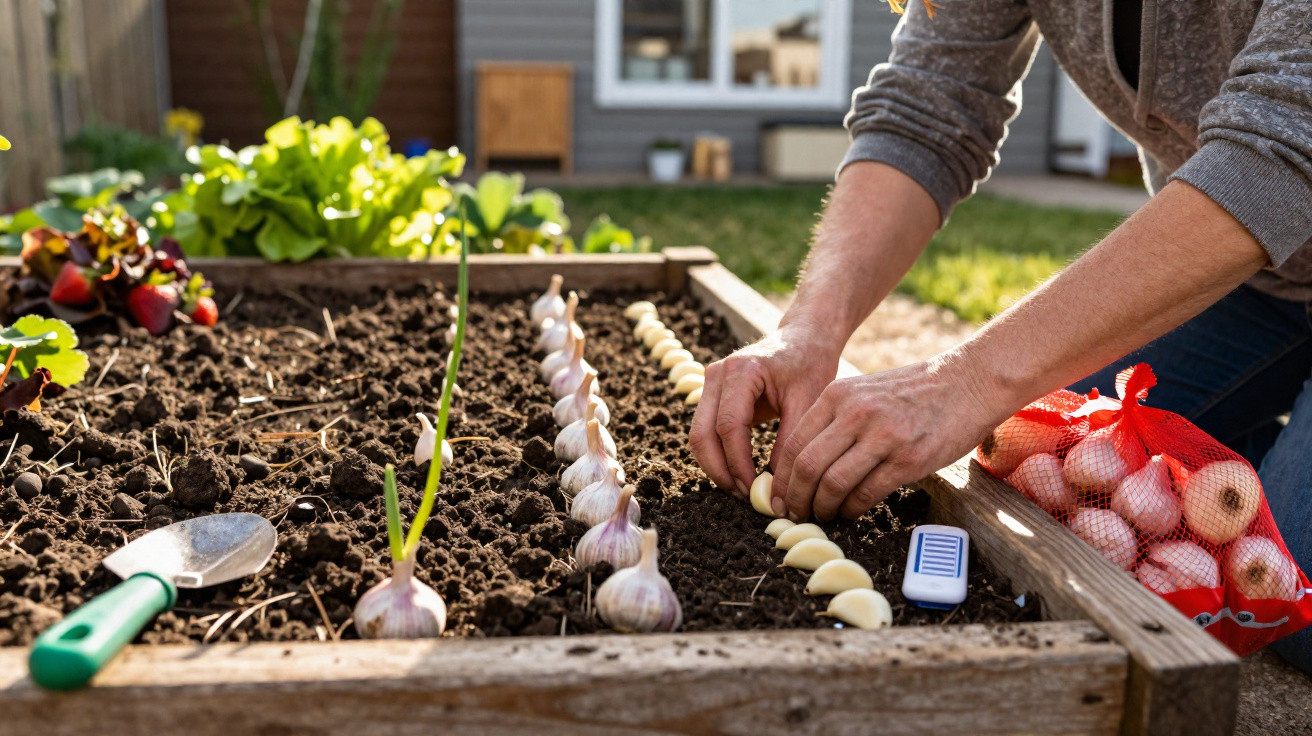
Garlic improves almost any meal, of course. What is far less widely known is that a supermarket net can also fill entire beds. Anyone who follows a few simple rules and avoids one common mistake can turn discarded cloves into impressive rows of fragrant bulbs.
Why supermarket garlic belongs in the garden bed
Most people buy costly planting bulbs at the garden centre while the bulbs in their shopping basket end up in the bin. That is a pity, because garlic is among the least demanding crops for the home garden. It enjoys sunshine, lean soil and minimal attention – ideal conditions for beginners.
Supermarket garlic offers three major advantages:
- Cost: You have already bought it, so the “seed” is virtually free.
- Availability: It can be bought throughout the year, with no reliance on the garden centre season.
- Simplicity: Every individual clove can produce a full bulb.
There is one drawback, however: many commercially sold bulbs are treated so that they do not sprout too quickly on the shelf. These cloves germinate poorly, if at all. This is exactly where success and frustration diverge – and where you need to avoid the key mistake.
Only untreated, vigorous cloves will later produce dense rows in the bed. Plant everything blindly and you will harvest disappointment rather than bulbs.
The most common mistake: unsuitable soil and no test
Pushing garlic into any wet corner of the garden can result in rot rather than growth. It is even worse to fill a whole bed without trying a small sample first. If the cloves have been treated or the soil remains constantly wet, the entire crop can fail.
The rule is therefore simple: test first, then plant on a larger scale. A short row or a container is enough to reveal how reliably the cloves actually sprout. At the same time, check whether your soil drains water well.
You can spot an overly wet bed by these signs:
- Puddles remain for hours after rain.
- The soil clings heavily to a spade or your shoes.
- Roots from other plants smell musty or are black.
If these signs apply, garlic urgently needs a raised planting row or a different position.
Choosing good cloves: not every bulb is suitable for planting
Before planting, inspect the supermarket net carefully. Only healthy, strong cloves should go into the garden bed.
What to look for when buying garlic
- Choose organic where possible: Organic produce is less often treated with sprout-inhibiting agents.
- Colour: White and pink garlic are both suitable; what matters is an even colour.
- Firmness: Cloves should feel hard and plump, never shrivelled.
- Health: Avoid mould marks and dark patches around the base.
Carefully separate the bulb into individual cloves without peeling them. Their skins protect them against rot and drying out.
The largest clove will usually produce the strongest new bulb. Small cloves are better used in the frying pan than in the garden bed.
A cold boost from the fridge
A professional trick helps ensure that only genuinely vigorous cloves make it into the soil: a brief spell in the fridge. The cold mimics winter and encourages the cloves to sprout.
Proceed as follows:
- Select large, undamaged cloves.
- Put them in a paper bag in the vegetable drawer for one to two weeks.
- Check for tiny white or green tips appearing.
- Plant only these pre-sprouted cloves and use the rest in the kitchen.
This straightforward test filters out unsuitable produce and prevents an empty planting row.
Step by step: how to plant garlic correctly
Once you have chosen the cloves, the site and soil preparation are what count. Garlic prefers a sunny, airy and relatively dry spot.
The ideal location
- At least six hours of direct sunshine each day.
- Lightly sandy, loose soil without waterlogging.
- No fresh, heavy application of fertiliser in the planting year.
In clay-rich, heavy ground, creating a small raised area is worthwhile. A loose rise of around ten centimetres is often enough to drain away surplus water.
Spacing and planting depth
Plant the cloves with their pointed ends facing upwards. A common beginner’s error is setting them too deep or too close together.
| Parameter | Recommendation |
|---|---|
| Planting depth | 3–5 cm of soil above the clove |
| Spacing within the row | 10–15 cm |
| Distance between rows | 20–30 cm |
After planting, firm the soil gently and water once with care. Afterwards, the watering can will be needed little more than for decoration.
Garlic care: why garlic thrives on minimalism
Garlic does not like having wet feet. Water only during extended dry spells, and even then use a moderate amount. Stop watering entirely around three weeks before the expected harvest date so that the bulbs will store well.
Because its roots stay shallow, garlic does not cope well with deep hoeing. Gently loosening the surface and removing weeds is generally sufficient. Heavy feeding is more likely to hinder than help: too much nitrogen produces masses of foliage but weak bulbs.
Less water, little fertiliser and hardly any effort – garlic is the minimalist among vegetable crops.
Harvesting, storing and smart garlic companions
Depending on when you plant, the bulbs usually mature from early summer onwards. The most reliable indicator is the foliage: when roughly two thirds of the leaves have yellowed and dried, the time is right.
Lift the bulbs from the ground on a dry day if possible, then allow them to dry in a shady, well-ventilated place. Many gardeners braid them and hang them in a shed, garage or pantry.
How to keep garlic for a long time
- Store only dry, undamaged bulbs.
- Keep them well ventilated rather than in sealed plastic boxes.
- Choose a cool, dark place, but not a damp cellar.
To prevent disease in the bed, garlic should not follow other alliums such as onions or leeks directly. A break of several years between crops helps curb soil-borne problems.
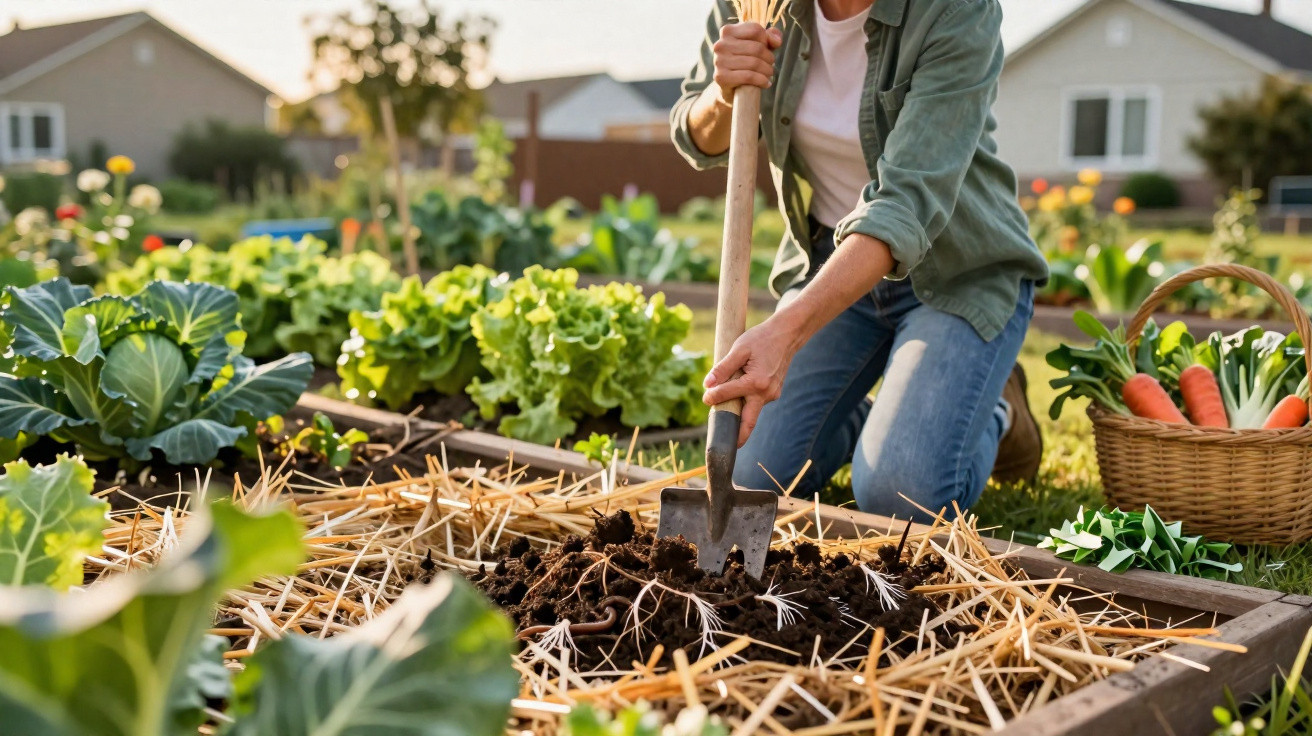
At the same time, garlic acts as a natural bodyguard in the garden bed. Planted among carrots, strawberries or roses, it can confuse pests. It is less happy, however, when grown close to peas and beans.
Risks, limitations and useful combinations
As tempting as the supermarket produce method may sound, it is not entirely risk-free. Wet, heavy soils can cause rot, while treated bulbs may refuse to germinate. Anyone planting out a large bed without a test row or without considering the soil conditions risks losses and, in the worst case, long-term fungal problems.
By contrast, gardeners who use organic bulbs, chill them briefly, plant only well pre-sprouted cloves and choose the site carefully can turn leftover kitchen produce into a surprisingly effective form of self-sufficiency. It becomes particularly interesting when combined with raised beds and containers: soil is easier to control, the risk of waterlogging is lower, and attractive mixed plantings with lettuce, spinach or strawberries can be created at the same time.
In this way, an unassuming discount supermarket net becomes a small self-sufficiency project – producing garlic that often seems more aromatic, fresher and longer-lasting than any bulb from the shelf.
Comments
No comments yet. Be the first to comment!
Leave a Comment