
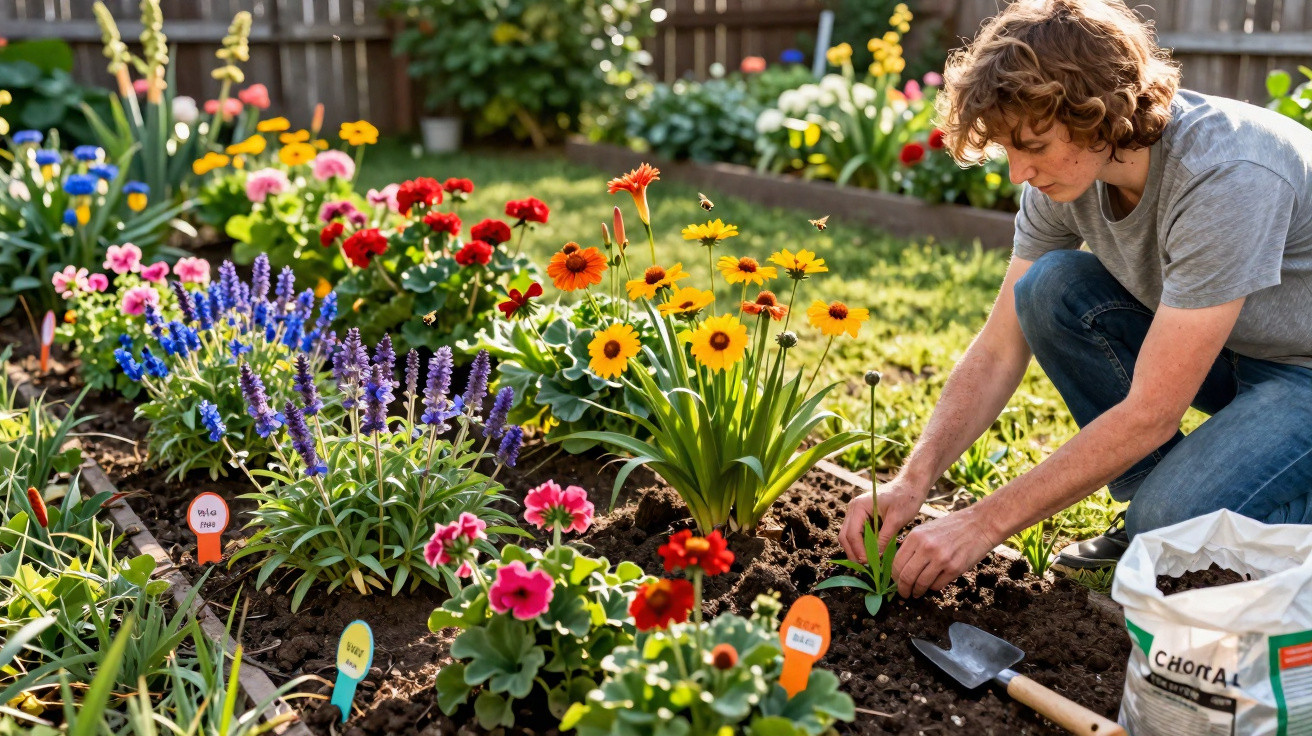
Many amateur gardeners will recognise the situation: you plant with high hopes, wait what feels like forever, yet gaps remain where only weeds really thrive. Fortunately, there are perennials that not only return every year but also grow at an impressive pace. They spread quickly, flower for months and provide insects with a generous buffet. These are the “turbo perennials” covered here.
Why fast-growing perennials are a game changer in the garden
Perennials are the long-distance runners of the border: plant them once and they return year after year, establishing a dependable network of roots in the soil. Choosing fast-growing varieties effectively skips the stage when beds can look thinly planted for years.
“Fast-growing perennials fill gaps, suppress weeds and provide colour for a long time – with considerably less effort than many annuals.”
Most perennials follow a similar pattern: they establish their roots in the first year, spread in the second, and have generally claimed their space by the third. With especially vigorous choices, the same stages simply happen far more quickly, provided the growing conditions are reasonably suitable.
Light is particularly important:
- Full sun: around six or more hours of direct sunshine each day
- Partial shade: roughly half that amount, with the remaining time in indirect light or light shade
Following this straightforward rule prevents plenty of disappointment and means you can enjoy dense, healthy borders sooner.
How to help perennials get off to a fast start
Most fast-growing perennials prefer soil that drains well. Waterlogging slows their growth, while roots can easily rot away in heavy ground. It is therefore worth carrying out a quick soil check before planting.
The ideal start in the border
- Remove weeds thoroughly, including all their roots
- Loosen the soil with a digging fork, avoiding smooth-sided “pot holes”
- Work in compost or well-rotted farmyard manure
- Soak the rootballs before planting until no more air bubbles rise to the surface
Using sturdier potted perennials rather than very small young plants gives a quicker visual result. During the first few weeks, water them regularly, especially in sunny or windy weather.
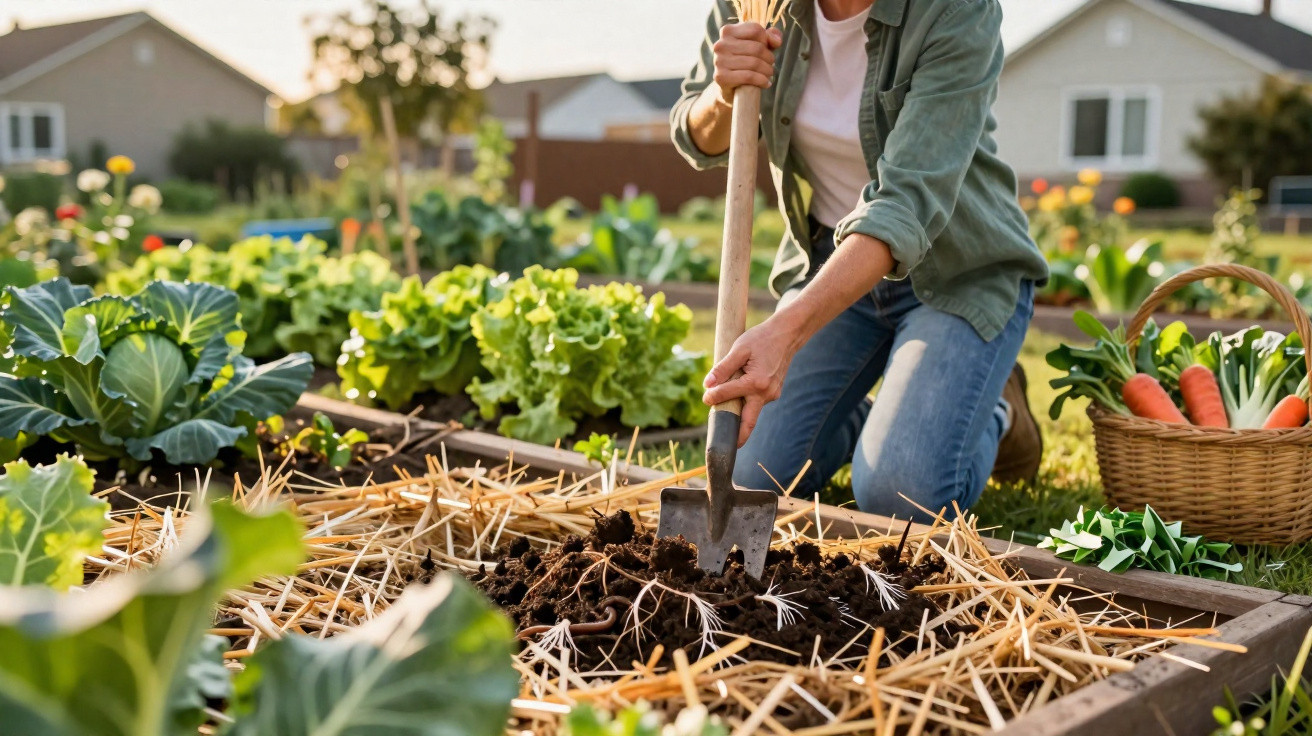
Mulch is another important factor. A layer of composted bark, chipped prunings or straw keeps moisture in the soil, restricts weeds and creates a more balanced soil climate. This is a major advantage, particularly during the hot summers of recent years.
The 10 perennials that really fill borders at record speed
1. Agastache – fragrant perennial and insect magnet
Agastache, often sold as giant hyssop, enjoys sunny and relatively dry positions. It soon forms upright clumps carrying numerous flower spikes in shades of purple, pink or orange. Its leaves release an aniseed or minty scent when touched, and bees and butterflies are particularly drawn to it.
Once established, Agastache copes well with heat and dry spells. A light trim after the first flush of flowers will often produce a second one.
2. Catmint (Nepeta) – a blue flower carpet for sunny spots
Nepeta is among the most dependable ground-covering plants for sunny borders. Growing in a relaxed, arching habit, it forms dense cushions and often flowers from May until late summer. Its delicate blue-toned blooms create an almost floating effect in the border.
Cats enjoy its scent, and insects do too. Cut it back firmly after its main flowering period and it will regrow compactly, often flowering again.
3. Coreopsis – long-flowering colour in yellow and red
With its daisy-like flowers in yellow, orange or red, Coreopsis brings an immediate summer feel to a border. The plants branch freely, grow in loose upright clumps and, when well cared for, produce flowers at an impressive rate.
Regularly removing faded blooms noticeably extends the flowering season. A fully sunny position with fairly poor soil is ideal.
4. Blanket flower (Gaillardia) – a red-and-yellow firework display
Gaillardia thrives in warmth, dry conditions and full sun. Its blooms resemble small fireballs in yellow, red and orange. It flowers for a long time and reliably, even if watering is occasionally forgotten.
As a cut flower, it lasts for several days in a vase. In the border, it quickly fills empty spaces while still remaining easy to manage.
5. Gaura lindheimeri – blooms floating above the border
Gaura lindheimeri can look almost like a swarm of small butterflies hovering over the border. Its fine, branching stems carry countless little white or pink flowers that dance in the breeze.
It prefers a sunny, light and free-draining site. In severe winters, it may die back to some extent, but it usually regrows strongly in spring and rapidly fills its space again.
6. Red hot poker (Kniphofia) – exotic bursts of colour
Kniphofia, also known as red hot poker, creates striking focal points with its two-toned flower spikes in yellow, orange or red. The plants form dense clumps fairly quickly.
A position in full sun with well-drained soil keeps them vigorous. In exposed areas, some winter protection around the root zone is advisable.
7. Hardy geraniums – a living carpet along the border edge
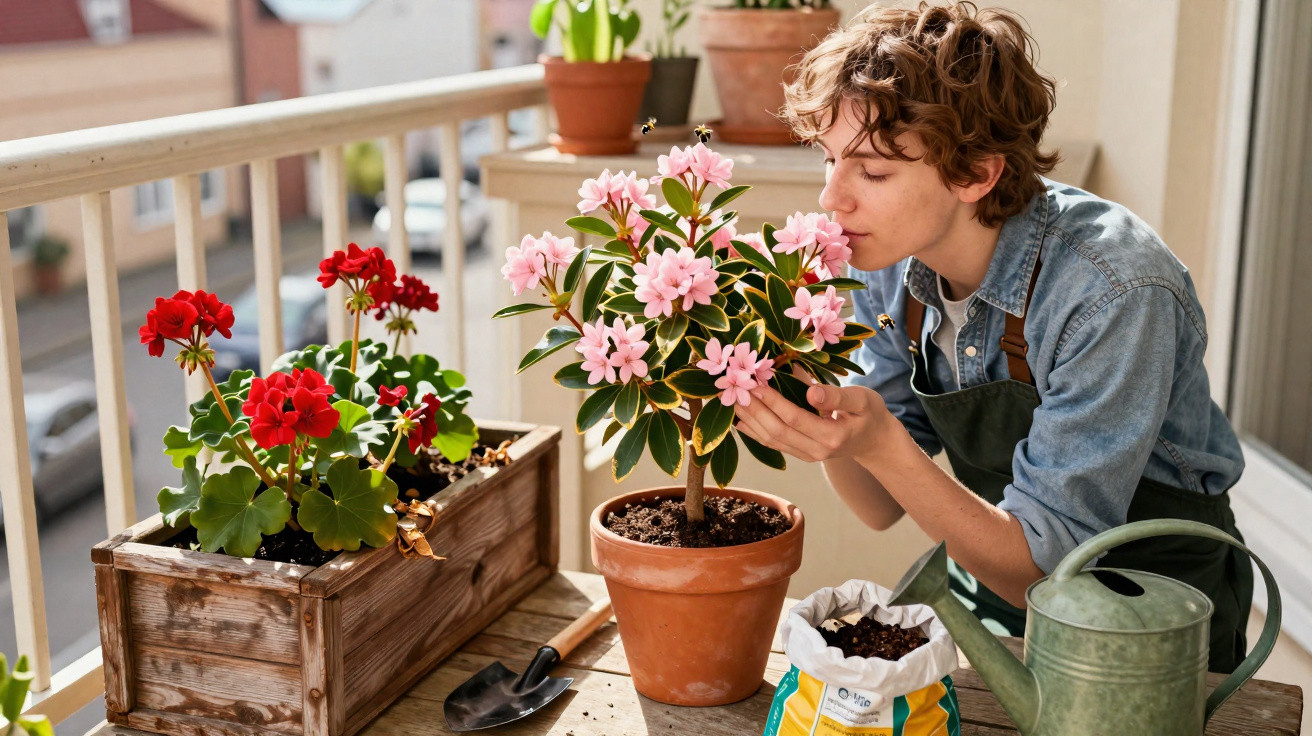
Hardy geraniums, not to be confused with bedding pelargoniums, are rightly considered workhorses of the border. Many varieties grow quickly and widely, cover bare ground and flower from late spring into summer.
They are ideal for underplanting in front of taller perennials or shrubs. Cutting them back firmly after flowering rewards you with fresh foliage and often a lighter second flush of blooms.
8. Perennial sage – flower spikes for weeks
Perennial sage adds structure to the border with its upright, usually purple or blue flower spikes. It quickly develops into compact clumps and flowers over many weeks.
Pruning immediately after the main flush encourages a second display. A sunny, relatively dry soil suits it far better than a permanently damp position.
9. Daylilies – powerful, low-maintenance clump-forming perennials
Within just a few years, daylilies make impressively large clumps. Although each individual flower lasts only one day, new buds continually open, keeping the overall display lush for weeks.
They cope with both sun and light partial shade. Nutrient-rich soil encourages particularly large flowers and strong colours.
10. Bee balm (Monarda) – a colourful accent and bee magnet
Monardas spread quite rapidly through short runners, forming continuous carpets. Their distinctive rounded flowers in red, pink or violet are magnets for bees, bumblebees and butterflies.
They prefer fresh soil that does not become too dry, and benefit from an airy position because otherwise their leaves can be prone to powdery mildew. Dividing them regularly every few years keeps them vigorous and under control.
How to combine these fast starters cleverly in the border
If you want a garden that fills out quickly while also looking visually balanced, plan in broad layers:
- Background: red hot poker, daylilies, tall Agastache varieties
- Middle ground: Monardas, Coreopsis, Gaillardia, Gaura lindheimeri
- Foreground: catmint, hardy geraniums, low-growing sage varieties
This creates depth and structure without individual plants immediately overwhelming the others. If you prefer a more natural, meadow-like appearance, mix the varieties more loosely and repeat small groups throughout the planting.
Practical tips for a permanently relaxed level of maintenance
After a few years, fast-growing perennials can become a little too successful. Regular division and replanting keeps them in shape and prevents competition for space. Early spring or late summer are the best times for this.
Another point is to fertilise sparingly. Too much nitrogen mainly produces leafy growth, making plants more likely to flop and more susceptible to disease. A thin annual layer of compost is entirely sufficient for most borders.
What terms such as “poor soil” and “well-drained” really mean
Gardening guides often refer to “poor” or “well-drained” soils, but these terms can remain abstract for many people. Put simply, they mean:
- Poor: low in nutrients, usually rather sandy, with water draining away quickly and weeds growing more slowly
- Well-drained: the soil does not stick together when squeezed in your hand, and water does not sit on the surface for long
If your garden has heavy clay, you can improve it with sand, grit and plenty of organic matter. This helps even drought-loving perennials feel more at home and establish themselves far more reliably.
When properly combined, these ten turbo perennials take a large share of the gardening work off your hands. They fill bare areas, provide food for pollinators and make the border look, after only a short time, as though it had “always” been there.
Comments
No comments yet. Be the first to comment!
Leave a Comment