
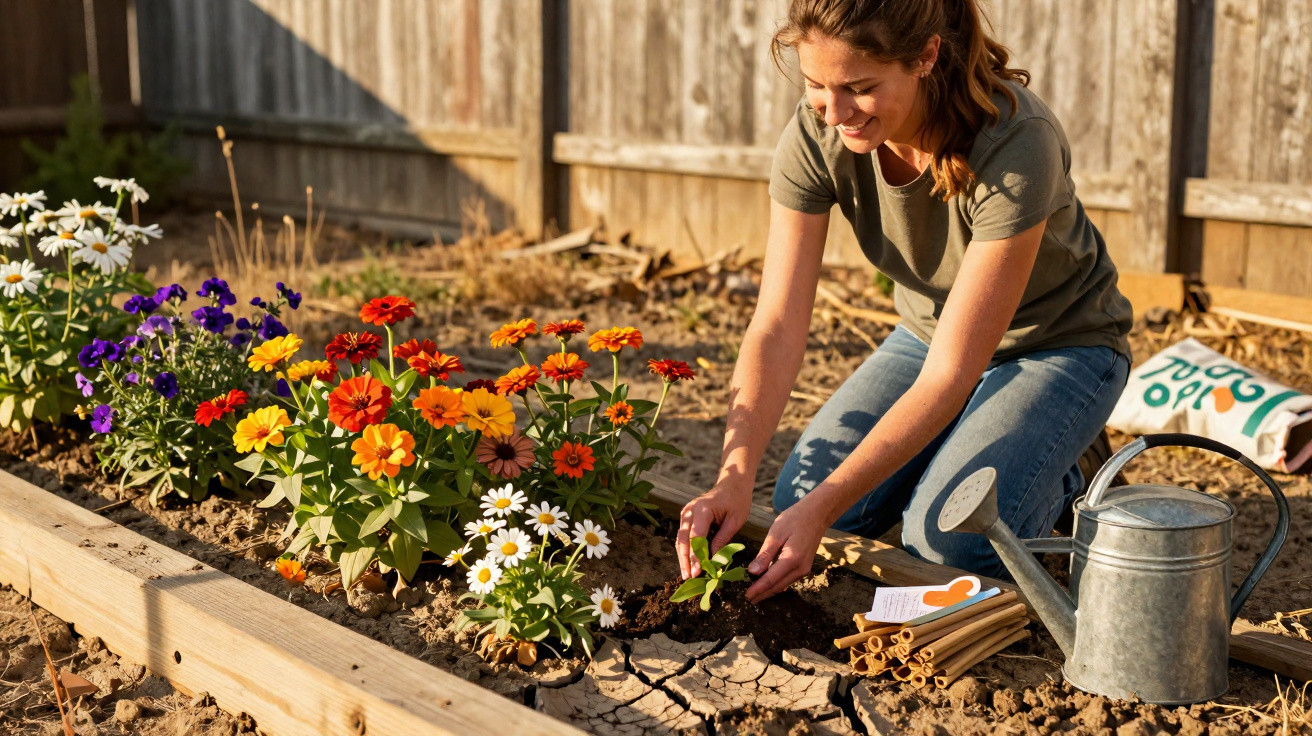
Spring may only just be getting under way, but many borders still look bare.
Plant wisely now and you can enjoy flowers for months, without the stress of constant watering.
While others are battling with the hosepipe in high summer, certain perennials and annuals cope remarkably well with heat. Timing is crucial: planted out in late March, they establish deep roots and can handle even very dry soil surprisingly well.
Why late March is the ideal time to plant
By late March, the soil is beginning to warm up while still retaining plenty of moisture. Many tough plants particularly benefit from this window, as their roots have time to spread before the first heatwave arrives.
Planting in late March gives your flowers several weeks' head start – and therefore far greater resistance to drought.
Plants put in now generally produce stronger root systems. Their roots can reach lower soil layers where some residual moisture remains, even during dry summers. As a result, they stay upright for longer while more delicate varieties have already started to wilt.
Seven heat-tolerant plants for a flowering summer
For a long-flowering border that needs little water, colour is not the only consideration: resilience matters above all else. These seven plants have proved their worth in dry spots.
Rudbeckia – a sunny long-flowering favourite
Rudbeckias, often called coneflowers, bring large yellow blooms to the border and tolerate heat exceptionally well. They are ideal for the middle or back of a border.
- Spacing: 40–60 cm
- Position: sunny, free-draining soil
- Watering: water thoroughly after planting, then only during prolonged dry spells
Removing faded stems promptly will often encourage a second flush of flowers well into autumn.
Perennial geraniums – elegant gap-fillers
Perennial geraniums create loose carpets, fill spaces in the border and suppress weeds. They work especially well in front of taller perennials such as Rudbeckia.
- Spacing: 30–40 cm
- Position: sun to light shade, ordinary garden soil
- Care: trim back lightly after flowering to encourage fresh new growth
Their advantage is particularly clear in hot summers: their dense growth shades the soil, preventing it from drying out as quickly.
Lavender – fragrant cushions for sunny spots
Lavender thrives in dry, poor conditions and full sun. It adds a Mediterranean feel to front gardens, border edges and gravel areas.
- Spacing: 30–50 cm
- Position: very well-drained, lime-rich, sunny soil
- Care: trim lightly after flowering, but do not cut into old wood
A mineral mulch of grit or fine gravel around the plants prevents waterlogging and increases warmth around them – precisely the conditions lavender enjoys.
Euphorbia – a striking structural feature
Spurges have a very contemporary appearance, thanks to their structured, often yellow-green foliage. They need little water and remain impressively sturdy even in drought.
- Spacing: 40–60 cm
- Position: sun to partial shade, free-draining soil
- Safety: wear gloves when cutting back, as the milky sap can irritate skin
They bring shape and calm to a border, and combine particularly well with lavender and Sedum.
Orpine (Sedum) – the specialist for bone-dry corners
Both tall and low-growing stonecrops are among the easiest perennials to look after. Their fleshy leaves store water, making them ideal for stony, dry ground.
- Spacing: 20–30 cm
- Position: full sun, very well-drained soil
- Watering: water regularly only while plants are establishing
In late summer, their flowers attract numerous bees and butterflies. If the stems are left in place over winter, they provide structure as well as food for insects.
Cosmos – floating clouds of flowers
Cosmos, also known as Mexican aster, bring an airy quality to the border. Their delicate flowers sway in the breeze and fill open spaces between perennials.
- Sowing: sow under cover in late March, then plant into the border after the last frosts
- Spacing: 20–30 cm
- Care: deadhead regularly and they will flower into autumn
They prefer sunshine and relatively poor soil – too much fertiliser produces lots of leafy growth but fewer flowers.
Love-in-a-mist – delicate-looking but naturally robust
Love-in-a-mist has a fine, airy appearance, yet copes surprisingly well with ordinary garden soil and dry periods. It is also keen to self-seed.
- Sowing: sow directly into the border, 20–25 cm apart
- Position: sunny to lightly shaded
- Special feature: decorative seed pods for bouquets or dried arrangements
To prevent it spreading too freely, cut off the pods in good time. Otherwise, it will happily take care of some of the following year's sowing for you.
How to combine the plants successfully
A harmonious, low-maintenance summer garden follows two straightforward rules: group plants with similar watering needs, and arrange them by height.
| Area | Suitable plants | Water requirement |
|---|---|---|
| Full sun, very dry | Lavender, Euphorbia, orpine | very low |
| Ordinary garden soil, sunny | Rudbeckia, perennial geraniums | moderate |
| Front of border / gaps | Cosmos, love-in-a-mist | moderate to low |
Place taller plants such as Rudbeckia and cosmos at the back or centre of the border, with ground-covering perennials such as geraniums and Sedum at the front. This keeps every plant visible while allowing them to benefit from one another.
The key planting steps
Before planting, loosen the soil thoroughly and remove stones and large clods. Give each plant a hole the size of its root ball, positioning it so that the top of the root ball sits as level as possible with the surrounding soil.
Once planted, firm the soil well and water generously once – this removes air pockets from the soil and helps plants establish.
A mulch layer gives the soil extra protection:
- organic mulch (bark chips, compost): ideal for Rudbeckia, perennial geraniums and cosmos
- mineral mulch (grit, gravel): perfect for lavender, Euphorbia and orpine
Plant in the morning or evening wherever possible, when the sun is not beating down on newly planted specimens. This prevents drought damage from the very first day.
What to do after planting
Even drought-tolerant plants need slightly more support during their first few weeks. Water less often but deeply, encouraging roots to grow down into the soil.
If there is a late frost, simply lay horticultural fleece over the borders in the evening. Deadhead cosmos regularly, shape lavender lightly after it has flowered, and only cut back Euphorbias while wearing gloves.
Anyone wishing to keep love-in-a-mist under control should watch its seed pods. Leave only a few in place deliberately and, next year, they will create a loose, natural-looking carpet.
A summer garden that manages with little water
Together, these seven plants form a remarkably reliable planting scheme: perennials provide structure and return year after year, while annuals such as cosmos and love-in-a-mist add movement and fill gaps as they appear.
One tried-and-tested combination is Rudbeckia and several cosmos at the back, lavender and Euphorbia in the middle, then perennial geraniums and low-growing Sedum at the front. This creates a layered border that flowers from early summer into autumn and provides insects with plenty of food.
There is a reason many of these plants perform so well: they originate from regions with hot, sparse summers. Their strategies – storing water in leaves, developing deep roots and producing fine foliage that loses little moisture – make them ideal for gardens where the hosepipe should not need to be used every day.
If you wish, add a few pots of herbs such as thyme or rosemary among the perennials. Both suit lavender and Sedum visually and ecologically, enhancing the effect of a low-maintenance summer garden with a Mediterranean feel.


Comments
No comments yet. Be the first to comment!
Leave a Comment