
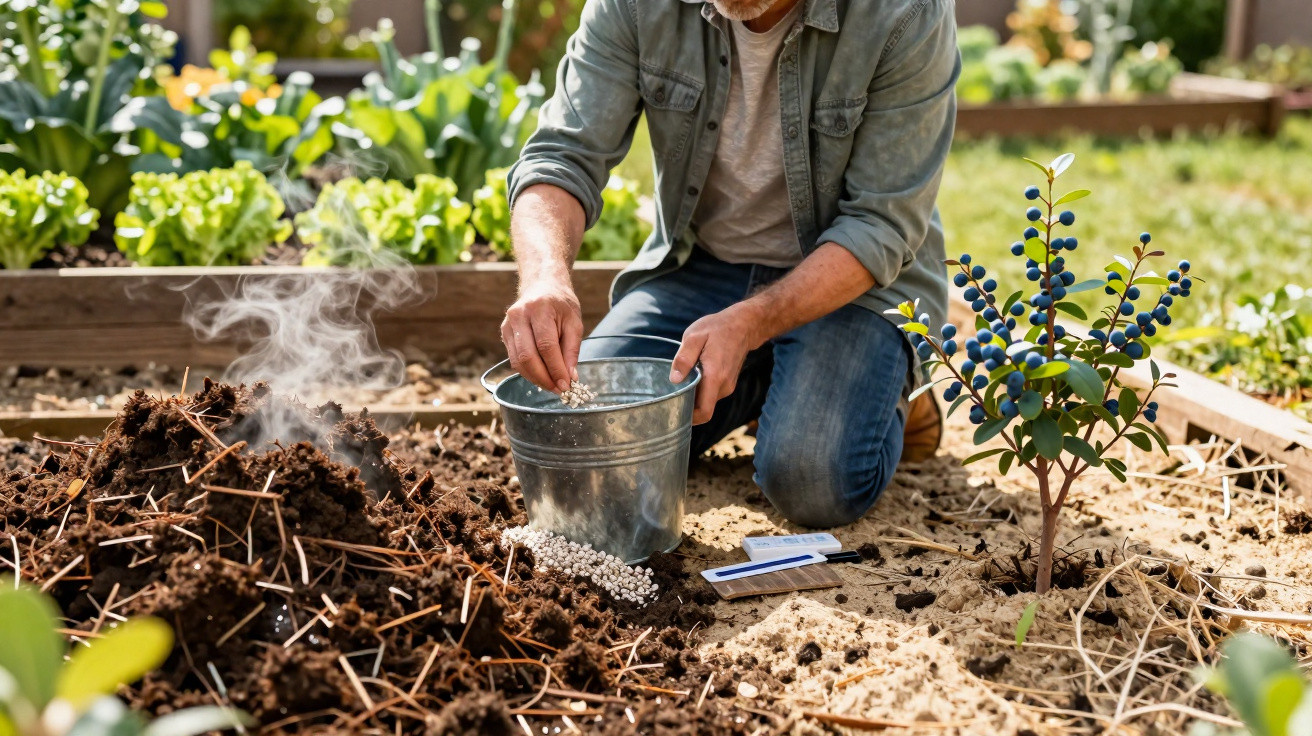
Many fireplace owners diligently tip ash into flowerbeds and vegetable plots in spring – and harm their plants far more than they realise.
For many amateur gardeners, wood ash seems like a free miracle treatment: natural, produced by their own stove and packed with minerals. So, many think, why not spread it over the beds? An experienced gardener strongly cautions against such enthusiasm: ash can be beneficial, but only in a few very specific places. Used properly, it has advantages; used incorrectly, it damages soil structure and harvests.
Why wood ash can quickly become a soil problem
Wood ash is not a harmless “natural fertiliser”, but a highly alkaline substance. Its pH usually ranges from 10.5 to 12.8, making it more alkaline than heavily diluted bleach. Even small excess applications can measurably alter the soil.
Wood ash acts like an alkali bomb in the soil: it drives up the pH rapidly and can lock up nutrients.
What does this mean in practical gardening terms?
- The pH becomes too high: Many cultivated plants prefer slightly acidic to neutral soil. When soil becomes overly alkaline, they come under stress.
- Potatoes become diseased: Potato scab and chlorosis (yellowing leaves) occur more often in excessively limy soil.
- Nutrients are locked up: Iron and phosphorus in particular become less available to plants, even if they are present in the soil.
Heavy clay soils can develop a “concrete effect”
Wood ash is especially problematic on loamy and clay-rich soils, which occur in many areas. There, its strong alkalinity worsens the compaction that is already an issue.
Typical consequences in these soils include:
- The surface becomes silty, forms hard crusts and dries out like cement.
- Water penetrates less effectively and runs off across the surface more readily.
- Fine roots receive less oxygen and are more likely to rot.
- Soil organisms retreat and microbial activity declines.
This is precisely where many stove owners make their biggest mistake: a bucket full of ash is regularly emptied straight onto beds and lawns in the belief that it is spreading “good fertiliser”. In reality, they worsen the soil structure year after year.
Ash as a slug barrier? A short-lived misconception
Another common idea is to use wood ash as a supposedly natural barrier against slugs. A dry ring around young plants may indeed appear discouraging at first.
However, the effect soon disappears:
- As soon as rain falls or there is heavy dew, the ash clumps together.
- It sticks to slugs but loses its “abrasive” effect.
- Many gardeners therefore keep applying more, unknowingly pushing pH levels ever higher.
Mechanical barriers, beer traps, runner ducks or consistent bed maintenance provide much more lasting slug control. Ash is suitable for this only to a very limited extent and in very small quantities.
First sensible use for wood ash: genuinely acidic, light soils
Despite all the warnings, wood ash can be very helpful when correctly measured and used in the right place. Its main benefit is in correcting strongly acidic, sandy soils.
On light, acidic soils, a small amount of wood ash can work wonders – provided the pH is tested first.
When soil is “asking” for ash
A typical situation where ash can be used sensibly looks like this:
- The soil is sandy and loose, and dries out quickly.
- Moss cushions are growing in lawns and beds.
- Tomatoes, carrots or beans remain small, while their leaves look yellowish.
- The area is not dominated by calcareous subsoil, such as a typical limestone or loess region.
Rather than guessing, it is worth carrying out a quick test: pH kits from the garden section usually cost less than ten euros. With a small spoonful of soil and a bottle of reagent, you can establish within minutes whether garden soil is acidic, neutral or alkaline.
- pH below 6: slightly to strongly acidic – sparing use of wood ash can make sense here.
- pH between 6 and 7: neutral – use ash only with great restraint.
- pH above 7: alkaline – it is better to avoid ash in beds altogether.
The correct amount and the right time to spread it
Anyone wanting to improve acidic soil in a targeted way should adhere strictly to the dosage. Specialists recommend:
- 80 to 100 grams of wood ash per square metre per year – roughly two loose handfuls.
- Apply it in winter or very early spring where possible.
- Spread only over finely crumbed, unfrozen soil.
- Work it in lightly or allow rain to wash it into the soil.
Important: this amount is an annual application. Anyone adding “just a little” more to the same bed after every evening by the fire will quickly exceed the tolerable limit.
Second sensible use for wood ash: on the compost heap
Routing ash through the compost is considerably safer than applying it directly. Many kitchen and garden wastes are naturally slightly acidic, including coffee grounds, fruit scraps, leaves and grass clippings.
In compost, wood ash acts as a pH buffer: it moderates acidity and supplies minerals without directly scorching roots.
How to dose ash on the compost heap
A little judgement is needed to prevent the compost heap from turning into alkaline slag:
- For each layer of organic material around 10 centimetres thick, one small cup of ash is enough.
- Do not tip ash on in a thick lump; distribute it as finely as possible instead.
- Add layers of woody material, such as woodchip, small twigs or straw, at intervals.
This gives microorganisms a well-buffered environment. Over the following months, calcium, potassium, magnesium and trace elements move into the compost. When it is later applied, the ash reaches the soil only in a highly diluted form – ideal even for loamy sites.
When wood ash must be strictly avoided
Not every type of ash belongs in the garden. The fuel used already determines whether the material is usable or should go into household waste.
Hazardous sources: ash best disposed of
- Wood from pallets, construction timber, chipboard or varnished furniture.
- Glued wood, window frames and coated boards.
- Pellets and briquettes from unknown sources.
Such products may contain glues, heavy metals, colourants or fire retardants. These substances become concentrated in the ash and therefore end up directly in the vegetable plot when it is spread. Garden professionals recommend using only ash from natural, untreated deciduous or fruit wood.
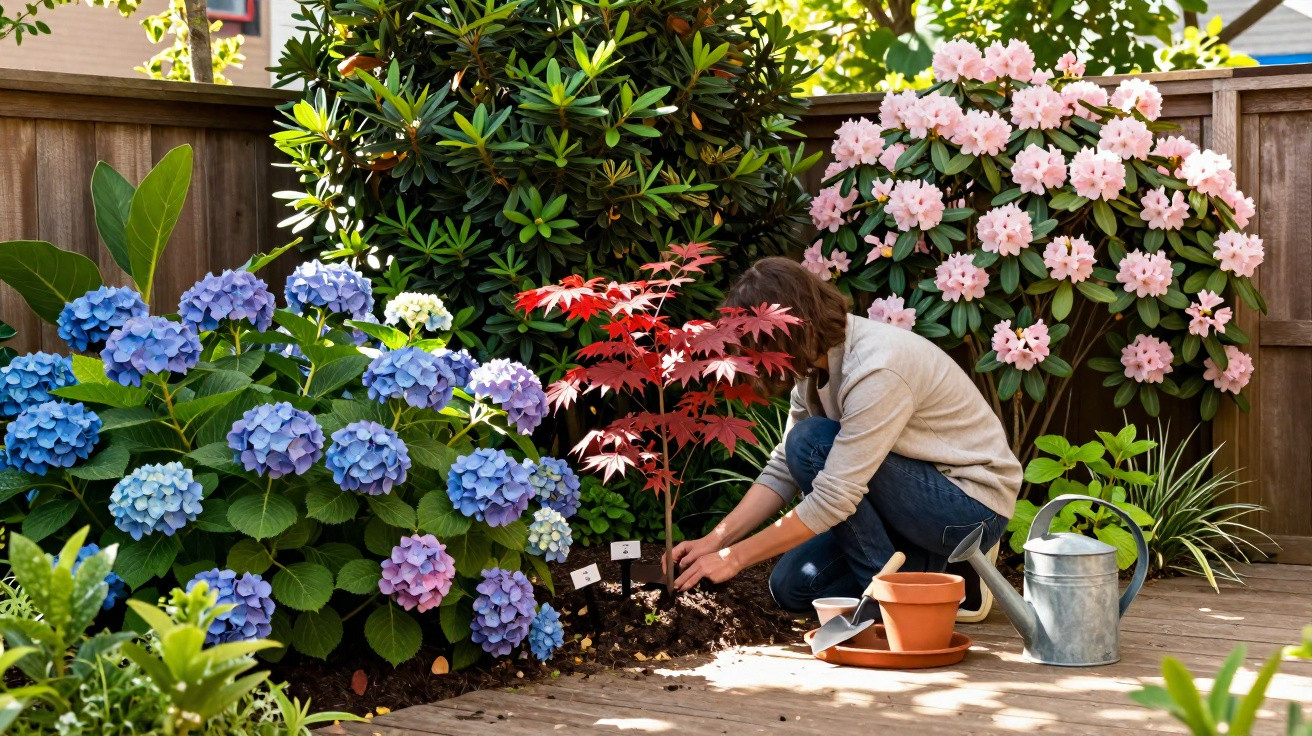
Nor can every garden location tolerate ash. Certain plants depend on acidic soil and react sensitively straight away:
- Hydrangeas, especially blue varieties
- Rhododendrons
- Azaleas
- Camellias
- Blueberries
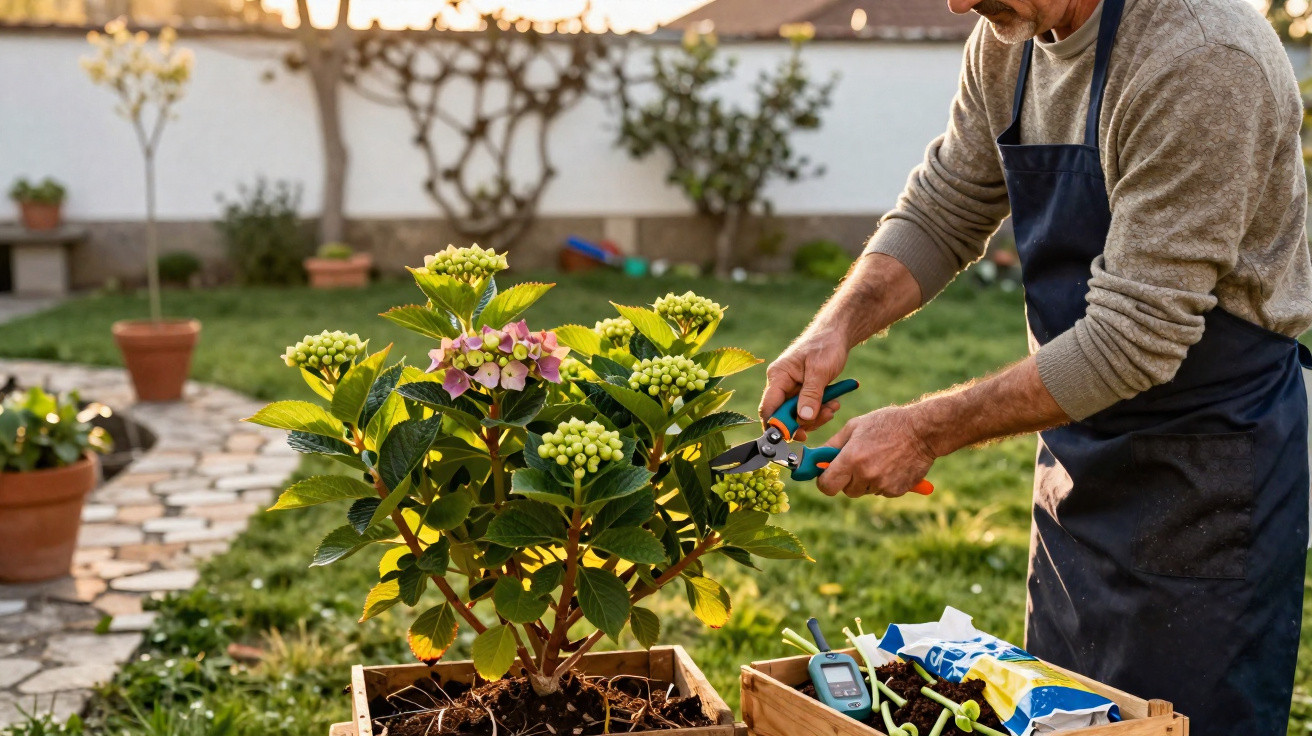
Anyone spreading ash in these beds may later wonder why flowers become discoloured and growth is poor. A hydrangea bush that suddenly changes from blue to deep pink is a classic warning sign of a rising pH.
Which nutrients wood ash actually supplies – and what it lacks
Wood ash does contain some useful components, though in far less abundance than many people assume. The following are broad typical values:
| Nutrient | Typical content | Importance in the garden |
|---|---|---|
| Potassium (K) | 2–5 % | Supports flower formation, water balance and frost resistance |
| Phosphorus (P) | 1–2 % | Encourages root development and fruit set |
| Calcium (Ca) | sometimes very high | Raises pH and improves the structure of light soils |
| Magnesium (Mg) | traces | Important for green leaves |
What ash lacks entirely, however, is nitrogen – the driver of strong leafy growth. Anyone who “fertilises” only with ash is therefore more likely to starve vegetables and perennials. Compost, manure, organic fertilisers or green manures remain essential.
Practical tips for everyday life with a stove and garden
Anyone who heats extensively with wood will quickly produce more ash than the garden can sensibly handle. A few straightforward rules can help:
- Use only cooled, grey-white ash, and sieve out black charcoal first.
- Always use a metal ash bucket and allow ash to cool without any risk of sparks.
- Store ash somewhere dry and sealed, such as in a lidded metal container.
- Use only part of it in the garden; dispose of the rest with household waste or give it to neighbours with sandy soil.
Those who observe their beds systematically will soon see whether the soil benefits from ash or suffers because of it: a crumbly texture, rich green leaves and reliable yields indicate a suitable dosage. Yellow leaves, crusted surfaces and stalled growth point to excess.
For many amateur gardeners, a change of approach is worthwhile: rather than reflexively carrying every bucket of ash into the vegetable garden, use it deliberately – small quantities on very acidic areas, with the rest carefully measured into the compost. This keeps a wood fire enjoyable without beds suffering the consequences in spring.




Comments
No comments yet. Be the first to comment!
Leave a Comment