
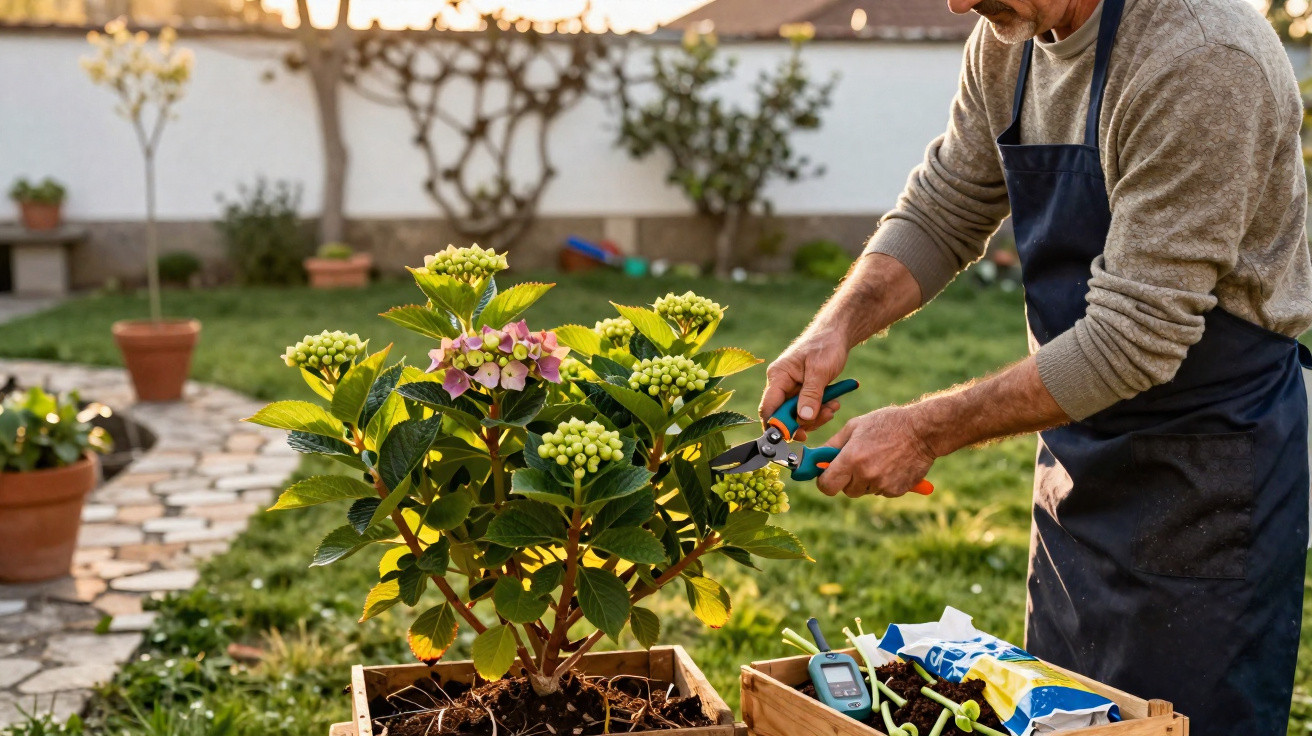
Anyone expecting dense clouds of pink, blue or white hydrangea flowers in summer may instead find their border full of foliage but short on blooms. British gardening expert Monty Don puts the blame not on expensive fertiliser, but on one easily missed moment in March and a pruning approach many amateur gardeners simply overlook.
Why March determines hydrangea flowers
Mophead hydrangeas (Hydrangea macrophylla) in particular – the familiar mophead and lacecap types found in front gardens – produce their flower buds during the previous year. Those buds form on what is known as old wood: stems that have already grown through the last summer.
Cut those stems back too hard with secateurs or a pruning saw in winter, and you remove the very sections meant to carry the coming season’s flowers. The consequence only becomes clear months later: vigorous shrubs with very few flower heads.
“The most important rule: many mophead hydrangeas flower on old wood – every incorrect cut in late winter immediately costs flowers.”
Monty Don, along with other well-known gardening experts, makes a clear distinction between two jobs:
- Removing spent flowers (deadheading): Taking off only the old flower heads without heavily shortening the entire stem.
- Pruning: Shaping the plant, cutting stems back substantially and removing old wood.
This difference is frequently missed in everyday gardening. Many people cut too early and too severely because they want to “tidy up”. In the depths of winter, the buds are still tight and inconspicuous, so they are easy to miss and accidentally remove. By around March, this changes: buds begin to swell and become more visible, starting the sensitive period when every cut needs careful consideration.
Monty Don’s simple rule for amateur gardeners
To illustrate the right pruning time, Monty Don uses a simple rule of thumb from the English-speaking world: if a shrub flowers before midsummer, leave its old wood largely intact. For many mophead hydrangeas, that means treating secateurs with caution in late winter and early spring.
In practical terms, gardeners expecting flowers in June should use a light touch in March and April, rather than reaching for hedge shears.
Monty Don’s March mini-prune for hydrangeas
For mophead hydrangeas, Monty Don recommends not a drastic cut in March but a gentle cosmetic tidy. The key is to deal only with old flower heads and dead tips, rather than cutting back the plant’s whole framework.
Step-by-step guide to the March trick
- Choose the right moment: Wait until late March or very early April, once the hardest frosts have passed and the buds have started swelling. The plant will still look bare, but thicker pairs of buds should be clearly visible on its stems.
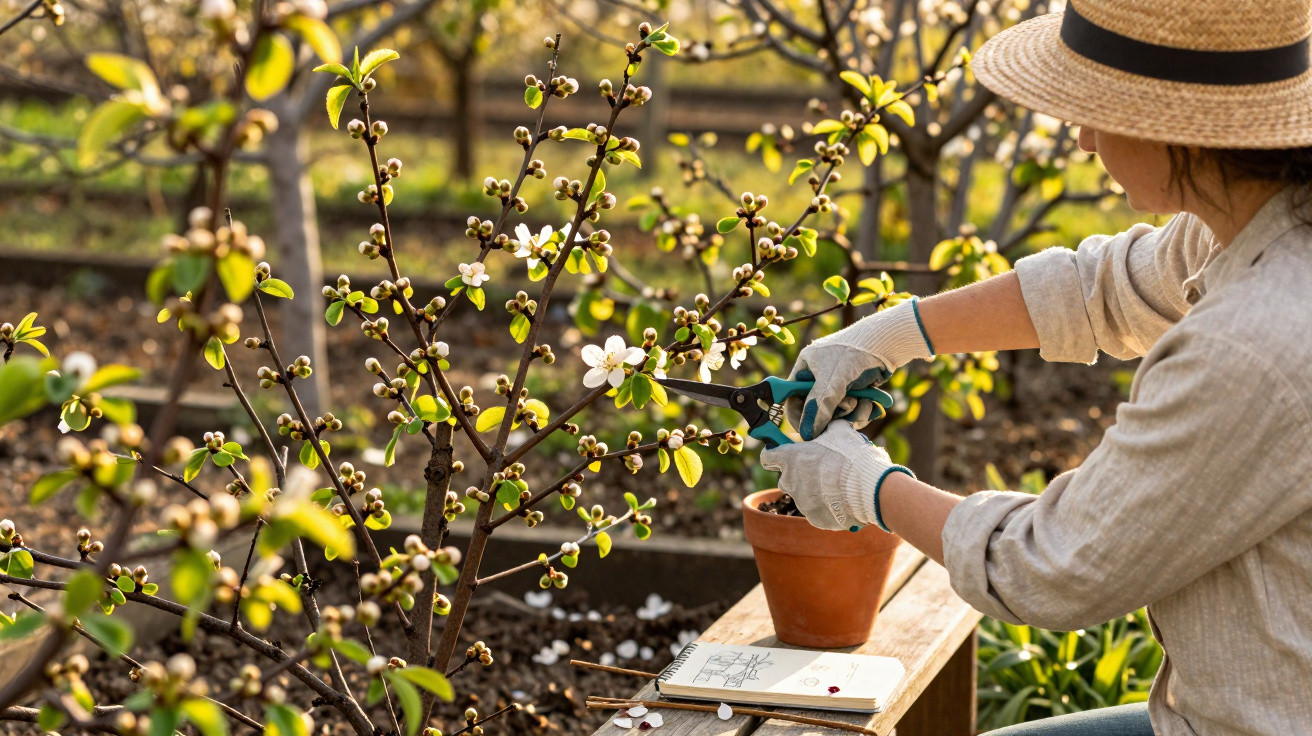
- Prepare your tools: Use sharp, clean and preferably disinfected secateurs so diseases cannot enter through the cuts.
- Find the old flowers: The brown, papery flower heads from the previous year often remain on the plant all winter. They provide some frost protection for the buds beneath them.
- Cut only just above a pair of buds: A strong pair of healthy buds usually sits directly below each old flower. Make the cut two to three millimetres above it. Leave the rest of the stem untouched.
- Remove frost-damaged tips: Where shoot tips look blackened or soft, trim them back as well – again, only to just above a healthy pair of buds.
This removes the dried flower heads and immediately gives the plant a tidier appearance. At the same time, every important flower bud remains in place. During spring, these buds develop into strong new shoots that carry the sought-after flower heads in summer.
“The crucial difference: the cut finishes at the pair of buds – not deep inside the shrub.”
Reports from amateur gardeners who have tried this method are often similar: noticeably more flowers, a more balanced shape and less “green disappointment” in July and August.
Common hydrangea pruning mistakes
Gardeners who have treated hydrangeas incorrectly for years often do not realise it. The plants survive and look healthy, but flower only sparsely. That is exactly why the usual pitfalls are worth considering.
- Pruning too early in winter: Cutting plants back hard in January or February removes the natural frost protection offered by old flower heads and often takes away flower buds without the gardener noticing.
- Cutting back severely every year: Many people treat mophead hydrangeas like summer-flowering shrubs that bloom on current-year growth, shortening every stem heavily and evenly. The plant then repeatedly produces foliage, but struggles to get going when it comes to flowering.
- Failing to distinguish hydrangea types: Panicle hydrangeas (Hydrangea paniculata) and smooth hydrangeas (Hydrangea arborescens) bloom on new wood, so they tolerate – and often need – harder pruning. Applying that method to mophead hydrangeas causes damage.
- Leaving dead stems in place: Gardeners who never thin out the shrub over several years risk creating an impenetrable tangle of old wood that shoots less well and is more susceptible to fungal diseases.
A quick inspection in March is enough to spot much of this: dead, hollow stems can be removed close to ground level without endangering the flower buds on younger, more vigorous growth.
Monty Don’s winter mulching routine for strong roots
Pruning alone will not turn a hydrangea into a summer star. Monty Don combines his March trick with a consistent winter mulching routine. Around January, he spreads a thick layer of organic material across the border, including around hydrangeas.
He favours well-rotted compost, mushroom compost or bark mulch. Along border edges, he often uses pine bark, which gently acidifies the soil – helpful for many hydrangeas that prefer a slightly acidic pH and then flower more strongly.
| Material | Benefit for hydrangeas |
|---|---|
| Garden compost | Rich in nutrients, improves soil structure and encourages soil life |
| Mushroom compost | Slow-release nutrients, an open texture and helps build humus |
| Bark mulch / pine bark | Retains moisture, protects against temperature fluctuations and gently acidifies soil |
According to Monty Don, the layer should be at least around five centimetres deep, and ideally twice that depth. It is better to mulch one part of the garden properly and deeply than to spread a symbolic thin layer everywhere.
“A substantial mulch acts like an insulating layer for roots – less evaporation, more stable temperatures, more nutrients.”
This brings several benefits for hydrangeas. The soil does not dry out as quickly in summer, plants experience less stress and can put more energy into bud formation. In winter, mulch also shields sensitive root areas from severe frost.
What gardeners can adopt in their own gardens
The British television gardener’s advice can be applied successfully in German gardens, although local conditions must be considered. In colder areas, the ideal pruning date is more likely to fall in early April; in milder regions, gardeners can begin as early as mid-March. The buds are the deciding factor: once they are clearly swollen but have not yet opened, the timing is favourable.
Anyone unsure which hydrangea is growing in their border can inspect it closely in summer. Do flowers appear on fresh, soft stems that grew in spring, or on stronger shoots from the previous year? Garden centres often label varieties as flowering on “current-year wood” or “older wood”. This information matters because it determines the pruning method.
Practical example: a hydrangea year with Monty Don’s routine
A possible annual routine for mophead hydrangeas in German-speaking regions could look like this:
- Autumn: Do not cut faded hydrangeas back drastically; instead, leave the dry flower heads largely in place. They add structure to the winter garden and provide light frost protection.
- January/February: On frost-free days, spread a deep mulch layer over the root area. Do not make any major cuts to the plant itself.
- March/April: Carry out Monty Don’s mini-prune: remove old flowers directly above the first healthy pair of buds, lightly shorten dead tips and take out dead stems at ground level.
- Summer: Water thoroughly in hot weather while avoiding waterlogging, and cut blooms carefully. When taking flowers for arrangements, cut long stems only from shoots that do not carry all the buds.
Gardeners who follow this routine often see their hydrangeas in an entirely new light: instead of isolated flower heads, a dense display can develop that almost completely covers the shrubs.
Hydrangea essentials: soil acidity, varieties and risks
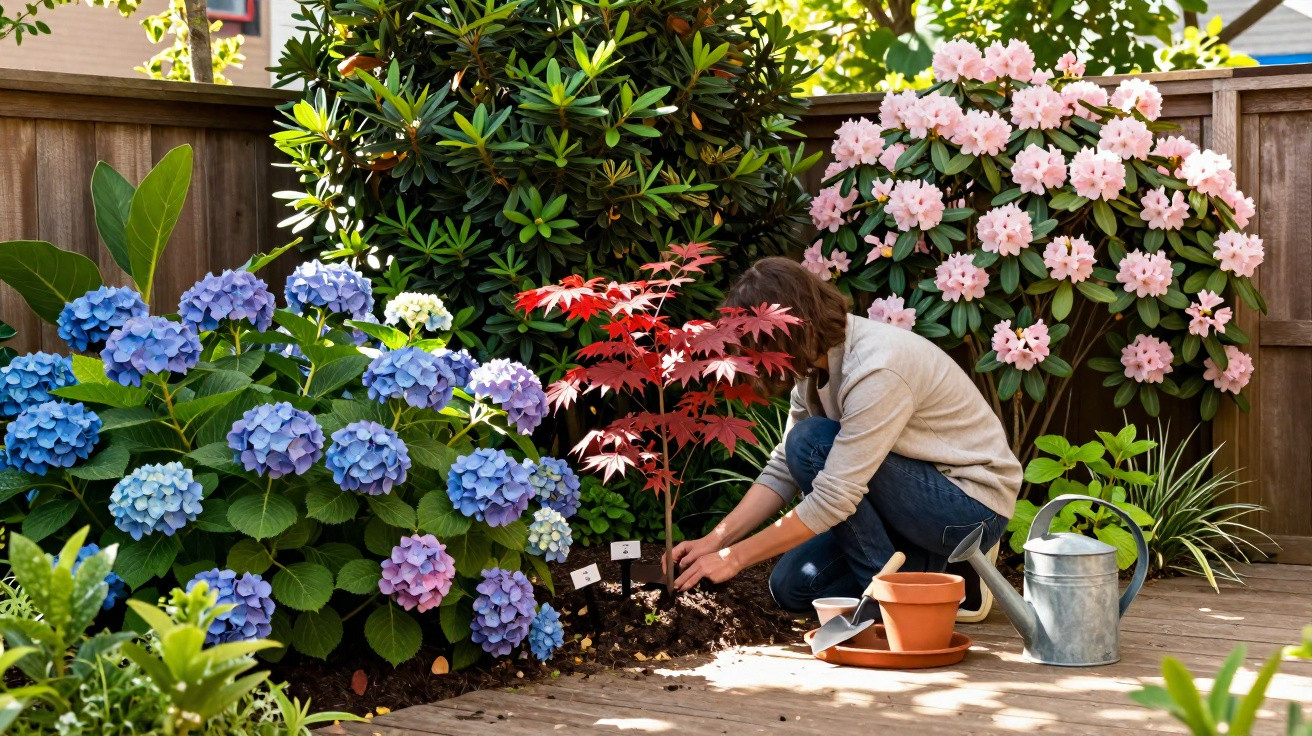
For many people, hydrangeas chiefly raise one question: blue or pink? The answer lies in soil pH, or acidity. In acidic soils with sufficient aluminium ions, certain varieties turn blue; in neutral to slightly alkaline ground, they become pink. The pine bark mulch recommended by Monty Don may help shift pH gently towards the acidic range – naturally, only when paired with a suitable variety.
One often-overlooked point is that excessive nitrogen fertiliser chiefly encourages foliage. Those using lawn feed or nitrogen-heavy general fertilisers with good intentions may therefore also end up with “lots of green, few flowers”. For freely flowering hydrangeas, a moderate organic fertiliser in spring is often enough when combined with a mulch layer.
Late frosts present the main risk. If buds grow very early after the March prune and a frosty night arrives at the end of April, young shoots can be killed by frost. In vulnerable locations, individual plants can be protected with horticultural fleece or hessian. Keeping an eye on the forecast and acting on critical nights can often save the entire floral display.
Combining all this with Monty Don’s small March ritual can create a summer scene more reminiscent of English gardening magazines than disappointing border experiments – without specialist fertiliser, but with good secateurs, some mulch and the right timing.



Comments
No comments yet. Be the first to comment!
Leave a Comment