
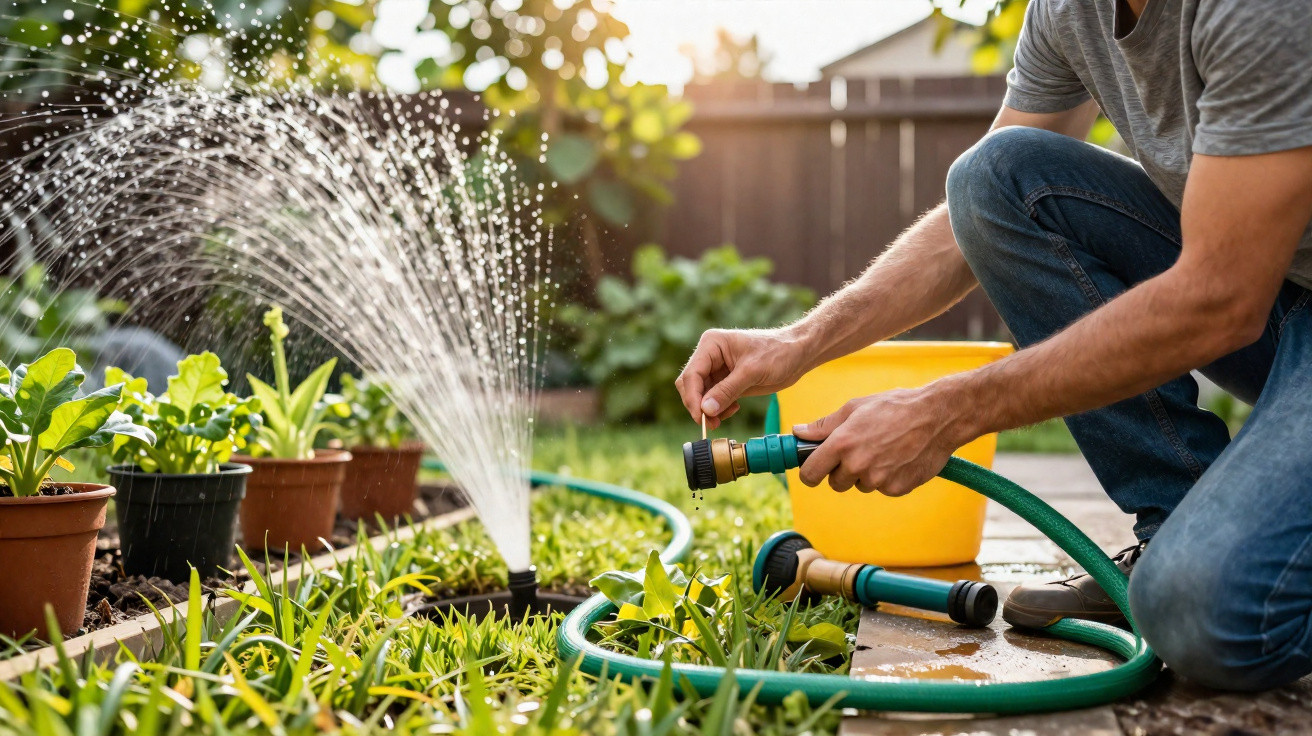
With regular use in the garden, an irrigation hose can gradually lose pressure and begin to release only thin streams of water. In many instances, the fault lies neither with the tap nor the mains water pressure, but with the hose holes themselves, which become blocked by debris that builds up over time, including sand, rust and leaf fragments.
Why does a garden hose lose pressure over time?
Dirt accumulates slowly and is often barely noticeable. Fine sand, small stones, soil, rust from pipework and even pieces of leaves can enter through the end connected to the tap and travel along the inside of the hose.
Because the holes are extremely narrow, a single grain lodged in one can be enough to obstruct the water flow and lower the pressure reaching the plants. In areas with particularly hard water, mineral deposits can speed up this blockage as well.
Watch a video on the Horta do Ditinho YouTube channel explaining how to carry out home maintenance and unblock irrigation and drip hoses without having to buy a replacement:
https://www.youtube.com/watch?v=rX_jY8dK2aM
How can you unblock garden hose holes simply?
You can clear blockages using items found in most homes, with no specialist tools required. First, disconnect the hose from the tap and lay it straight on the ground, ideally on a flat surface, then quickly inspect the sections where the water flow is weaker.
One helpful method is to use the water pressure in reverse by attaching the tap to the opposite end, forcing water through in the other direction. If that is not possible, placing the hose in a bucket of water for a few minutes can help loosen debris stuck around the outlets.
Which methods help increase water pressure for plants?
Once the dirt has been loosened, manually clean the holes more thoroughly with a thin piece of wire, a toothpick or an opened paper clip, always using gentle movements. Some people also use water mixed with mild washing-up liquid or white vinegar, leaving the hose filled with the solution for a while before rinsing it out.
As well as cleaning it, a few straightforward changes to daily use can improve overall watering performance and prevent the water supplied to plants from seeming weak:
- Check the tap valve: make sure the outlet is fully open.
- Avoid sharp bends: straighten tight kinks that restrict the flow.
- Keep the hose straight: whenever possible while it is in use.
- Use compatible spray nozzles: select fittings suited to the hose diameter.
How can you prevent further blockages and preserve the hose for longer?
After restoring the water flow, it is worth adopting a few simple habits so that the issue does not return quickly. Emptying the hose after every use, lifting it from the tap end towards the outlet, prevents solid particles from settling at the bottom and creating new obstructions.
It is also important to keep the tap connection clean and, where possible, fit a small mesh filter to catch sand and small stones. Storing the hose coiled on a raised holder, away from strong sunlight and mud, limits dirt entering through its ends and helps maintain more efficient, consistent watering over the months.

Comments
No comments yet. Be the first to comment!
Leave a Comment