
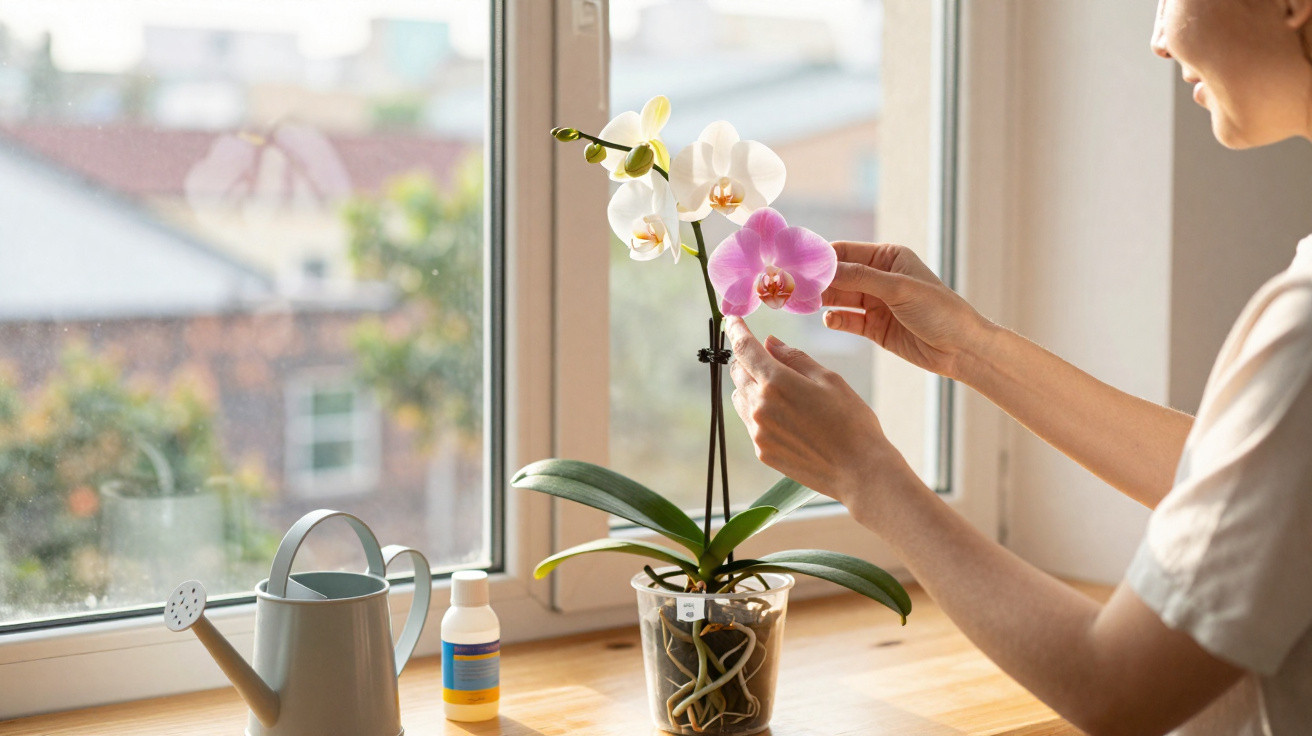
Watching an orchid grow a new flower spike is one of the most eagerly anticipated moments for anyone who cultivates this plant. While flowering times differ according to the species and growing conditions, certain practices can encourage healthy growth and support the appearance of fresh blooms. Suitable light, balanced fertiliser, correct watering and a favourable setting are among the factors that make the greatest difference to flowering.
How does light affect orchid flowering?
Light is one of the key requirements for an orchid to generate enough energy to produce new flower spikes. Most species grown at home favour bright conditions, provided they are not exposed to strong direct sunlight during the hottest part of the day.
The leaves offer a useful guide. Very dark green leaves may indicate insufficient light, whereas yellowed or scorched leaves suggest too much sun. Achieving the right balance is essential for promoting healthy flowering.
Watch a video on the Orchids in Action channel about the importance of lighting for orchids:
Which fertiliser helps encourage new flowers?
A well-fed plant is better able to produce flowers. While it is growing, use fertilisers formulated specifically for orchids, always following the manufacturer's guidance to prevent overfeeding.
As the plant approaches its flowering stage, many growers choose feeds with a higher phosphorus content, a nutrient linked to flower development. Fertiliser should be applied routinely, but always in moderate quantities.
- Use fertilisers made specifically for orchids
- Follow the application frequency stated on the packaging
- Avoid applying too much fertiliser
- Water before using liquid fertilisers
- Reduce feeding during dormant periods
- Keep the growing medium clean and well drained
How can you get watering and the growing location right?
Too much water is one of the main reasons orchids become weakened. Before watering, check whether the growing medium has already dried out partially. In transparent pots, silvery roots usually show that it is time to water again.
The growing area should also have good air circulation and moderate humidity. Stuffy spaces encourage disease and hinder the plant's development. A covered balcony or a spot near bright windows often provides suitable conditions for many species.
- Plenty of indirect light
- Good air circulation
- Water only when the growing medium is nearly dry
- A pot with excellent drainage
- Moderate ambient humidity
- Temperatures suited to the species being grown
Is it possible to get flowers within 60 days?
Some orchids can produce fresh spikes and blooms in around 60 days when they are already mature, healthy and naturally nearing their flowering period. However, this timescale is not guaranteed for every species and depends on factors such as variety, the plant's age, climate and growing conditions.
The most important thing is to follow a consistent care routine. An orchid with good light, appropriate fertiliser, correctly measured watering and a suitable environment is likely to flower more vigorously when its natural cycle arrives.



Comments
No comments yet. Be the first to comment!
Leave a Comment