
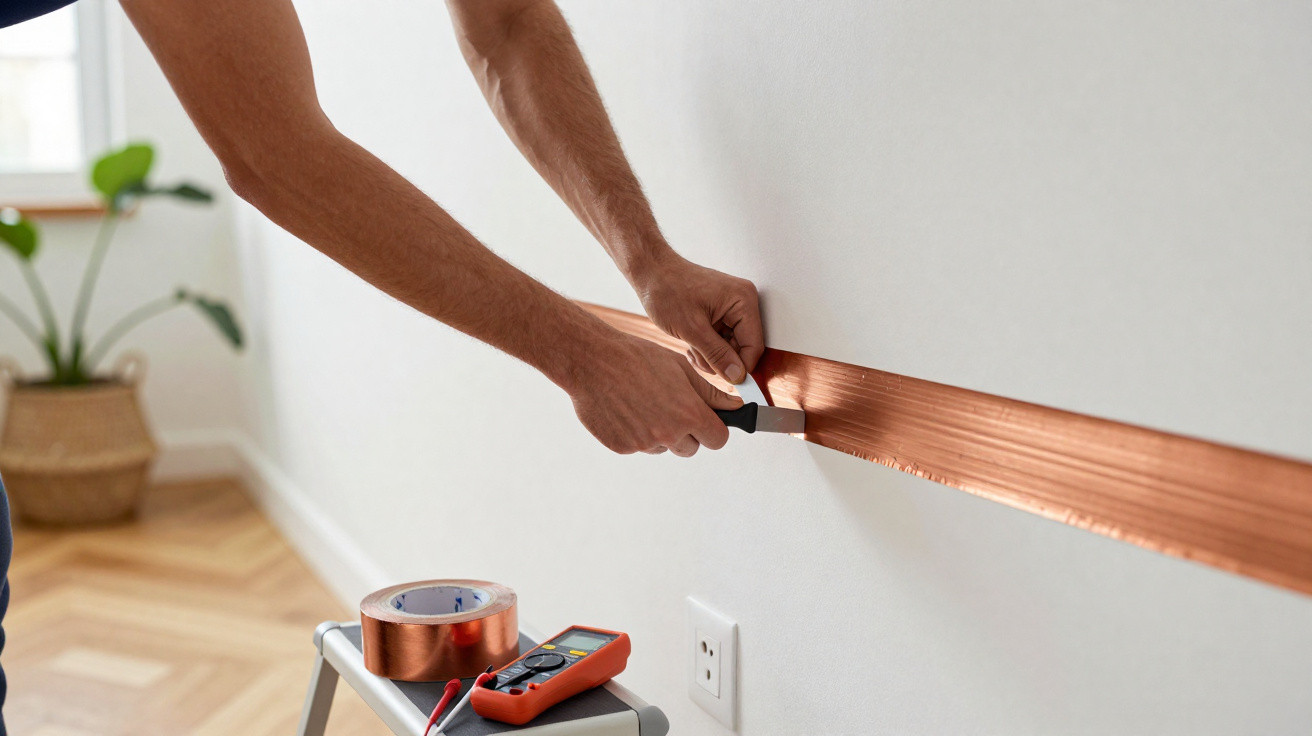
Copper tape has begun appearing on the walls of homes, clinics and offices, drawing attention because of the metallic strip running around skirting boards, door frames or particular areas. It is more than a decorative feature: it is a technical measure used to tackle electrical interference, improve earthing and, in certain cases, support moisture and mould control in critical areas. It creates a clearly defined conductive route where electrical charges and noise previously dispersed.
What is copper tape applied to a wall used for?
The most common use of copper tape on walls concerns conducting and managing electrical fields in spaces containing numerous cables, extension leads and power sources. When properly earthed, the strip provides a “preferred route” for dispersing interference, helping to reduce buzzing, minor electric shocks and interruptions affecting computers, sound systems and network equipment.
It can also be used in areas affected by persistent damp, where copper helps organise the movement of charges within walls suffering from water ingress, always alongside suitable mortars and base treatments. In these situations, it acts as an additional conductor and can help limit staining and peeling, but it is not a substitute for structural repairs or properly completed waterproofing.
Watch a video on the YouTube channel Let’s Evandro about the installation and usefulness of copper adhesive tape in residential projects, covering its conductivity and barrier functions:
https://www.youtube.com/watch?v=X2mB_7V9_kI
How does copper tape work, and which walls is it suitable for?
For copper tape for walls to perform as intended, its route to a connection point within the building’s earthing system must be planned. In locations with a high density of devices, it may run around the area behind worktops or television panels, forming a type of “protective ring” that helps reduce local electrical noise.
Copper’s combination of conductivity and mechanical strength sets it apart from aluminium tapes and plastic materials, which either oxidise more quickly or do not conduct at all. Adhesion is generally better on internal masonry walls; on drywall, the tape is usually incorporated into the metal framework. External walls or very damp walls, however, require further protection and an assessment of the surface condition in advance.
How to apply copper tape to a wall step by step
Correct installation begins with surface preparation. The wall must be dry, stable and clean, with no dust, loose paint or grease. On highly uneven walls, minor imperfections should be filled or lightly sanded to prevent bubbles and lifting that could compromise the copper’s continuity.
Once the area is ready, fitting copper adhesive tape involves several straightforward steps that help ensure electrical performance and lasting durability:
- Plan the route: establish the precise path, avoiding excessively tight bends and unnecessary joins.
- Clean the area: remove dust with a dry or slightly damp cloth, then allow the surface to dry completely.
- Apply the tape: gradually remove the backing, stick it down and press firmly, ideally using a plastic scraper.
- Maintain electrical continuity: overlap joins by a few centimetres and, where required, use suitable solder.
- Connect it to earth: attach the end to the earthing system with terminals, in accordance with technical standards.
What practical results can copper tape on walls provide?
In homes and small offices, professionals report less interference in sensitive equipment and improved consistency of earthing at critical points. Where cables are heavily concentrated, arranging the return path for electrical charges can reduce noise, freezing and minor shocks from nearby metal surfaces.
When incorporated into refurbishments and planned projects, copper tape in walls becomes more than a simple “patch” and forms part of electrical protection measures and property infrastructure care. Combined with sound installation practices, preventative maintenance and appropriate damp treatments, it is a discreet, relatively affordable solution that can bring noticeable improvements in comfort and environmental stability.





Comments
No comments yet. Be the first to comment!
Leave a Comment