
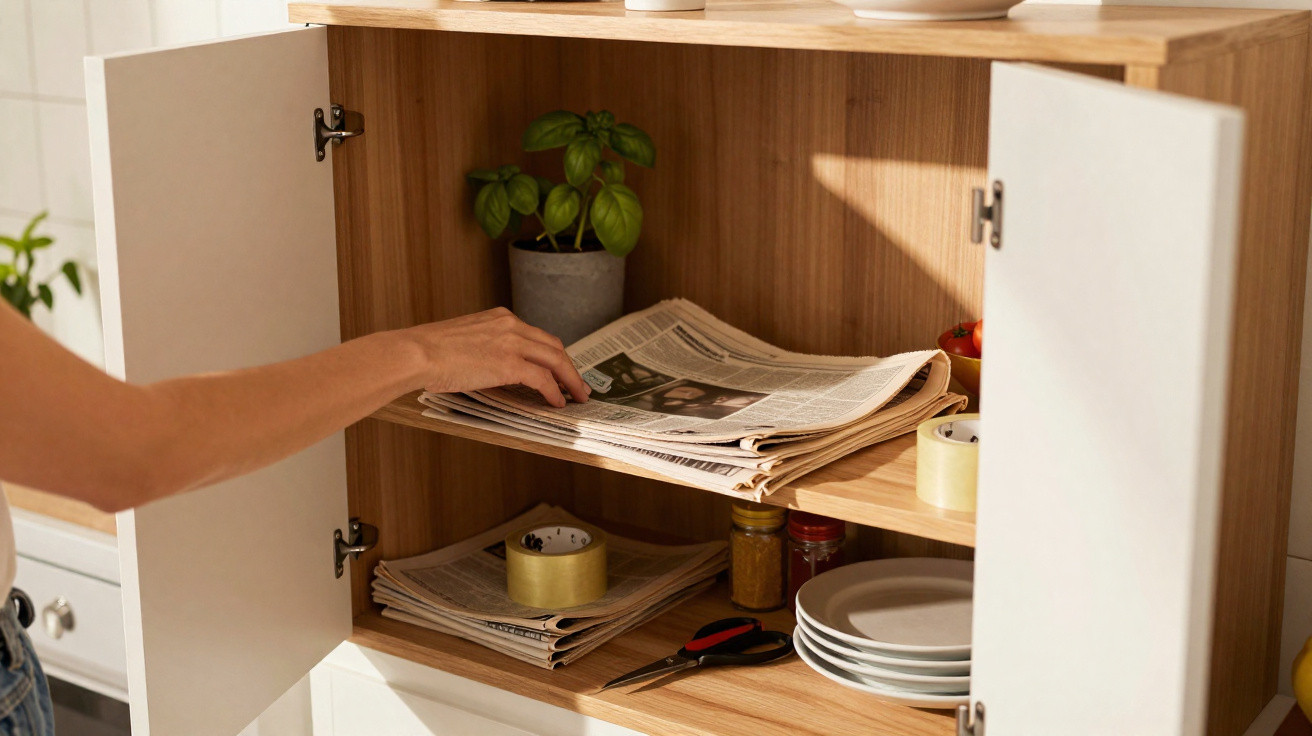
Lining the bottoms of kitchen cupboards with old newspaper is a long-standing habit that can still be found in many homes in 2026. It is linked to keeping things clean, protecting surfaces and reusing an inexpensive material that is easy to cut to fit different items of furniture.
What is the purpose of lining kitchen cupboard bottoms with old newspaper?
Newspaper primarily acts as a protective layer between packaging, pans and the cupboard’s inner surface. This limits direct exposure to grease, dust, damp and minor spills. As a result, stains, smells and signs of wear stay on the paper rather than reaching the wood, MDF or laminate.
It also makes cleaning easier: the lining can be removed and replaced quickly, without having to scrub the cupboard regularly. The paper provides a degree of cushioning too, helping to reduce scratches from heavier pans, baking trays and containers that are moved on and off shelves every day.
When should old newspaper be used in kitchen cupboards, and when should it be avoided?
Using newspaper is generally most suitable on shelves exposed to splashes, crumbs and light leaks, such as those used for oils, vinegars, liquid seasonings or children’s snacks. In older cupboards or rented properties, it can also conceal imperfections and help keep the furniture in better condition over time.
However, paper is not a good choice in particularly damp places, areas with water ingress or cupboards very close to the cooker. It may yellow quickly, hold moisture, worsen smells and encourage mould. For these situations, waterproof, washable materials are usually more suitable and hygienic for everyday kitchen use.
How to line kitchen cupboard bottoms with newspaper for longer-lasting protection
For newspaper to work properly, begin by cleaning and thoroughly drying the inside of the cupboard, removing all grease and dust. Next, measure the shelf and cut the paper with a small overlap around the edges. If preferred, layer two or three sheets together to make the lining sturdier and less likely to tear.
Once it is in place, a few straightforward steps will keep the cupboard organised and practical each day:
- Secure the newspaper only at the corners with small pieces of low-tack masking tape.
- Place heavier pans and containers at the edges to help keep the paper taut.
- Check every month for grease, tears, dampness or a strong smell, replacing the newspaper whenever required.
- Do not use newspaper on shelves affected by constant moisture or repeated leaks.
Other household uses for newspaper and whether the kitchen trick is still worthwhile
Around the home, newspaper can also line cutlery drawers and utility-room shelves, sit beneath cleaning products that may leak, and wrap crockery and glasses during a house move. For small maintenance jobs, it can protect floors while painting, absorb smells in containers and help dry wet shoes.
Despite the availability of modern shelf liners and organisers, the newspaper method can still be worthwhile for anyone wanting simple, low-cost protection that is easy to replace. In heavily used kitchens, it may be a temporary option until permanent liners are fitted, provided that the condition of the paper is checked regularly to prevent a build-up of dirt, damp and unwanted smells.




Comments
No comments yet. Be the first to comment!
Leave a Comment