
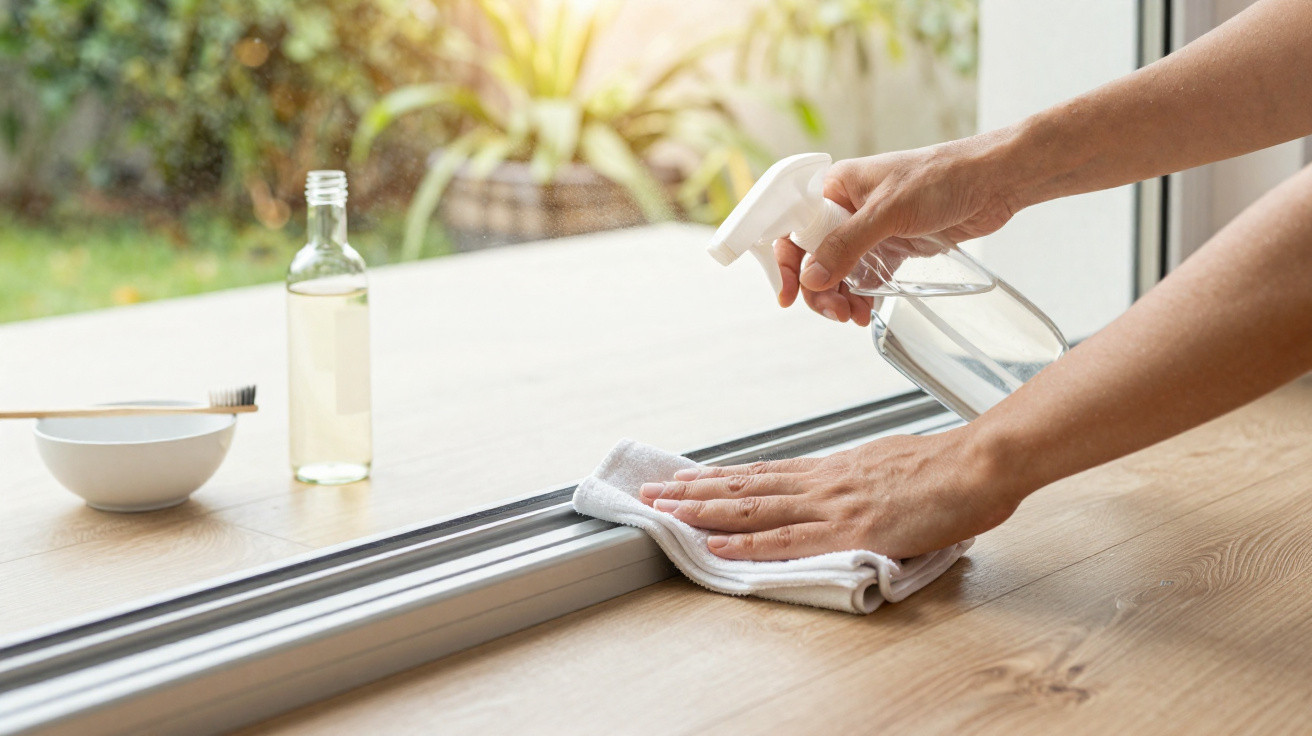
Using vinegar on sliding door tracks has become a common recommendation among household cleaning specialists. This inexpensive, widely available product can break down compacted grime that stops doors from gliding smoothly, reaching deep corners that an ordinary cloth cannot access and reducing the friction that wears down rollers and fittings.
What does vinegar actually do to sliding door tracks?
Over time, tracks collect dust, grease, drink splashes, cleaning-product residue and tiny particles carried in from outdoors. Together, these deposits create a type of “dried mud” that settles into corners and deeper sections, making doors catch even in homes that are cleaned regularly.
White distilled vinegar is mildly acidic, so it can work on dried grease, soap residue, light build-up and even early rust spots on metal or aluminium tracks. As it is very fluid, it seeps into narrow gaps, “lifting” the stuck-on layer and making it easier to remove mechanically with a cloth, brush or cotton bud.
Watch a video on the YouTube channel O Pulo do Gato na Construção about using distilled vinegar to clean metal channels and remove crusted deposits that cause sliding doors to jam:
https://www.youtube.com/watch?v=qMiwKIn0N7w
How to apply vinegar to sliding door tracks step by step
For the vinegar to work effectively, follow a simple sequence that avoids using too much liquid while ensuring the dirt is properly loosened. Whenever possible, use white distilled vinegar and begin by removing loose debris with a vacuum cleaner fitted with a narrow nozzle, a dry paintbrush or an old toothbrush.
- Prepare the solution: Mix equal parts white vinegar and warm water in a container or spray bottle.
- Apply it to the tracks: Spray the mixture directly onto the tracks, or dampen a cloth and spread it along the full length, paying particular attention to the corners.
- Reach awkward areas: Use a toothbrush, cotton buds or a firm-bristled brush in the narrowest points.
- Leave it to work: Allow it to sit for 5 to 10 minutes, without letting pools of liquid form.
- Remove the softened dirt: Wipe away the mixture and loosened grime with a cloth or kitchen paper.
- Finish cleaning: Wipe with a clean cloth lightly dampened with water, then dry the tracks thoroughly.
On tracks with heavy grease or old dirt, it can be helpful to sprinkle on a little bicarbonate of soda before spraying the vinegar. The fizzing action can help release the built-up layer. After cleaning, some householders apply a thin layer of silicone spray designed for tracks, which helps the doors continue to slide smoothly for longer.
How often should vinegar be used on sliding door tracks?
The ideal frequency depends on the amount of dust and foot traffic in the area. In places close to busy roads or outdoor spaces, cleaning the tracks with vinegar every 15 days is often useful. In more sheltered rooms, once a month is usually enough to prevent substantial build-up.
To organise track care more effectively, many people combine light day-to-day maintenance with more thorough cleaning at regular intervals:
- Weekly maintenance: Use a dry cloth or vacuum cleaner to remove loose dust and small debris.
- Deep cleaning: Apply the vinegar-and-water mixture 1 to 2 times a month, scrubbing the corners and narrow gaps.
Which other areas of the home can be cleaned with vinegar?
The same approach used on door tracks can be useful in various places with gaps and recesses where dirt remains hidden. With the right tools, vinegar makes cleaning simpler without relying on numerous different products, while also helping to reduce odours caused by old residue.
- Window tracks: These gather dust, rain splashes and soot, making them well suited to a solution of vinegar and warm water.
- Folds in metal blinds: Diluted vinegar helps remove grease and soot, particularly near the kitchen.
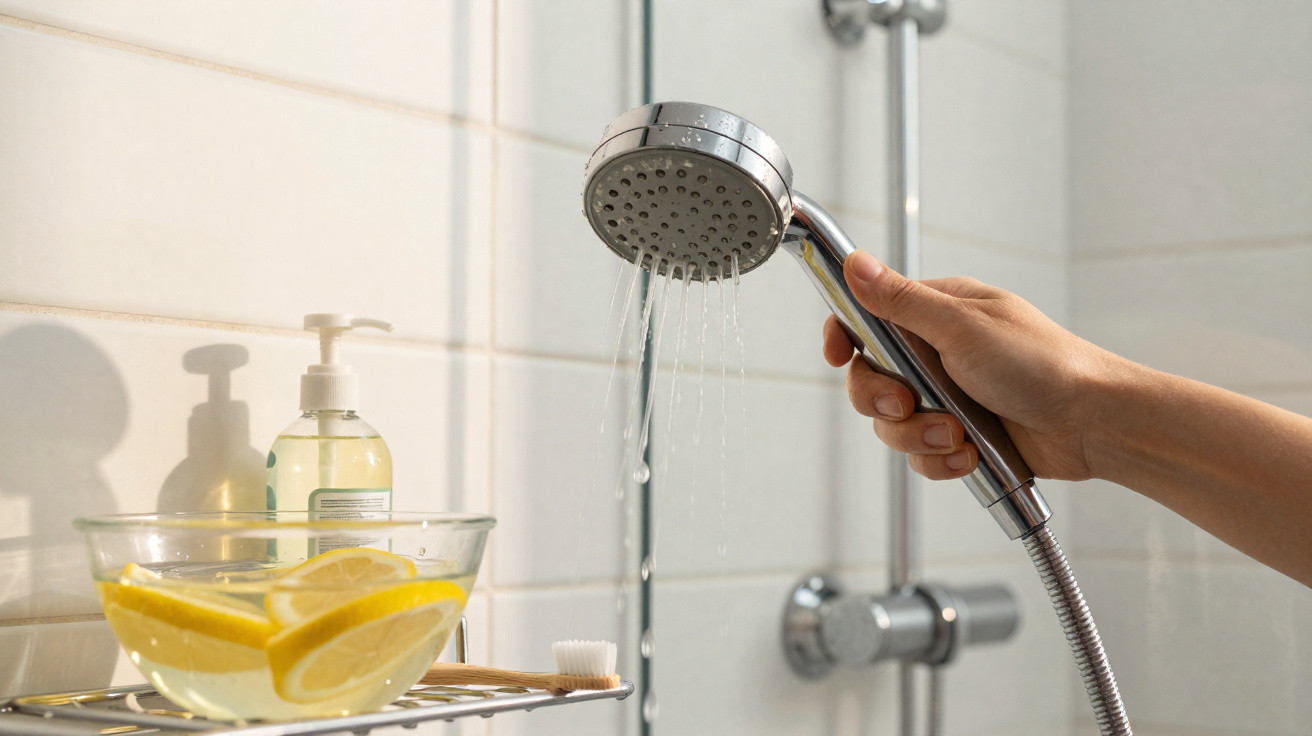
- Corners of the shower enclosure: It can help soften soap residue and small limescale marks.
- Skirting boards with recessed details: Applied with a cloth or fine brush, it removes dirt trapped in decorative features.
Whenever vinegar is used on sensitive surfaces, test it first in an inconspicuous area and dry the surface well afterwards, especially natural stone and delicate metals. This way, you can use this simple everyday resource as a “useful tip”, keeping several areas of the home easier to clean and looking well maintained for longer.




Comments
No comments yet. Be the first to comment!
Leave a Comment