
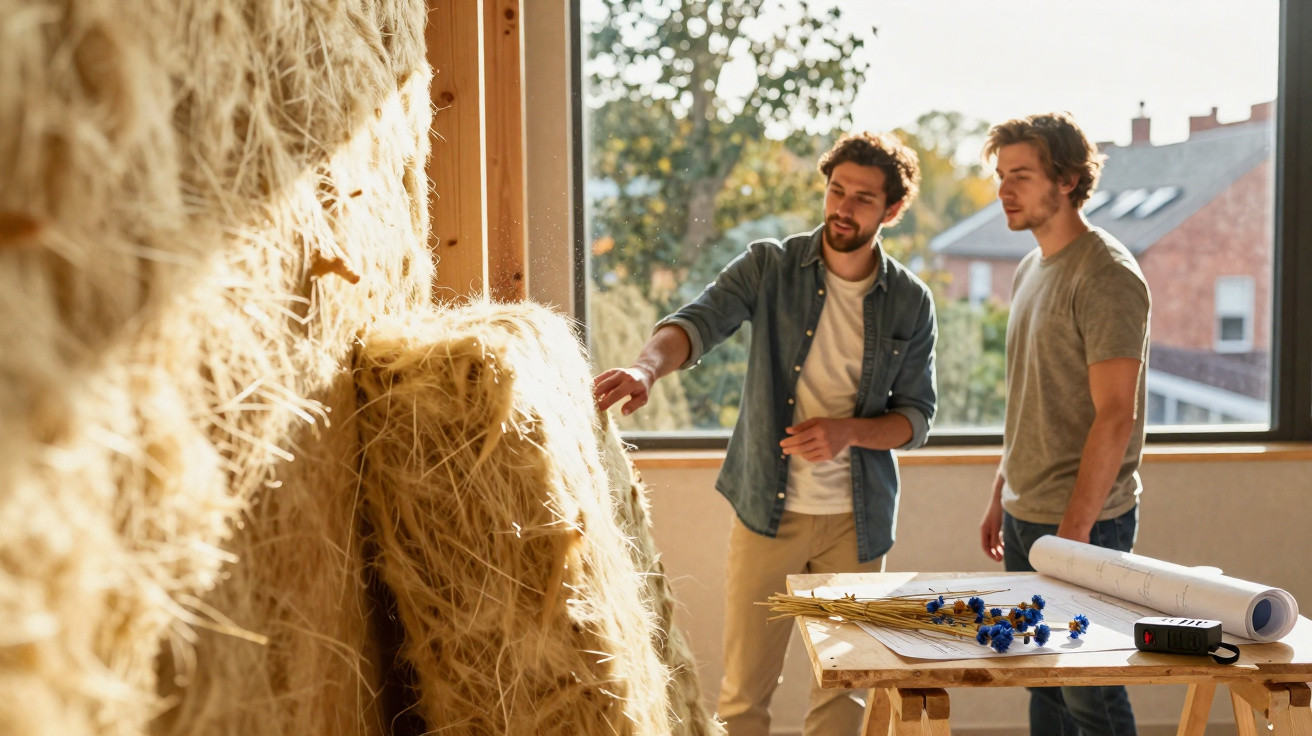
When building a home or refurbishing one today, people are no longer focused solely on attractive façades and contemporary kitchens. Energy performance, available grants and resale value all depend heavily on how effectively a property is insulated. This is where a familiar agricultural crop is gaining ground: flax, more specifically flax-fibre insulation. It offers the prospect of lower heating bills, greater comfort at home and a stronger environmental conscience – while potentially increasing a property's value considerably.
Why insulation now shapes a home's future
The building envelope has become the key factor in energy efficiency. Cutting corners here usually proves more expensive later. Effective insulation:
- retains warmth inside during winter
- keeps summer heat out
- reduces ongoing heating and cooling costs
- provides protection from external noise
- improves a property's CO₂ footprint
This is particularly noticeable in existing homes: a poorly insulated detached house can lose up to two thirds of its heating energy through the roof, façade and floor. Anyone undertaking a refurbishment soon faces the question of which material should go into the walls, roof and beneath the screed.
For a long time, mineral wool, polystyrene and similar materials were considered the norm. They insulate dependably, but there is a drawback: their manufacture and disposal place a burden on the environment and climate, while recycling is often complex or not economically viable.
Increasing numbers of property owners are therefore looking for a solution that saves energy, improves the indoor climate and reduces the environmental footprint – without turning a building project into an experiment.
Flax insulation: an ancient crop as a contemporary building material
Flax is best known for textile manufacturing. Yet the same plant also produces an effective insulation material that is seeing rising demand across Europe. The raw material is grown locally, especially in northern European regions, and requires comparatively little water and crop protection.
Renewable, regional and resource-efficient
From an environmental and climate perspective, the benefits are clear:
- Flax regrows every year and captures CO₂ while it grows.
- The crop thrives without exceptionally high water use.
- Many cultivation areas are within Europe, avoiding long transport routes.
- The fibre is 100 per cent recyclable and biodegradable.
This makes flax insulation especially well suited to strategies such as “climate-neutral building stock” and “cumulative CO₂ savings across the life cycle” – terms that are appearing ever more frequently in energy performance certificates, discussions with banks and grant applications.
Technical performance: thermal and acoustic insulation combined
A natural material offers little benefit if it does not make a noticeable difference to heating costs. This is precisely where flax surprises many sceptics. Typical flax-fibre products achieve insulation values that can compete with widely used mineral and synthetic materials.
For occupants, its ability to control more than temperature is particularly appealing: flax also absorbs noise. Road traffic, neighbours and commercial areas can all be heard far less inside a building when its roof, walls and intermediate floors are lined with this natural fibre.
Flax insulation acts like a three-part filter: against cold, heat and noise – all without a chemical smell in the house.
Healthier living: how flax fibre affects indoor spaces
When handling many conventional insulation products, homeowners may have reservations: itchy fibres, dust and recommendations to wear respiratory protection. Flax stands out by being much more pleasant to work with.
- No itchy fibres as found with some mineral wool products
- no emissions of volatile organic compounds (VOCs) that can affect indoor air
- effective moisture regulation: the fibre buffers humidity in the air before releasing it again
- consequently, a lower risk of mould developing within the construction
These are particularly compelling benefits for families with children, allergy sufferers and people with respiratory conditions. Those refurbishing a house sustainably often want more than a better energy rating on paper; they also want a genuine improvement in how the home feels to live in.
How flexibly flax can be used in practice
Flax-fibre insulation is now supplied to building sites in a wide variety of forms:
| Area of application | Typical product format |
|---|---|
| Pitched roofs and timber-frame walls | Flexible mats or boards |
| Intermediate floors and internal walls | Mats, sometimes loose-fill material combined with other natural fibres |
| Floor build-ups and top-floor ceilings | More rigid boards, sometimes combined with wood fibre |
| Timber-frame and period-building structures | Adapted boards and packable fibre products |
Its lightweight, flexible structure makes installation straightforward. Many tradespeople report that flax mats cut neatly, stay securely in place and reliably fill cavities. Confident DIY renovators can also work with the material, provided they understand the fundamentals of building physics.
Anyone already refurbishing their roof or façade can achieve several things at once by switching to natural insulation: better performance, a better indoor climate and a clearer conscience.
Comparing conventional insulation materials: where flax leads – and where there is still room to improve
In the marketplace, flax fibre faces strong competition from mineral wool, polystyrene and polyurethane. These products are well established, installed millions of times and often cheaper to buy.
Advantages in environmental and health credentials
Flax makes a clear statement when it comes to environmental impact:
- significantly lower energy demand in manufacturing
- a renewable raw-material base rather than fossil origins
- no problematic fibres or plasticisers for occupants
- readily recoverable or compostable at the end of its life cycle
As requirements for embodied energy and CO₂ emissions become stricter, these factors are growing in importance. For developers, local authorities and private clients, they can determine whether a concept appears viable over the long term – or likely to become outdated soon.
The price factor: higher upfront costs, long-term effects
The price per square metre of flax insulation is still generally above that of many standard products. The market is smaller, and production chains have not been industrialised to the same extent. However, this needs to be weighed against:
- an improvement to the energy performance certificate that can support resale value
- better prospects of qualifying for certain grant schemes
- a long service life when installed correctly
- fewer disposal issues at the end of its useful life
Particularly for refurbishments intended for a future sale or refinancing, it can be worthwhile to consider the full calculation: bank advisers and buyers are paying increasing attention to energy-efficiency ratings and building ecology.
Policy support for natural insulation
As energy requirements for new buildings tighten and standards for existing properties become more demanding, pressure on owners is increasing. At the same time, many countries support materials with a lower climate impact through grants, tax relief or low-interest loans.
Natural insulation materials such as flax fit this framework exactly. Those who make the switch early often benefit from more attractive terms and position their property for the future. Some schemes explicitly assess ecological building materials more favourably, which can increase the overall funding available.
Choosing insulation is no longer merely a technical detail – it influences grant levels, energy labels and, ultimately, a home's market value.
Thinking practically: which buildings benefit most from flax?
Flax fibre is not only suitable for ambitious eco-projects on undeveloped land. It can be especially effective in the following situations:
- Older buildings with timber structures: vapour-open constructions that regulate moisture effectively
- Detached homes with loft conversions: a noticeably better indoor climate beneath the roof in summer
- Blocks of flats affected by noise: a carefully designed combination of sound and thermal insulation
- KfW or near-zero-energy projects: additional benefits for environmental assessment and certification
Anyone unsure should consult an energy assessor with experience of natural building materials. Quality depends greatly on planning and workmanship: junction details, moisture protection and suitable vapour-control layers all determine whether the full potential of flax fibre is realised.
What property owners should pay particular attention to
When reviewing quotations, it is worth checking several points carefully:
- the product's exact thermal conductivity value (lambda value)
- fire classification and approved applications
- information on moisture absorption and release
- certifications, including those covering emissions and origin
- the contractor's experience with natural insulation materials
A carefully planned build-up prevents subsequent damage caused by moisture or inadequate airtightness. Although flax is more forgiving than some synthetic alternatives, it remains part of a sensitive system of layers, joints and connections.
More than a trend: how flax insulation is changing the market
By combining energy-cost savings, an improved indoor climate and credible environmental credentials, this material responds to several social developments at once. Sustainable construction is no longer simply about image; it has financial implications for insurance premiums, lending and purchase prices.
This creates a new calculation for those building homes: rather than considering material cost alone, they must assess the complete package of service life, energy rating, grant incentives and future market appeal. Seen in this way, flax is moving beyond its niche and into the view of a wider audience – from young families renovating older properties to investors seeking to prepare their portfolios for future climate requirements.
Those who insulate today influence the value of their home for decades. Natural fibres such as flax therefore become a strategic building block, rather than simply an appealing eco-friendly option.

Comments
No comments yet. Be the first to comment!
Leave a Comment