
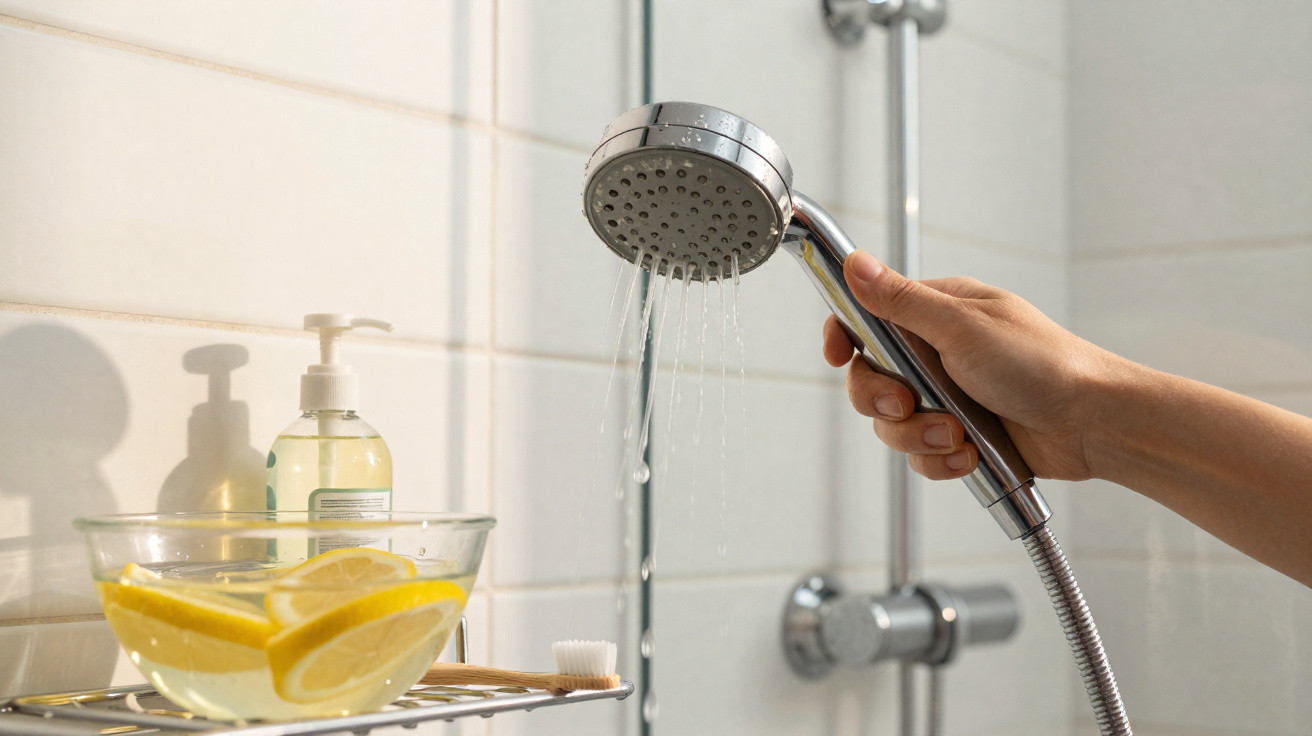
During everyday shower use, many households gradually notice weaker water flow and changes to the appearance of the shower head holes. In most cases, this is caused by limescale build-up, which is common in areas with mineral-rich water. Knowing how this deposit develops in the pipework and shower itself helps prevent damage, keep water pressure consistent and avoid wasting water and energy.
How does limescale form in shower pipes and shower heads?
Limescale in a shower is a mineral deposit, chiefly made up of calcium and magnesium carbonate, which are present in the water supply. In hard-water areas, these minerals occur in higher concentrations and adhere more readily to the internal surfaces of plumbing.
As water is heated, some of these compounds separate out and settle on pipe walls and shower components, forming a hard scale layer. In electric shower models, regular heating makes this process more intense, particularly when water is kept at a high temperature for extended periods.
Watch this video from the YouTube channel The Cat's Leap in Construction, which explains how to unblock shower head holes and remove dirt and limescale crusts that reduce water pressure:
https://www.youtube.com/watch?v=qMiwKIn0N7w
How does limescale affect water pressure and water quality?
As it builds up, limescale narrows the internal channels through which water travels, increasing resistance to flow. The result is a weaker, uneven and, in some instances, misdirected spray, because some shower head holes become partly or completely blocked.
The perceived quality of the water can also change, as small pieces of scale may break away and emerge through the holes. In older showers, prolonged exposure to mineral residue can encourage corrosion and internal staining. This does not usually make the water unsafe, but it can substantially reduce showering comfort.
Practical signs that limescale is already affecting the shower
A few straightforward signs can show when limescale in the shower pipe and shower head is impairing performance. Spotting these indicators early makes it possible to act before the entire unit needs replacing.
When these symptoms start occurring regularly, they indicate that internal scale is advancing and surface cleaning is no longer enough:
- Noticeable loss of pressure: showering takes longer, even when the control is fully open.
- Uneven spray: some holes release water forcefully, while others release almost nothing.
- Misdirected water flow: some water sprays sideways or backwards, suggesting a partial blockage.
- Whitish marks: hard spots around the holes that are typical of calcification.
- Unusual noises: unexpected hissing sounds or vibrations when the shower is switched on.
How to reduce limescale build-up and know when to replace the shower
Lightly cleaning the shower head each month, followed by a deeper clean every 3 or 4 months, helps keep limescale under control. Removing the component where possible, soaking it in a suitable descaling solution and brushing the holes with a soft brush will usually extend the shower's service life considerably.
If water pressure does not return to normal after thorough cleaning, blockages reappear within a few days, or hard layers are visible in difficult-to-reach internal areas, replacing the shower may be more worthwhile than continuing with maintenance. In homes with very hard water, considering dedicated filters or simple treatment systems fitted close to the point of use is a useful option that may prevent recurring problems and keep showers comfortable for longer.





Comments
No comments yet. Be the first to comment!
Leave a Comment