
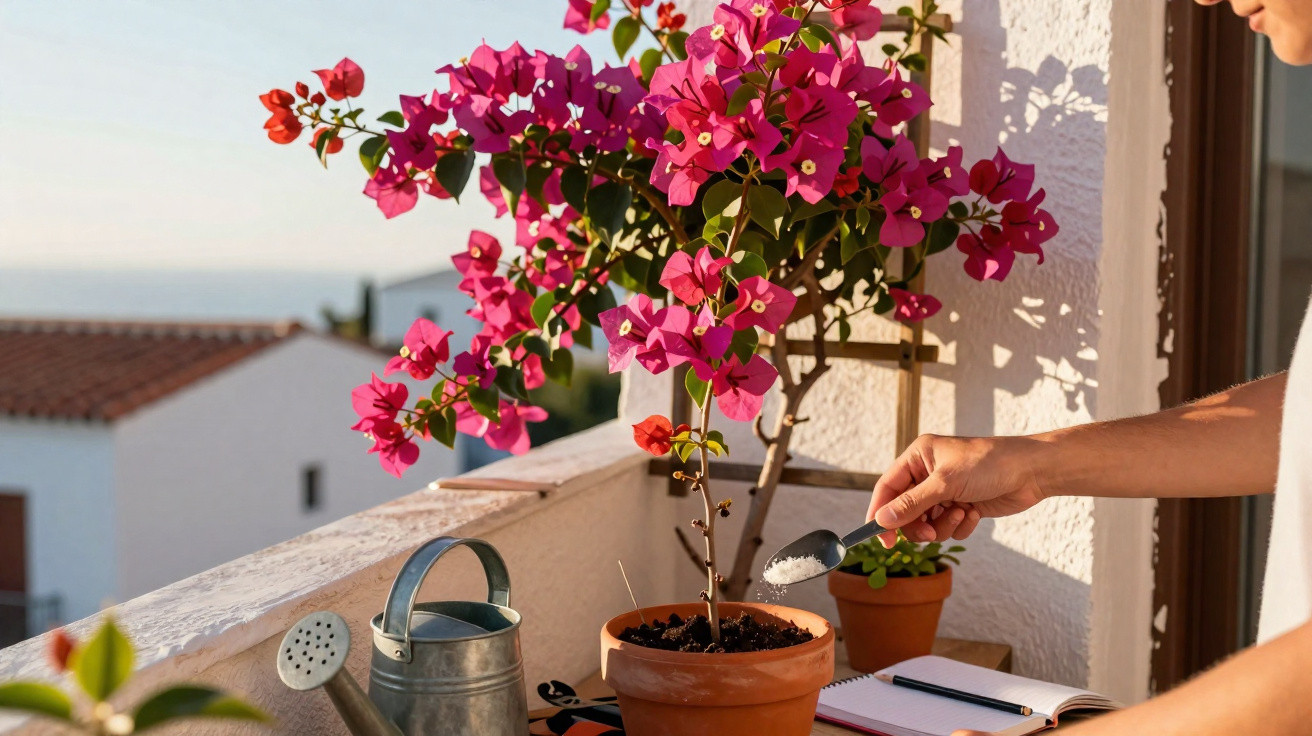
Gardeners know a straightforward technique that can set off an avalanche of colour.
Many amateur gardeners tend to their Bougainvillea with great care, watering generously and feeding it regularly, only to be rewarded with a lush green shrub. Its famous vivid bracts fail to appear, often for years. This is rarely caused by a lack of attention; more often, it comes down to one widespread habit found in living rooms, on patios and across balconies.
Why a Bougainvillea grows vigorously but does not flower
A Bougainvillea that looks healthy, puts on strong new growth and produces plenty of shoots may initially seem like a success. Yet when it shows no colour at all, the plant is sending a clear message: it is directing all its energy into growth rather than flowering.
This climbing shrub originates in warm, dry areas and thrives on abundant sunshine. On a summer day, it needs at least six hours of direct sun, and preferably more. A south- or south-west-facing wall is ideal, particularly one that warms up and retains heat.
During the growing period, temperatures should remain between 20 and 30°C. Once the temperature drops to around 5°C, the container should be moved indoors or to a frost-free location. Many varieties can suffer damage at temperatures close to freezing, pushing flowering even further out of reach.
The watering misconception
The crucial issue lies around the roots. In its native habitat, Bougainvillea does not grow in damp rainforest shade, but in relatively dry, free-draining soil exposed to brief spells of rain. This is precisely what many people with watering cans overlook without realising it.
A familiar situation goes like this: it is high summer, the plant is on the patio in full sun, and water is added to the pot every two days out of concern that it may become drought-stressed. A general-purpose fertiliser is added weekly as well. The plant responds eagerly with long shoots and flawless leaves, while the colourful bracts fail to materialise. This is how the familiar “green bush without flowers” develops.
“Too much water and too much nitrogen tell the plant: growth takes priority, flowering can wait.”
From a botanical perspective, an excess of water and nitrogen-rich fertiliser primarily promotes leaf and shoot development. Only a mild period of dryness shifts the plant’s focus towards reproduction. The Bougainvillea then puts more energy into flower clusters and bract-like coloured leaves, which it uses to attract pollinators.
The trick: controlled thirst instead of constant watering
Before changing the watering routine, the essential conditions must be right. Without this foundation, even the best technique will have little effect.
- Position: full, unshaded sunshine
- Growing medium: light, sandy and well drained
- Pot: drainage holes, with no saucer left permanently full of water
- Fertiliser: moderate amounts, high in potassium and low in nitrogen
Once these requirements are met, the “controlled thirst protocol” can begin. During the main growing season, a potassium-rich fertiliser used sparingly is enough to support bud formation. Feeding should stop from mid-September so that the plant does not produce unnecessary fresh leaves that would still need to mature before winter.
How to water in summer
In summer, allow the root ball to dry out noticeably between waterings. The top three to four centimetres of compost should be dry before watering again.
When the time comes, do not simply add a small top-up. Water thoroughly, so that it runs through the entire root ball and drains out of the bottom. Remove any excess water from the saucer after around half an hour. If it remains there, root rot and waterlogging stress can follow - both are clear enemies of flowering.
“Alternating a brief dry phase with thorough watering imitates a short summer downpour - this is a rhythm the Bougainvillea ‘understands’.”
Managing a Bougainvillea in its winter quarters
From November to March, this exotic plant is happiest in a cool, bright place. A temperature range of 10 to 15°C is ideal. It also requires considerably less water during this period.
Allow the surface of the growing medium to become almost dry before watering. Many plants get through these months with very few, light waterings. The winter position should be bright, but not directly beside a radiator. Rooms that are too warm cause weak, stretched growth and leave the plant less resilient.
How to tell when it is time to water
The soil in the pot, not the week on the calendar, should determine when to water. A simple finger test is often sufficient: push a finger one or two knuckles into the compost. If it still feels moist at that depth, wait. If it is dry or only slightly damp, the plant can be watered.
Leaves may sometimes appear slightly limp when the plant is signalling thirst. Watering at this stage will not cause harm. However, if leaves turn brown or curl tightly, the stress has already become too severe and care needs to be adjusted gently.
Common mistakes that prevent flowers
Several issues can significantly slow down the hoped-for flush of blooms. These recurring pitfalls are particularly common:
- Automatic watering: This keeps the growing medium permanently slightly moist, so the important dry-stress stimulus never occurs.
- A constantly full saucer: Wet roots become weakened, while rot and leaf drop are frequent consequences.
- An overly large pot: The plant first puts its energy into expanding its roots, delaying flowering.
- Pruning at the wrong time: Hard pruning shortly before flowering removes many potential flowering points from the Bougainvillea.
Pruning should follow the flowering cycle. After a flush of blooms, the plant can be trimmed lightly to maintain its shape. More substantial pruning is best carried out towards the end of winter, before new growth begins.
How to check whether the position really suits it
Even the most effective watering schedule offers little help if the plant is growing in partial shade. A Bougainvillea that receives only morning or evening sun often falls short of its potential. Anyone unsure can try moving it to an even sunnier position. Changes in its growth habit can often be seen after just a few weeks.
In cooler parts of the UK, a large container is suitable: it can be moved quickly onto the patio or balcony in spring, then brought back indoors in autumn. Many plants become noticeably more willing to flower beside a warm house wall with plenty of reflected light.
When patience is worthwhile - and when a change makes sense
An older Bougainvillea with a well-established root system often does not respond immediately when its care routine changes. Moving from constantly damp compost to controlled dry spells may take several weeks, or occasionally an entire season, before the plant adapts.
If no flowers appear over a long period despite an ideal position, pruning and carefully managed watering, it is also worth considering the variety. Some types naturally flower less freely, while others create spectacular displays of colour under identical care. When buying a new plant, look for strongly flowering specimens at the garden centre, as they show what is genetically possible.
Background: what are these “flowers”, exactly?
Strictly speaking, the colourful parts of a Bougainvillea are not petals, but modified leaves known as bracts. The true flower is small and rather inconspicuous, sitting in the centre. Many people are unaware of this and wonder why the “flowers” seem to last for so long.
These bracts, in particular, respond strongly to stress signals such as short dry periods and intense sun. They are the plant’s advertising display - and this is exactly what its care can be tailored to encourage.
Anyone who accepts the natural rhythm of their Bougainvillea not only avoids constant watering, but is often rewarded with a much longer and more intense flowering period. Less “pampering”, combined with more deliberate use of water and fertiliser, is often enough to turn a disappointing green plant into a striking splash of colour.


Comments
No comments yet. Be the first to comment!
Leave a Comment