
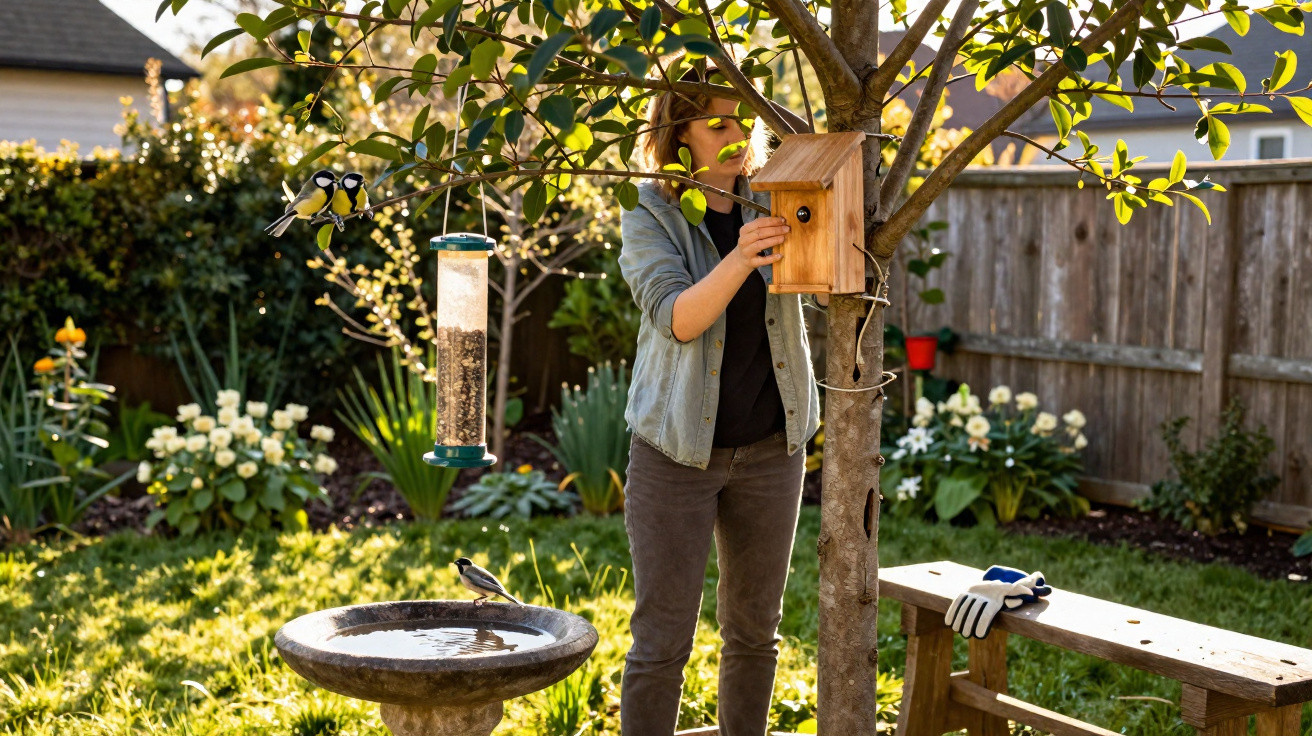
Many amateur gardeners wonder why everything can look tidy, clean and well cared for, with a bird box hanging up and food available, yet hardly any tits appear. The cause is rarely the absence of a feeder; more often, it is subtle signals that people do not even notice.
What tits really need before they settle
Tits are not impulsive birds that will quickly build a nest anywhere. Before committing to a garden, they assess it carefully. Three things in particular determine whether they stay or move on: safety, food and peace.
For tits, the “perfect” garden matters less than one that is safe, varied and partly wild.
A secure nesting site comes first. Tits nest in cavities, looking for holes in trees, crevices in old wood or suitable nest boxes. An entrance protected from cats, martens and magpies matters more to them than the most attractive flower border.
The food supply follows closely behind. During the breeding season especially, they need huge quantities of insects and larvae. If there are too few small creatures nearby, the location simply is not worthwhile, even if the tree is healthy, tall and apparently ideal.
Peace and quiet are the third crucial factor. Constant noise from lawnmowers, a trampoline, children playing directly beside the nest box, or dogs and cats continually roaming free can deter many breeding pairs of tits. A part of the garden that remains relatively quiet for much of the day is far more appealing.
Common garden mistakes that drive tits away
People often have good intentions, yet unintentionally make their garden less attractive to birds. Tits in particular are sensitive to several common mistakes.
- Too much tidiness, too little mess: Removing every dead plant immediately, shredding all branches and clearing away every last leaf also removes insect habitats and hiding places.
- Widespread pesticide use: Sprays aimed at aphids, caterpillars or “pests” effectively take food off the tits’ table. Without insects, there can be no family of tits.
- Unsuitable or poorly positioned nest boxes: An entrance hole that is too large can allow bigger birds or predators in. Cautious birds avoid boxes hung too low or left completely exposed.
- Constant activity in the garden: Daily mowing, chainsaw use at weekends, loud music on the patio or intensive DIY work in spring causes disturbance at precisely the sensitive breeding period.
- Hunting cats: Just one cat waiting purposefully beneath nest boxes is often enough for tits not to choose the site at all.
Trees and garden structures tits love
Anyone hoping to attract tits permanently should focus less on decoration and more on structure and variety. A garden containing three arborvitae hedges, lawn and a gravel bed offers little food or shelter. Certain trees and features, by contrast, are real magnets for tits.
Old oaks are particularly popular because they support vast numbers of caterpillars and other insects. Mature apple and pear trees also often contain natural cavities, cracks and loose bark, providing ideal nesting sites. Conifers such as pines and spruces offer good perches and cover from birds of prey, as well as a clear view across the territory.
Trees including birches and willows make a major contribution to food security through their bark and their own insect populations. Other helpful features include:
- deadwood-rich corners with dead branches or tree stumps
- dense hedges of native shrubs, such as dog rose, privet and blackthorn
- unmanaged edge areas with tall grass, dead perennial growth and leaf litter
These mixed areas provide insects, shelter and microhabitats in a compact space. Such a garden may seem less than perfect from a human perspective, but to a tit it is a five-star hotel.
Creating a paradise for tits step by step
There is no need to dig up the entire garden. Small, targeted changes are often enough to make birds view the site differently.
Choosing and installing the right nest box
Different tit species favour different entrance-hole sizes. Anyone who overlooks this may later be surprised to find empty boxes. A rough rule of thumb is:
| Species | Recommended entrance-hole diameter | Recommended height |
|---|---|---|
| Blue tit | approx. 28 mm | 2–3 metres |
| Great tit | approx. 32 mm | 2–3 metres |
The box should tilt slightly forwards so that rain cannot run inside. Positioning it east or south-east makes use of the morning sun while protecting it from intense midday heat and strong westerly winds. Directly beside a patio that is constantly in use is not a good location. A quiet area, lightly framed by shrubs, is much more likely to appeal.
Combining food, water and safety
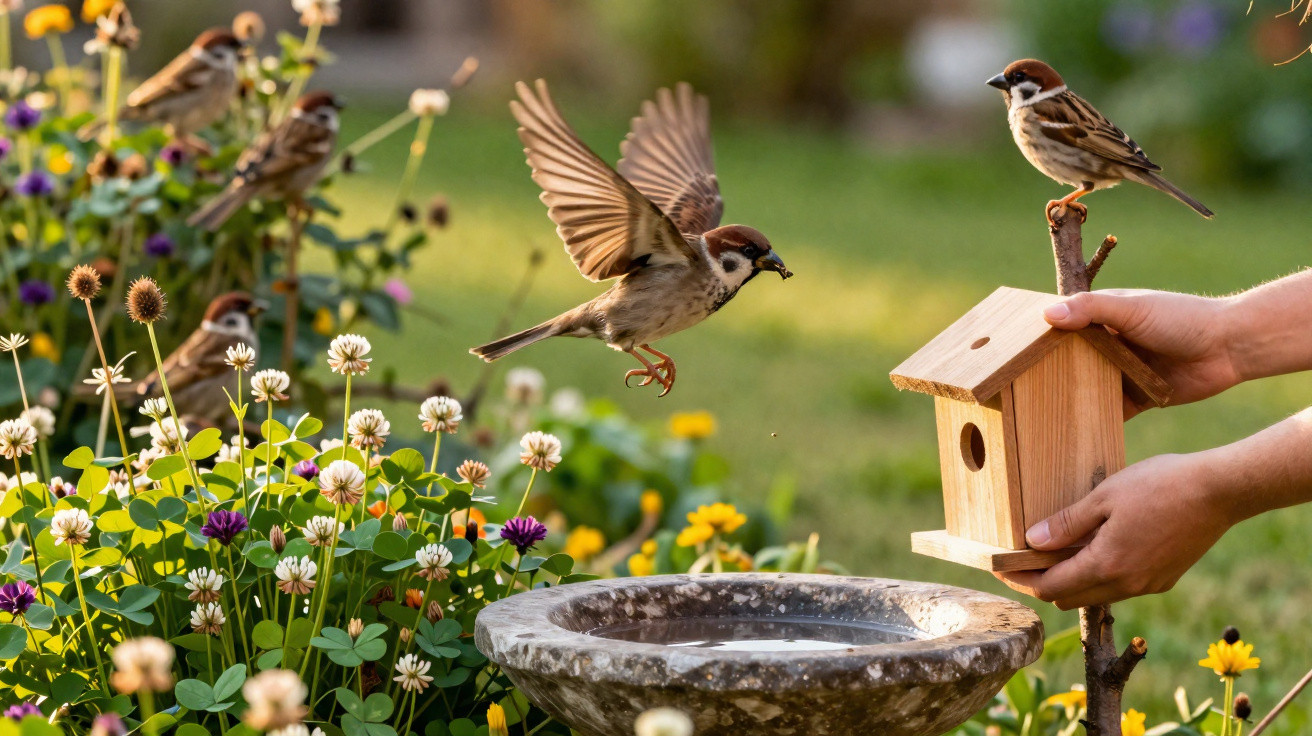
Few gardens can provide insects in abundance all year round. Additional support makes a site more attractive. A shallow container of water, cleaned regularly, will quickly become a bird bath. In winter, sunflower seeds, fat balls and energy-rich mixes help tits survive.
At the same time, at least part of the garden should become “pesticide-free”. Anyone who consistently sprays caterpillars or aphids prevents tits from feeding their young. A better approach is to deal with individual problem areas by hand or rely on beneficial creatures such as ladybirds, parasitic wasps and spiders.
Protection against predators includes:
- predator guards on nest-box poles, preventing cats and martens from climbing up
- leaving sufficient distance from walls that cats could jump from
- avoiding locations directly beside feeding stations, where there is constant activity
Practical details that often make the difference
Many gardens meet the main requirements reasonably well but then fail because of small details. Several rules of thumb are easy to put into practice.
- Clean nest boxes in autumn once all young birds have fledged. Old nests may contain parasites.
- Do not install more than one box in a small garden area: tits are territorial and do not like close neighbours.
- Provide low, dense bushes nearby as cover, so young birds can find shelter after fledging.
- Avoid drastic pruning of hedges and trees during the spring breeding season.
Why tits are so valuable in the garden
Attracting tits benefits the gardener too. During the breeding season, a pair of tits feeds thousands of caterpillars and other insect larvae to its young. This noticeably reduces severe feeding damage on fruit trees and ornamental shrubs.
Tits therefore act as a natural regulator, reducing peaks in pest numbers. Rather than relying on chemical treatments, the birds take on part of the garden-care work. They also bring movement and sound into the garden. For many people, morning song and watching feeding at the nest box are among the loveliest moments outdoors.
Patience, observation and the courage to leave some wilderness
Tits do not change locations overnight. They explore new areas, remember the structures and return when conditions are right. Anyone putting up nest boxes today may not succeed until the following year. Regular observation helps: where do sparrows gather? Where do blackbirds search through leaf litter? Tits usually feel at home in those places too.
A garden that appeals to tits also benefits other species. Robins, wrens and nuthatches profit from plentiful insects, varied structures and peace. Deliberately maintaining a few corners less “perfectly” creates a small, stable habitat in return for lively, whistling neighbours among the branches.

Comments
No comments yet. Be the first to comment!
Leave a Comment