
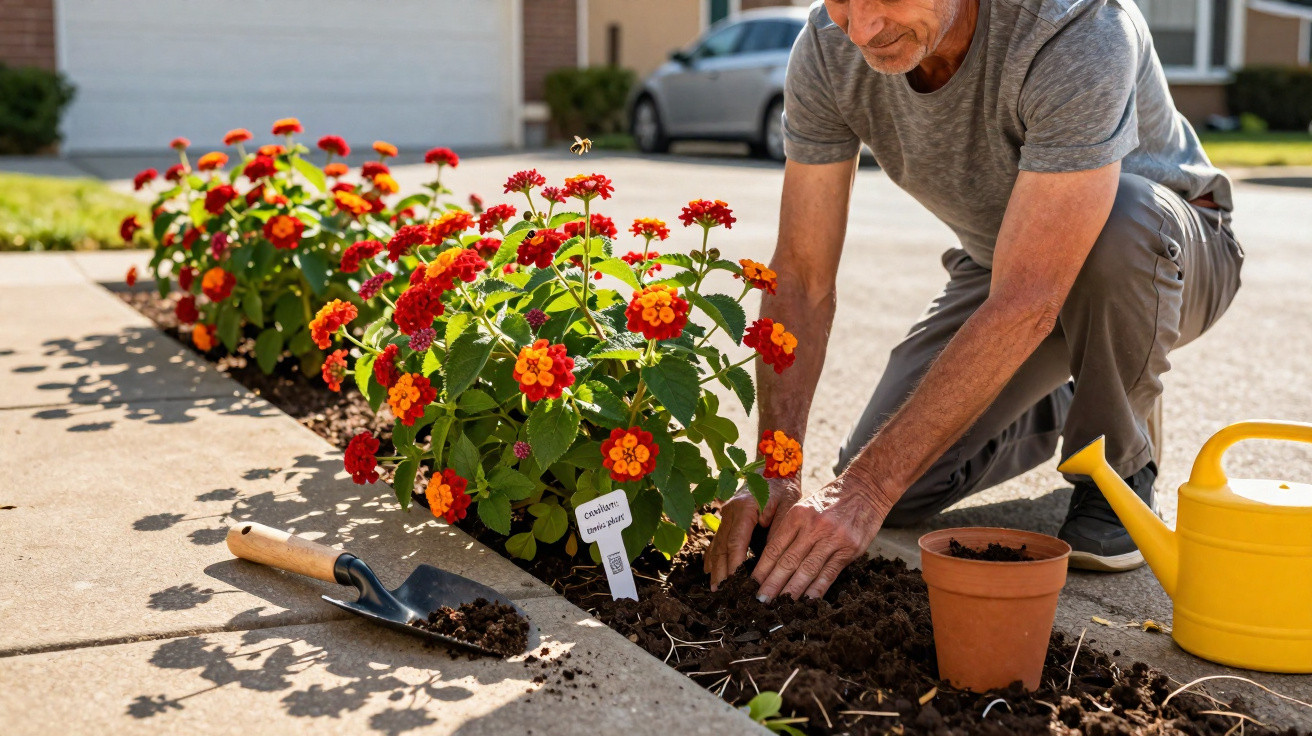
Many homeowners become frustrated with their driveways: the surface radiates heat, cars kick up dust, de-icing salt is added in winter, and in summer the whole area can look grey and uninspiring. This is exactly where a small, heat-resistant flowering shrub comes into its own: Lantana camara ‘Hot Blooded’, a variety attracting attention and currently considered an insider tip among amateur gardeners for bordering paths and driveways.
Why this shrub copes so well with the harsh edge of a driveway
Originally from warm climates, this ornamental shrub belongs to the verbena family. In its native settings, it commonly grows in hot, sparse locations – a distinct advantage beside driveways or parking spaces. Heat, brief dry spells and the reflected warmth of tarmac affect it far less than they do many traditional bedding plants.
Lantana ‘Hot Blooded’ combines outstanding heat tolerance with months of vivid red flowers – making it ideal for the difficult area right beside a driveway.
Its flower colour is especially striking. The clusters begin as a warm yellow, progress through bold orange, and finally turn a deep red. Every colour stage is visible on the same plant at once. Along a paved driveway, the effect resembles a continuous, fiery ribbon.
Reaching roughly 60 centimetres in height and a similar spread, the shrub remains compact. Car doors can still be opened easily, while visibility at junctions is maintained. It develops a cushion-like shape and quickly fills gaps without overrunning the space.
Key benefits at a glance
- exceptionally long flowering period, from around May to October
- intense colours ranging from yellow and orange to deep red
- compact growth, approximately 60 × 60 centimetres
- highly tolerant of heat and short periods of drought
- copes well with splashes of de-icing salt and proximity to traffic
- a popular nectar source for bees and butterflies
- a sterile variety that produces no viable seeds and does not spread uncontrollably
Its sterility is particularly beneficial: the shrub does not self-seed and stays where it was planted. This keeps the border neat and clearly defined, without a continual need to remove seedlings.
Position: where the fiery red Lantana shrub thrives
To get the best from this plant, place it somewhere that receives as much sunshine as possible. At least six hours of direct sun each day is regarded as the minimum. Partial shade results in fewer flowers and looser, less compact growth.
Soil conditions are equally important. At the edge of a driveway, soil is often compacted, disturbed by construction work or mixed with gravel. Lantana handles this surprisingly well, provided water drains away promptly and the ground never becomes waterlogged.
The hotter, sunnier and drier the border, the more this shrub shows its strengths – but it does not tolerate waterlogging at all.
Preparing the soil: how to plant successfully
If planting several shrubs along a driveway, it is best to work in sections and loosen the soil thoroughly. This straightforward sequence provides a good start:
- Dig a planting hole two to three times wider than the rootball.
- Loosen the soil at the base with a garden fork so water can drain away.
- Mix compacted soil with gravel or expanded clay to improve drainage.
- Position the plant so that the top of the rootball is level with the soil surface.
- Water thoroughly, allowing the spaces around the roots to close.
- Apply a thin mulch layer of gravel or grit to complement the driveway surface.
Ideally, leave 60 to 90 centimetres between individual shrubs. Over time, this creates dense yet airy cushions that function like a natural kerb edge.
Care through the year: little effort, great impact
Young plants need slightly more attention during their first summer. Being close to tarmac or paving causes the soil to dry out more quickly. It is worth checking regularly at this stage: if the ground dries rapidly, give the plants a generous watering. Once their root systems are established, they can go several weeks without water.
The shrubs also cope well with very high temperatures. Radiated heat from concrete or dark stone is less of a problem for them than it is for many perennials. During wet spells, well-drained soil relieves pressure on the roots.
Another advantage is that browsing damage is uncommon. Deer and rabbits generally avoid Lantana, which is especially useful in gardens on the edge of a village or town.
Winter protection and pruning by region
Cold tolerance varies considerably by region. In areas with comparatively mild winters, the plants can remain outdoors. A cut-back in late winter or early spring is then sufficient. Shorten the shoots substantially to remove old, woody growth. Strong new shoots emerge quickly afterwards and produce abundant flowers again.
In areas with more severe frosts, there are two suitable options:
- Outdoor growing with protection: Cut the shoots back close to ground level and cover the base with a thick mulch layer of leaves or bark chippings.
- Container growing: Place the plants in large pots along the driveway, then move them to a bright, frost-free space in autumn.
In containers, the shrubs are slightly more sensitive, but they can be moved easily whenever the driveway needs cleaning or redesigning.
Care around children and pets: beautiful but poisonous
As attractive as this shrub is, one point must be made clearly: every part of the plant is considered poisonous. The fruits in particular may appeal to children, although this variety generally does not produce seeds. Even so, its position should be chosen carefully.
Anyone with young children or inquisitive pets should avoid placing the shrub directly beside play areas or frequently used paths.
Garden gloves are advisable when pruning or transplanting, so the skin does not come into unnecessary contact with plant sap. Prunings should not be put on compost heaps that animals can access.
Benefits for insects and driveway design ideas
Despite being sterile, the plant supplies plenty of nectar. Bees, bumblebees and butterflies regularly visit its bright flowers. It can therefore create a kind of “nectar ribbon” along the driveway, combining visual appeal with ecological value.
The design becomes particularly interesting when the shrub is paired with other drought-tolerant species, such as:
- silver-leaved ground cover plants, including alyssum or cotton lavender
- low-growing grasses that introduce movement
- cushion-forming perennials such as thyme or low sage
Along a narrow, long driveway, the shrubs can be planted in staggered positions to form a subtle zigzag effect. This softens the rigid line of the drive without compromising its practical use.
Anyone planning to redesign their driveway can loosen the border area more deeply at the same time and fill it with a free-draining growing medium. A combination of gravel beneath and loose, sandy-gritty planting soil above provides ideal conditions for Lantana and other steppe plants. In this way, a bare, hot problem area becomes a colourful, low-maintenance border that noticeably enhances the entire front of the house.
Comments
No comments yet. Be the first to comment!
Leave a Comment