
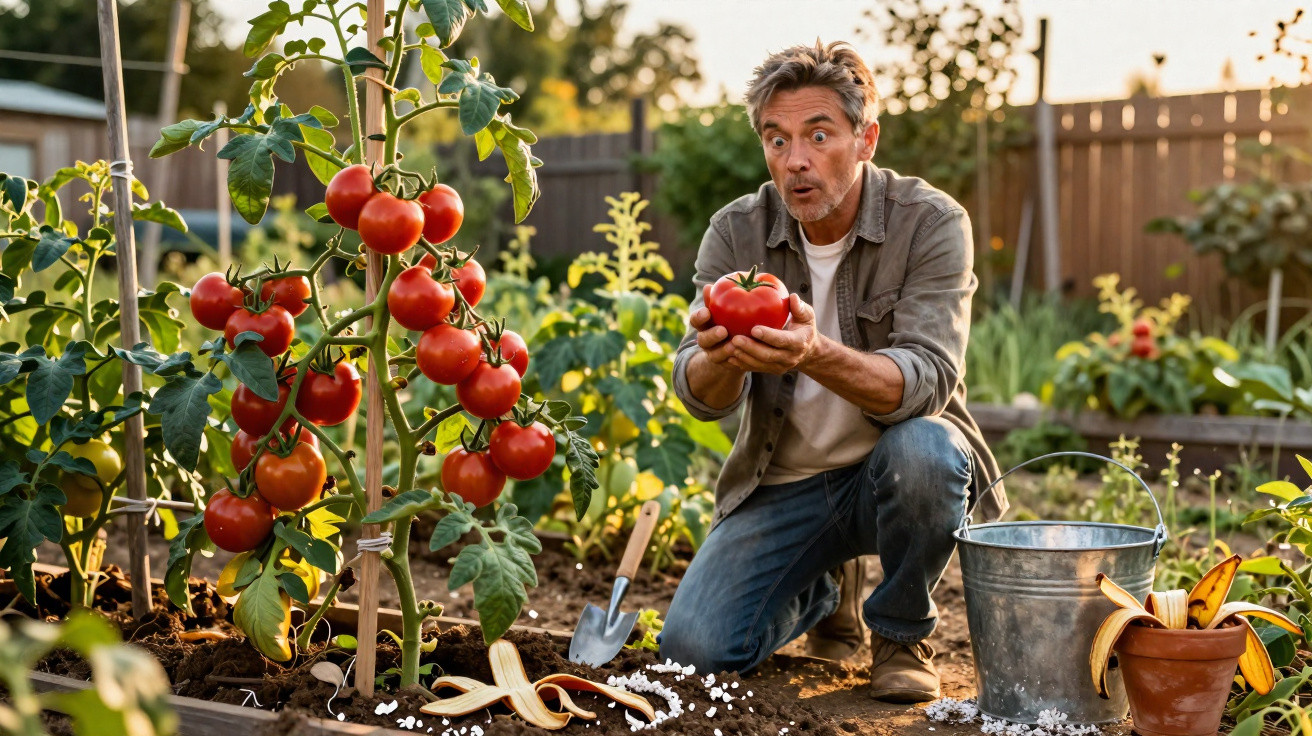
Tomatoes thrive on warmth, water and light – yet without the right nutrition, the crop will be disappointing. Rather than buying costly specialist feed from the garden centre, two everyday household leftovers can turn a tomato plant that produces nothing but foliage into a remarkably productive plant within a few weeks. Timing, quantity and a few straightforward steps are what matter.
Why many tomato plants look lush but produce very little
It is a familiar summer sight: the tomato plant reaches knee or chest height, is deep green and covered in leaves – yet bears only a few small, firm fruits. The cause is usually not watering or position, but the balance of nutrients.
Tomatoes are hungry plants. Compared with lettuce or herbs, they require substantially more nutrients, particularly:
- Potassium – for plump, large and flavoursome fruit
- Magnesium – essential for metabolism and photosynthesis
- Nitrogen – builds leaf growth, but must not dominate
- Phosphorus – supports roots and flower formation
Many general garden fertilisers contain plenty of nitrogen. As a result, the plant pushes out masses of leaves and looks impressive, but forms far fewer flowers. Without flowers, there will be no tomatoes.
A good tomato fertiliser does not create even more foliage; it directs the plant’s energy specifically towards flowers and fruit.
This is where natural nutrient sources are useful: they work more gradually and evenly, and can be matched to the plant’s stage of growth.
The secret booster: two free leftovers from home and garden
Many gardeners throw them away or tip them into the ash bin, even though they are extremely valuable: banana skins and wood ash. Used together, they give tomato plants precisely the minerals they often lack during fruiting.
Banana skins: a potassium boost for sweet, juicy tomatoes
Banana skins are high in potassium and also provide magnesium, phosphorus and a little calcium. This makes them particularly suitable once the first green tomatoes begin to appear on the plant.
Two simple approaches have proved effective in the garden:
- Burying them around the root area
Cut the skins into small pieces and work them 5 to 8 centimetres into the soil around the root ball. They will break down quickly without smelling or attracting pests. - Liquid feed made from skins
Leave chopped skins to steep in a bucket of water for 24 to 72 hours, then strain the mixture and water the tomatoes with this “banana water”. Use it very sparingly for container-grown plants to avoid odours and fruit flies.
Important: use organic bananas where possible, and do not overdo it. During fruiting, one to two skins per plant every two to three weeks will generally be enough.
Wood ash: a mineral boost against small fruit and blossom end rot
Anyone with a fireplace, wood burner or fire pit has access to a second useful resource: ash from untreated, natural wood. It contains plenty of potassium alongside calcium and phosphorus – a combination that helps produce plentiful, healthy fruit.
Wood ash can be especially helpful with a problem many tomato growers fear: blossom end rot. The bottom of the fruit turns black and may partly rot away. Calcium deficiency and uneven watering are among the usual triggers. Ash supplies calcium in a readily available form.
Apply it safely as follows:
- Use ash only from untreated, natural wood.
- Sieve the ash to remove nails, charcoal remnants and larger pieces.
- Scatter around 20 to 30 grams per plant between mid-July and early August – roughly one level tablespoon.
- Apply ash to the soil only, never to leaves or stems.
Wood ash acts like a targeted mineral boost – it will not turn an attractive but unproductive tomato plant into a record-breaker, but it can noticeably improve fruit quality.
A second, lighter application of ash around 14 days later is possible if the soil is dry. Rain quickly washes ash away and can raise the soil pH too much.
Tomato plant foundations for an XXL harvest
As effective as banana skins and wood ash can be, they will achieve little without a sound foundation. Anyone serious about tomatoes should start preparing at planting time.
Spring start: feed rather than simply plant
When planting young tomato plants, it is worth making a small nutrient-rich planting hole:
- Work mature compost or well-rotted farmyard manure into every planting hole.
- If desired, add a little horn shavings, which provide slow-release nitrogen.
- Plant the root ball deeply enough for the lower part of the stem to be covered with soil – additional roots will form there.
This allows the plant to largely feed itself during its first weeks. From June onwards, it needs regular top-ups.
The right summer routine
From early summer, a two-stage plan works well:
- At the start of the season (June): apply a mild organic feed, such as diluted nettle liquid manure, every 14 days. This supplies nitrogen for growth.
- Once fruit formation begins: shift the focus to potassium-rich additions – banana skins, comfrey liquid manure or specialist organic tomato fertilisers.
At the same time, consistent watering remains vital. The soil should neither dry out nor remain permanently waterlogged. Mulch made from grass clippings or chopped straw helps retain moisture and nutrients.
Common mistakes that slow the harvest despite natural fertiliser
Anyone using kitchen and garden waste as fertiliser for the first time can easily make mistakes, but a few basic rules will prevent them.
- Too much of a good thing: generous amounts of ash can make soil strongly alkaline. Tomatoes prefer slightly acidic to neutral soil, not an “ash desert”.
- Skins left too large or too close to the surface: whole banana skins placed on the soil attract slugs and flies, and decompose too slowly.
- Poor timing: heavy nitrogen feeds late in summer encourage only leafy growth, when the plant should be directing its energy into fruit.
- Neglecting side-shoot removal: too many side shoots drain energy from the plant. Combined with heavy feeding, they create an overloaded bush with little fruit.
How long does it take to go from leafy monster to an XXL harvest?
If, in high summer, tomato plants appear healthy but are producing hardly any fruit, the banana skin and ash combination can help correct the situation. Depending on the variety, weather and starting condition, results may appear after two to four weeks: the plant produces more flowers, while existing fruit develops more evenly and becomes more flavoursome.
Patience is still essential. Vegetables do not respond like chemically boosted quick starters fed from a fertiliser shelf. Natural nutrients work more slowly but more sustainably, while also improving soil structure.
Extra tips for anyone wanting to go a step further
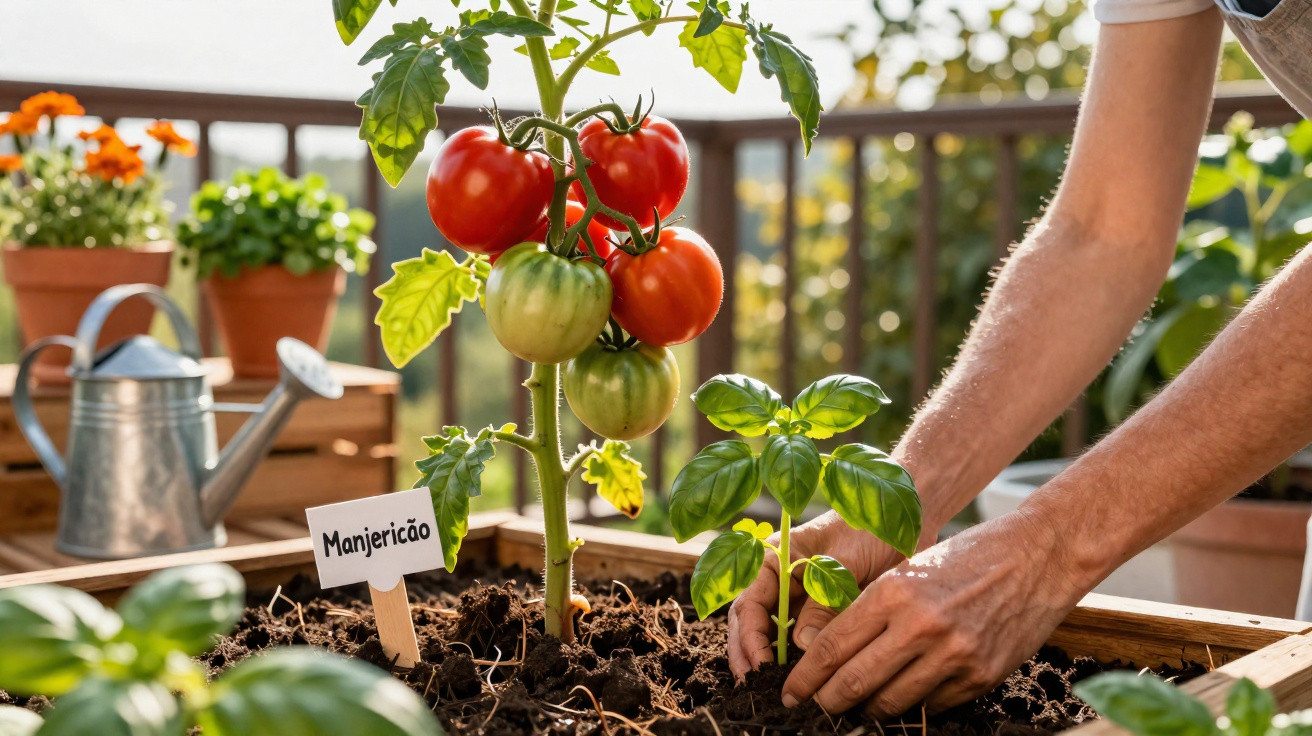
Those wishing to make yields more reliable can sensibly expand the natural feeding system. Seaweed lime, rock dust or a small amount of algae lime broaden the mineral range and bind excess acids in the soil. Tomatoes can also benefit from companion planting with basil, French marigolds or pot marigolds: these companion plants help keep pests under control and loosen the soil.
It is also worth considering other hungry crops: peppers, chillies and aubergines respond just as well to banana skins and carefully measured ash applications. Once you begin using them, you will quickly think twice before putting kitchen scraps and stove ash in the bin – and the vegetable garden will show its appreciation.
Comments
No comments yet. Be the first to comment!
Leave a Comment