
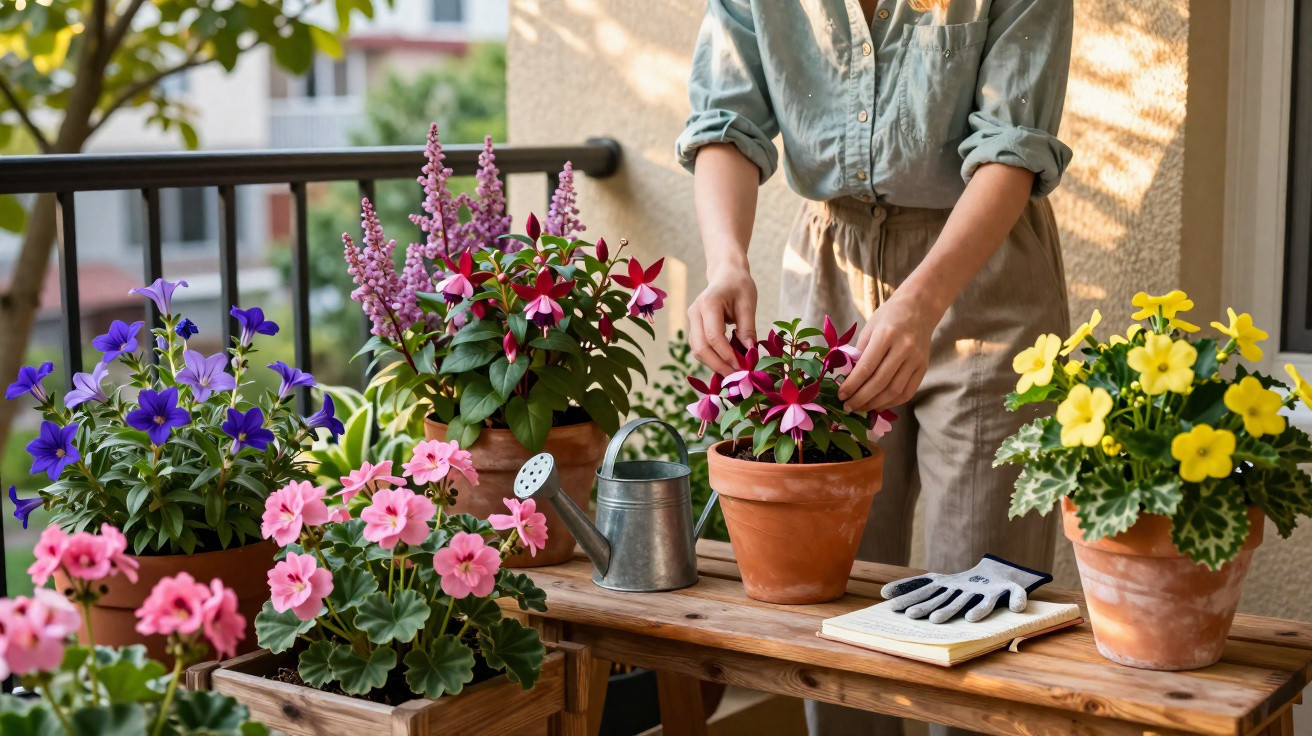
Many amateur gardeners give up on shady corners in frustration, planting little more than ivy there. Yet even a cool, low-light spot can be turned into a ribbon of flowers from June through to autumn with surprisingly little effort. The key is to identify the type of shade correctly and select flowers that are suited to precisely those conditions.
How much shade does the spot really get?
Not all shade is the same. Ignore this and it is easy to choose unsuitable varieties, then wonder why the plants remain weak and sparse.
- Light partial shade: sunshine in the morning or evening, with shade at midday – for example, beside an east- or west-facing wall.
- Constant dappled light: beneath open-canopy trees or by a north-facing window.
- Deep shade: directly against a north-facing wall, below densely leafed trees or in narrow courtyards.
The darker the position, the more important it is to choose plants that are genuine shade specialists. Shade also changes the soil conditions: it dries out more slowly, stays cool for longer and may become heavy and waterlogged if watered too often.
“Anyone who understands their shady corners saves money, stress – and enjoys far longer flowering periods.”
Loose, humus-rich soil is ideal for shaded areas. In garden beds, use a blend of compost and leaf mould; on a balcony, choose quality container compost with a little bark humus. A thin mulch layer keeps roots cool and helps maintain even moisture – ideal for uninterrupted summer flowering.
Seven shade flowers that bloom from June to autumn
A thoughtful blend of free-flowering annuals and hardy perennials can transform a dark corner into a colourful display. These seven plants cover the whole season, whether grown in pots or in the garden.
1. Busy Lizzies (Impatiens)
Impatiens are a classic choice for shaded balconies and beds. They prefer fresh, evenly moist compost and reward this with almost continuous blooms from June until the first frosty nights.
- ideal for north-facing balconies and house walls without direct sun
- flowers range from white and pink to rich red
- well suited to window boxes, bowls and low bed edging
Important: never allow them to dry out completely, but avoid waterlogging too. Regularly removing spent flowers keeps the plants compact and encourages further flowering.
2. Tuberous begonias for deep shade
Tuberous begonias are among the few flowering plants that even enjoy deep shade beneath a balcony overhang. In hanging baskets or pots, their double flowers trail down like small rose-shaped balls.
Planted from May, they flower from June into September. Over time, they prefer nutrient-rich compost and roots that remain slightly moist. Wind and persistent rain weaken the plants, so a sheltered position is best.
3. Fuchsias for cascades of flowers
Fuchsias are among the stars of partial shade. Their delicate bell-shaped blooms in pink, violet or white brighten even grey days. They create real cascades of flowers in hanging baskets and work equally well in containers by the front door or on narrow balconies.
A light trim in early summer, together with liquid feed every two weeks, supports flowering for months – often into October if autumn remains mild.
4. Astilbes as a focal point in the shade border
Astilbes are perennials for fresh, shady beds. Their upright, feathery flower plumes add height and structure to a shade border. Colours range from white and pink through to vivid red.
They generally begin flowering in late May or June and continue into late summer. Astilbes are happiest in humus-rich soil that stays evenly moist; in dry conditions, their leaves soon begin to droop.
5. Carpathian bellflower (Campanula carpatica)
Those with a lightly shaded position can use Carpathian bellflower to create carpets of blue or white bells. These low-growing perennials are suitable for bed edges, stone borders and large bowls.
In loose soil with moderate feeding, they continue flowering from May into September. A light cut-back after the first flush of flowers encourages fresh buds.
6. Perennial geraniums for broad areas of colour
Varieties such as ‘Rozanne’ in particular have become established as reliable long-flowering plants for partial shade. Their violet-blue flowers appear almost without interruption from June until autumn. At the same time, they suppress weeds by forming dense, low cushions.
They suit planting beneath shrubs, along path edges or in front of taller perennials such as astilbes. Once properly established, they require comparatively little maintenance.
7. Foamflowers – delicate blooms and decorative foliage
Foamflowers are ideal ground cover for fresh, shaded places and open woodland edges. They form dense carpets and carry fine white or pinkish flower spikes from April into late summer.
Their foliage develops attractive colouring over the course of the year, making it appealing beyond the main flowering season. A little compost in spring is usually sufficient fertiliser.
How to combine shade flowers effectively
Shade plants are at their best when used together. With a little planning, it is possible to create uninterrupted colour for months.
“The art of the shade border: low ground cover, medium-height long-flowering plants and individual ‘performers’ in the background.”
- Under trees: use perennial geraniums and foamflowers as a carpet, with groups of astilbes behind them for height.
- North-facing balcony: place fuchsias in hanging baskets, tuberous begonias in window boxes beneath them, and add Busy Lizzies for solid areas of colour.
- Narrow shaded beds beside the house wall: put Carpathian bellflowers at the front, followed by geraniums and occasional astilbes.
Combining different heights and flower forms prevents the planting from looking flat and repetitive. In shade, contrasts between pale and dark blooms are particularly striking.
Care table: what shade flowers really need
| Plant | Position | Water needs | Special tip |
|---|---|---|---|
| Impatiens | Shade to partial shade | evenly moist | Remove spent flowers regularly |
| Tuberous begonia | deep shade, sheltered | moderate, no waterlogging | Overwinter tubers frost-free |
| Fuchsia | partial shade | high, check daily in hot weather | Do not place in strong midday sun |
| Astilbe | shade, fresh soil | high | Mulch keeps the roots cool |
| Carpathian bellflower | light partial shade | moderate | Cut back after the first flowering flush |
| Perennial geraniums | partial shade | medium | Do not cut back too hard in autumn |
| Foamflower | shade, humus-rich soil | medium | Leave fallen leaves in autumn as natural mulch |
Common mistakes in shade – and how to avoid them
Many plants do not fail in shade because the spot is too dark, but because the soil is managed incorrectly. Constant wetness can quickly cause root rot. A simple finger test before watering is enough: if the compost still feels cool and slightly moist, it is better to wait.
Another common mistake is using standard fertiliser at too high a dose. This produces plenty of leafy growth while flowering suffers. For flowering plants in pots, use a liquid fertiliser for flowering plants at half strength every two weeks. In a bed, a generous helping of compost in spring is usually enough.
What else you should know about shade plants
Shaded areas are often climatically more stable than sunny positions. Temperatures fluctuate less, while wind does not dry out the soil as quickly. This is especially helpful during hot spells. At the same time, damp leaves dry more slowly, creating conditions that favour fungal diseases. Giving plants enough space and removing old leaves promptly greatly reduces this risk.
The effect on the garden as a whole is also worth considering: brightly coloured islands in the shade draw the eye when sunny beds are already tiring in high summer. Many of these plants also grow well in containers. This makes them easy to move, combine or simply bring closer to the house in autumn to extend their visual flowering season.
Anyone who has tried these seven plants will see dark garden corners very differently: no longer as problem areas, but as an opportunity for cool, colourful summer spaces where it is pleasant to linger even on hot days.




Comments
No comments yet. Be the first to comment!
Leave a Comment