
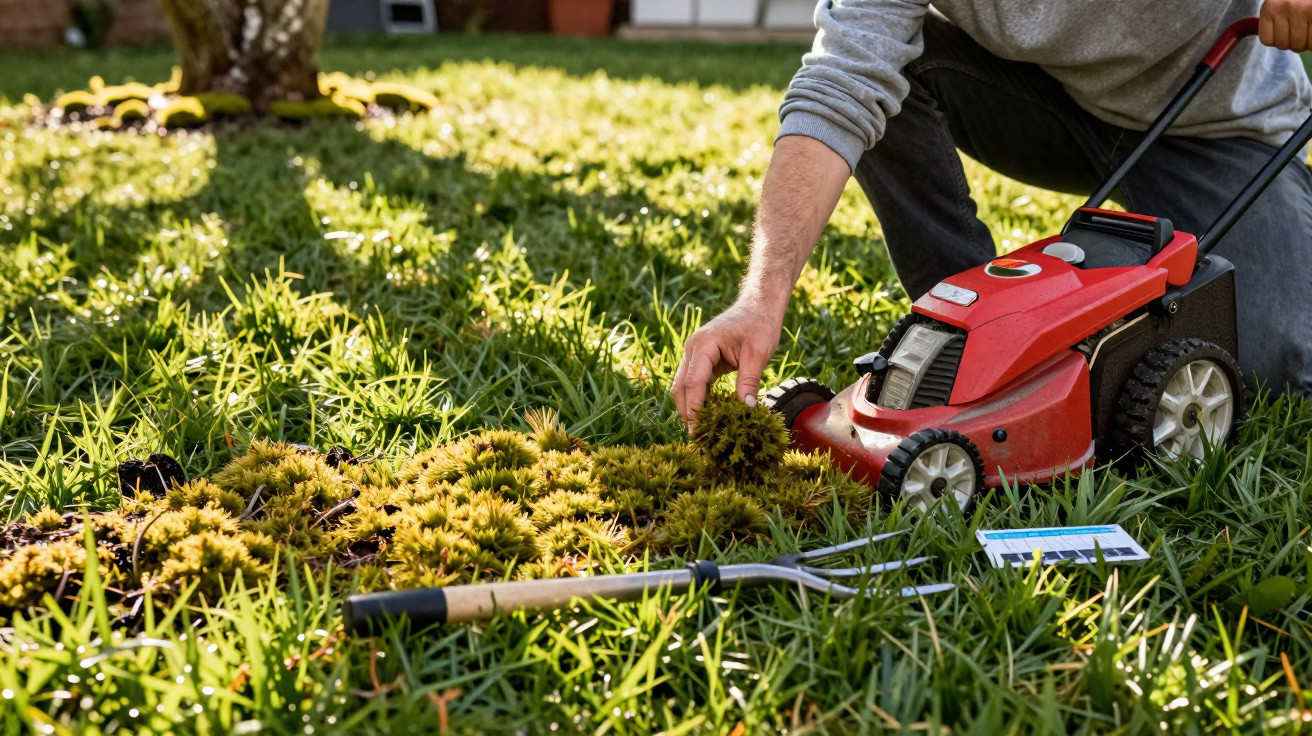
Many amateur gardeners spend a great deal on fertiliser while overlooking the simplest way to achieve a dense, moss-free lawn.
Brown, patchy or thatchy lawns are usually not caused by a shortage of nutrients, but by an incorrectly set mower. Moving the machine’s height setting by just a few centimetres can determine whether the turf stays strong or moss, clover and weeds take hold.
Why cutting height determines whether you get moss or a dream lawn
Grass blades are not carpet fibres that can be cut as short as you please. Every blade needs sufficient leaf area to generate energy through photosynthesis. If it is mown too low, the plant must draw on reserves stored in its roots, which weakens it in the long term.
Allowing grass to grow slightly taller encourages deeper roots. These can draw water and nutrients from lower soil layers, enabling the lawn to cope much better with heat, dry spells and foot traffic. The blades also shade the ground, so the surface heats up less and the soil does not dry out as quickly.
Cutting height controls root strength, soil temperature and moisture at the same time – and therefore directly affects moss’s chances of spreading.
When a lawn is repeatedly cut too short, small gaps appear. Bare soil then warms up and dries out, allowing weeds and moss to move into these open spaces. The lawn starts to look dull and uneven.
However, leaving grass permanently too long is not the answer either. After rain, moisture remains trapped in the dense sward for a long time. A kind of thatch layer develops from old clippings and dead plant matter. Moss species thrive in this damp cushion and grow there particularly reliably.
The ideal cutting height through the year
Modern lawn mowers generally offer several height settings. Many people pick one setting and leave it unchanged throughout the season, missing considerable potential. The ideal setting varies according to sunshine, shade, use and the time of year.
Lawns in full sun
For a typical domestic lawn used by children, for barbecues and regular walking, the suitable height in a sunny position is around 4 to 5 centimetres for most of the year.
- below 3 cm: even hardy grass varieties suffer and the lawn quickly turns yellow
- 4–5 cm: a good balance of appearance, resilience and protection against moss
Only extremely fine-leaved ornamental lawns can be cut a little lower. In that case, though, the area must receive less foot traffic and require very intensive care.
Lawns in shade and damp corners
Different rules apply beneath trees, on the north side of the house or along damp edges of a garden. These spots receive less light and the ground stays wet for longer – precisely the conditions that favour moss.
A higher setting of 6 to 8 centimetres is worthwhile here. The extra leaf area captures more light, strengthening the grass plant so it can compete more effectively with moss and shade-loving plants.
Recommended heights by season
| Season | Sunny areas | Shaded areas |
|---|---|---|
| Spring | 4–5 cm | 6–8 cm |
| Summer | 5–6 cm (slightly higher in hot weather) | 6–8 cm |
| Autumn | 5–7 cm | 6–8 cm |
At the start of the season in March or April, set the mower to its highest position first and remove only the tips. Lower the cutting height in one or two stages afterwards.
The essential rule: never remove more than one third
Professionals follow one straightforward mowing principle: never cut off more than one third of a blade’s current length. So, if the intended finished height is 6 centimetres, mowing should take place by the time the grass reaches roughly 9 centimetres.
The less often grass is cut and the more drastic each cut is, the weaker the turf becomes – and the easier it is for moss to establish itself.
During spring, when grass grows vigorously, this may mean mowing once or twice a week. From May to October, one weekly pass is sufficient in many gardens. Anyone mowing only every two or three weeks will be faced with grass that is too long. A severe close cut then becomes the only option – and that is exactly what causes damage.
Common mistakes made by amateur gardeners
- cutting the lawn extremely short to “leave it alone for longer”
- mowing too infrequently, then removing far too much in one go
- using the same height setting in sun and shade
- always mowing when the ground is damp – the blades tear rather than being cleanly cut
A better approach is to mow in dry weather, adapt the cutting height to the conditions and mow a little more often while removing less each time.
How to curb moss step by step
Anyone whose lawn already contains large patches of moss will usually need a few additional measures. The good news is that many of them can be completed over a weekend.
Use the right mowing height as the foundation
The first and most important step is to adjust the height settings. Set the mower to around 4 to 5 centimetres in sunny areas and 6 to 8 centimetres in shade. This change alone noticeably improves conditions for the grass.
Aerate the soil and remove thatchy layers
Moss often establishes itself in compacted, poorly aerated soil. The following measures can help:
- aerating with a garden fork or specialist tool by making holes in the soil
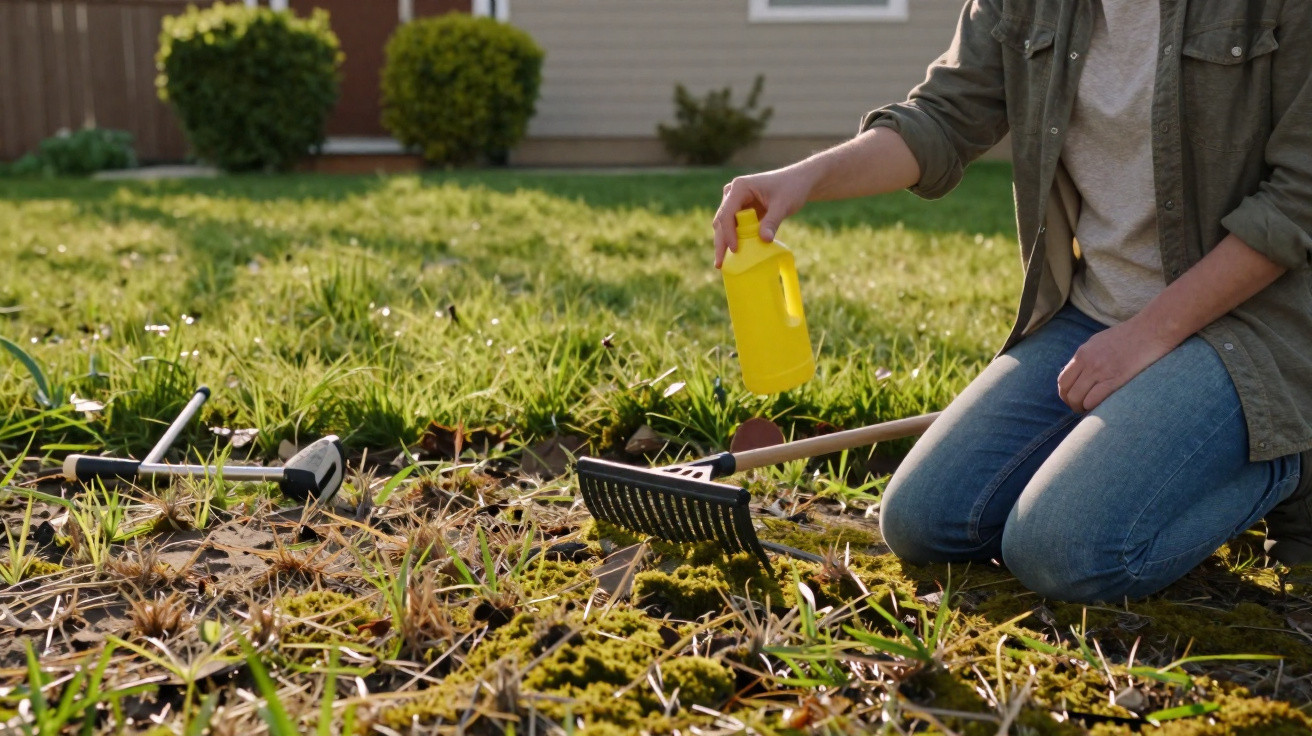
- scarifying to pull thatch and old clippings out of the turf
- working fine sand into heavy soil so water can drain more effectively
A lawn often looks alarmingly bare immediately after scarifying. With the appropriate cutting height, a little overseeding and patience, it will generally fill in quickly.
Keep acidity and nutrients in check
Moss favours acidic, wet soils. A soil test from a garden centre will show whether the pH level is too low. If it is, an application of garden lime can raise it. It is also worth checking nutrient levels: a balanced lawn fertiliser strengthens the blades so they grow more densely.
Everyday examples from the garden
The same pattern can be seen in many housing estates: at the front by the road is a very short, yellowish lawn, while the slightly shaded area at the back is mossy and fails to become properly green even after plenty of fertiliser. The care routine is barely different – the mower is simply set to the same notch everywhere.
Changing the height setting deliberately can make a substantial difference. A slightly higher cut at the front, a little more height at the rear, mowing when dry and occasional scarifying can make the lawn visibly denser after just one season. Moss patches shrink and new blades fill the gaps.
Many garden owners say they previously relied on moss killers, iron treatments and specialist fertilisers. In the long term, this achieved little because the underlying cause remained. Lasting results came only after adapting the cutting height and mowing regularly without cutting too severely.
What lawn clippings and thatch actually mean
Advice articles often use terms that can seem abstract in everyday gardening. Two in particular are frequently encountered by amateur gardeners:
- Lawn clippings: This simply means cut grass. If long or wet clippings are left on the lawn, they can form a matted layer. Fine, dry clippings may be left behind provided the lawn is not overloaded.
- Lawn thatch: This layer of old clippings, moss and dead plant material sits between the soil and the living grass blades. Too much of it prevents air, water and nutrients from reaching the soil. Scarifying is the solution.
Once you understand what these terms mean, it becomes easier to see why mowing height has such a powerful effect on the balance: it determines how much new, healthy material is produced and how much old, dead material remains.
Anyone who pauses briefly each time they start the mower to consider the right height setting is essentially already maintaining their lawn to a professional standard. The work itself hardly changes, but the effect is significant: denser growth, less moss and a lawn that still looks good after a hot summer.




Comments
No comments yet. Be the first to comment!
Leave a Comment