
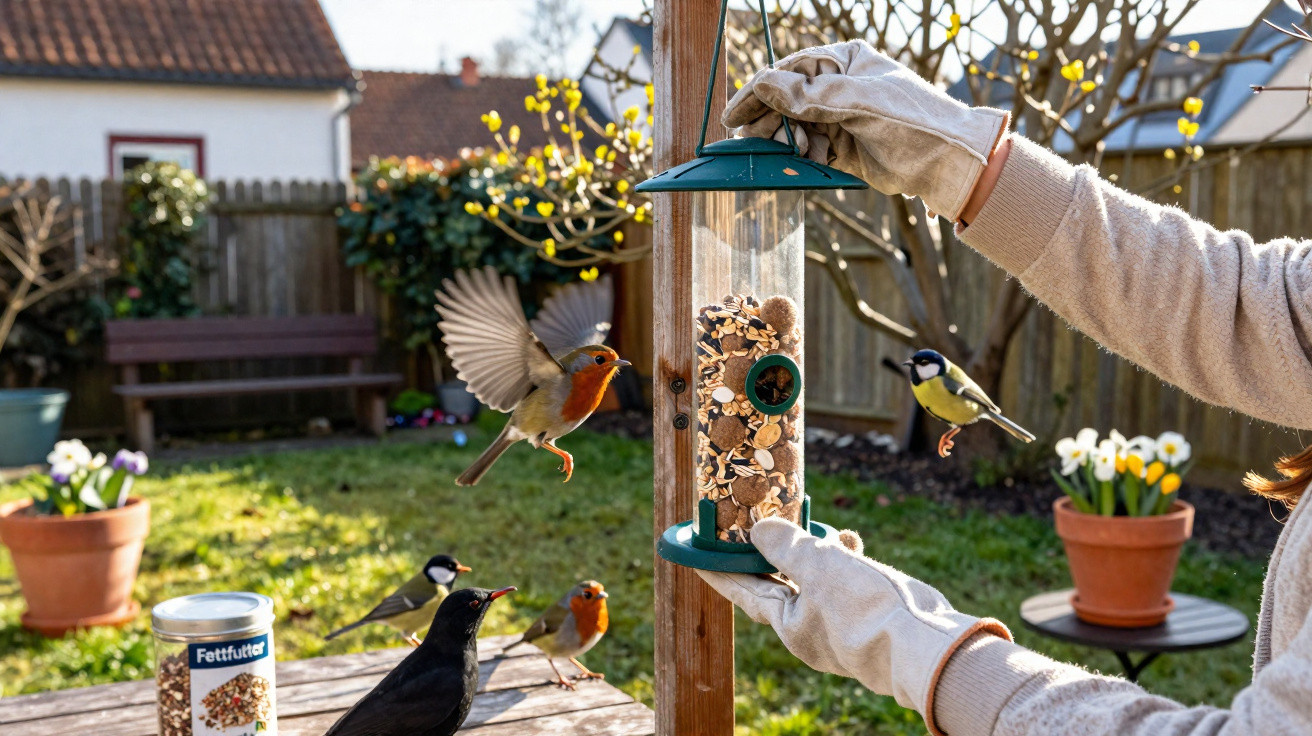
Anyone travelling to England in winter, or watching television footage of English gardens, is often struck by the bustle around bird feeders. There is constant activity, while many bird enthusiasts in Germany look with frustration at deserted bird tables. The explanation is not some miraculous climate, but a different approach to feeding garden birds – one that has barely taken hold in Germany so far.
How a quiet feeding revolution is changing birdlife
For a long time, the thinking was simple: scatter whatever is available – a few stale bread scraps, a cheap seed mix and perhaps a fat ball from the supermarket. The intention was always good. Yet this routine no longer suits the conditions wild birds must cope with today.
Winters are frequently unpredictable: several weeks of drizzle and mud can be followed abruptly by nights of severe frost. For a bird weighing only a few grams, these swings are a serious challenge. If its energy reserves are not full by evening, every cold night can become a fight for survival.
In England, home gardeners have for several years relied not on “lots of food”, but on “specifically high-calorie food” – and it is transforming entire garden scenes.
Rather than buying huge bags of low-cost mixes, people are putting smaller quantities of higher-quality food into their shopping baskets. The principle is straightforward: fewer fillers and more energy in every mouthful. It can even save money in the end, as far fewer seeds are left unused on the ground or rot away.
High-fat energy: why birds need different food in winter
Every calorie matters to songbirds on icy nights. They need to keep their body temperature steady, burn through energy at remarkable speed and have very little in reserve. A bird has a problem if it uses more energy cracking tough seeds than it receives from eating them.
This is precisely where the English approach comes in. It centres on high-fat food that birds can access with minimal effort. In effect, these are “energy bars” for blue tits, robins and their companions.
- Sunflower hearts, ideally husked: Birds can reach the nutritious kernel immediately rather than having to crack open the shell. This saves both time and energy.
- Fat blocks and vegetable-fat balls: Options containing insects or nuts are particularly suitable, providing both fat and protein. Important: hang them without plastic netting so that birds’ feet cannot become tangled.
- Dried mealworms: A high-quality protein source especially popular with robins, blackbirds and tits.
Replacing cheap wheat or broken maize with these types of food turns a feeding station into a genuine refuelling point for wild birds. Smaller species in particular benefit enormously, often appearing in noticeably greater numbers after only a few days.
Targeted feeding: which species really uses which food
Another detail applied consistently in Britain is matching food to the species that actually visit the garden. Instead of laying out an enormous buffet that mainly attracts pigeons and crows, many gardeners now plan their feeding much like a restaurant menu.
Different bird species have different preferences and feeding techniques. Taking this into account prevents waste and supports precisely those birds most in need of help.
The more closely food matches the beak and behaviour of each bird species, the more local biodiversity benefits – and the less is left unused in the flowerbed.
- Goldfinches: They favour very small seeds such as niger seed, offered in specialist tube feeders.
- Robins and blackbirds: These prefer feeding on the ground, especially on soft mixes containing fruit and insect ingredients.
- Tits: They most readily pick at hanging fat blocks, net-free fat balls or sunflower-heart feeders.
- Sparrows: They cope with more robust seed mixes, but also benefit from husked sunflower hearts.
This specialisation is also more likely to keep common unwanted visitors, such as rats and excessive numbers of pigeons, away because there is less suitable food for them. At the same time, fewer seeds remain untouched on the ground and later germinate.
Why feeding in February shapes the whole spring
Late winter is particularly important. By then, birds are usually already weakened, while their bodies are beginning to prepare for the breeding season. Those able to build sufficient reserves at this stage enter the mating and nest-building period in better condition.
A bird that leaves winter in good condition not only builds a nest more quickly, but can also raise more and stronger young birds.
Long-term observations in England show that more breeding pairs appear in spring where high-quality winter food is provided consistently. These pairs are also more likely to raise their offspring successfully until they fledge. More fit parents in February mean more young birds in May.
The logic is simple: birds that survive winter can breed in spring. Birds that begin the season strong breed more successfully. This is exactly where relatively little effort can have a major effect on local birdlife.
How to turn your garden into a bird hotspot quickly
The good news is that the English approach does not require an estate or a vast garden. A balcony, small courtyard or terraced-house garden is enough to attract substantially more life.
Practical steps for everyday feeding
- Replace cheap mixes: Gradually move away from budget standard bags and towards high-quality sunflower seeds, either black or husked.
- Include fat sources: Hang vegetable-fat blocks or fat balls, ideally containing nuts or insects.
- Clean regularly: Wash feeding stations around once a week with hot water to reduce disease-causing germs.
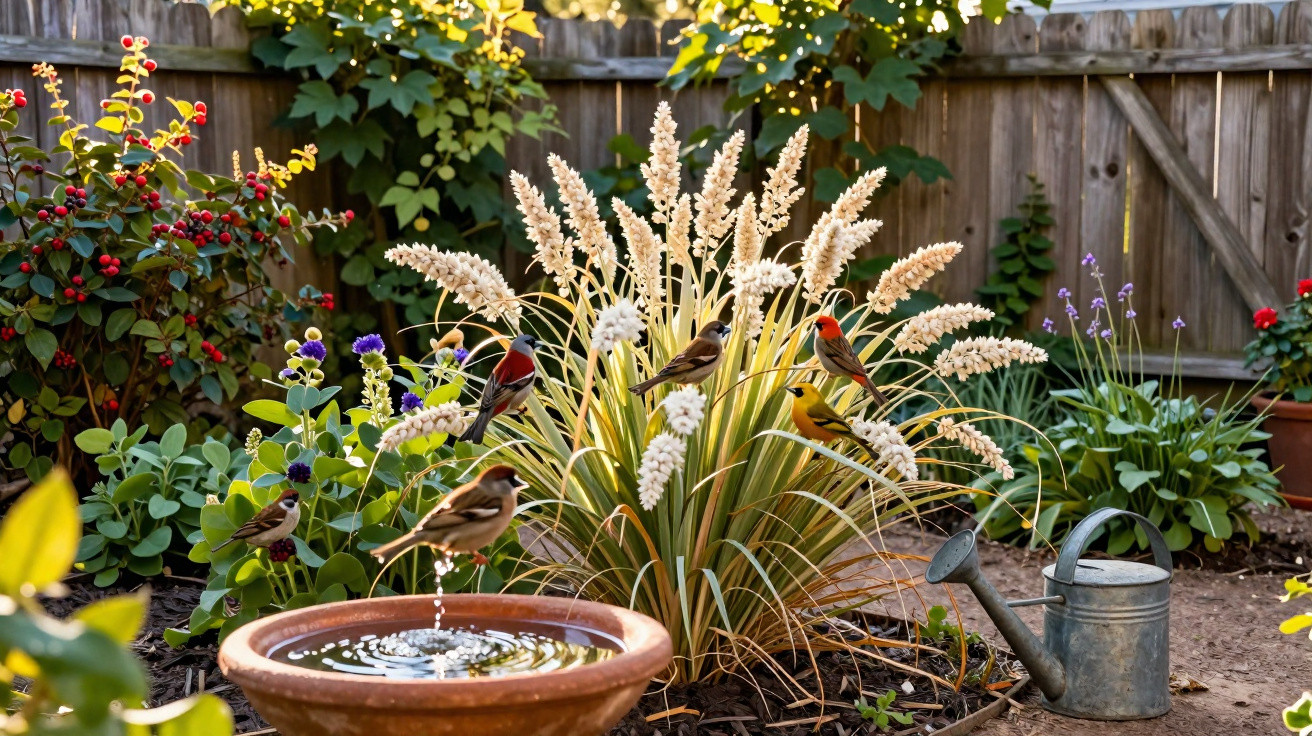
- Provide water: Put out a shallow dish of fresh water and, during frost, replace it with lukewarm water when needed.
Hygiene in particular is taken very seriously in the UK. Dirty feeding stations can spread diseases that weaken entire populations. Clean feeders and bowls ensure that birds can genuinely recover rather than becoming infected.
How quickly nature can respond
Many garden owners report seeing significantly more bird species within just a few days of switching to energy-rich food. Tits tend to arrive first, followed by robins, sparrows, nuthatches and sometimes even woodpeckers.
The effect is often astonishing: a few deliberate changes at the feeding station are enough to make a previously quiet garden seem more alive than ever.
There is another benefit alongside the pleasure of watching wildlife: supporting birds also helps the garden indirectly. Many species consume vast quantities of insects in spring and summer, including aphids, caterpillars and other so-called pests. A garden rich in birds often needs fewer chemicals and is more resilient overall.
Practical tips for getting started in German gardens
For anyone wishing to begin now, it is worth considering a few common questions:
- How long should you feed birds? Ideally, from the first cold days of autumn well into spring, especially throughout the harshest winter weeks.
- Bread – yes or no? Best avoided. It swells in the stomach, provides little nutrition and can go mouldy.
- Salty leftovers? Keep away from seasoned food scraps. Salt and cooking fats put strain on birds’ bodies.
- Where should the feeding station go? Choose a position where cats cannot launch a surprise attack, leaving some distance from bushes and walls.
Planting native shrubs as well, such as wild roses, blackthorn or snowberry, creates a natural store cupboard. These plants provide berries, habitat for insects and protection from birds of prey. Combined with energy-rich winter feeding, they form a year-round habitat that has a positive long-term effect on biodiversity.
With just a few well-considered actions, part of the English garden strategy can be brought to towns and villages in Germany – making the view from the window far more interesting.

Comments
No comments yet. Be the first to comment!
Leave a Comment