
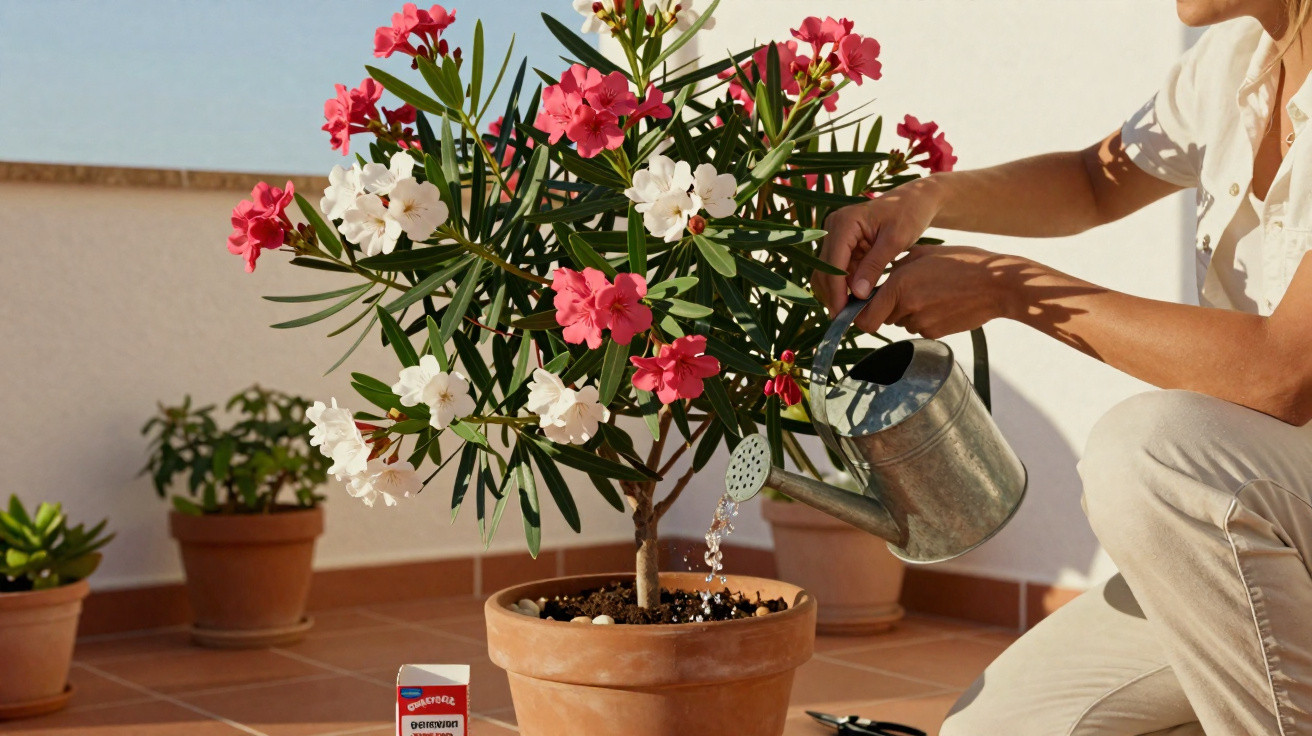
A simple trick can change that.
Many amateur gardeners choose oleander to bring a Mediterranean feel to their garden or balcony, only to be disappointed when the plant produces barely any buds. The climate is rarely to blame; care mistakes are almost always the cause. Pay attention to a few essential factors and, by high summer, the plant can be positively covered in flowers.
Where oleander comes from – and what it really needs
Oleander, botanically known as Nerium oleander, originates from Mediterranean areas and parts of South Asia. In its native habitat, it grows beside watercourses, in gravel beds and on dry slopes.
- It thrives in sunshine and heat.
- It copes well with relatively lean, mineral soils.
- It tolerates dry spells better than waterlogged conditions.
This is precisely the secret to abundant flowering: recreating these natural conditions as closely as possible in the garden or in a container produces robust, vigorous plants with plenty of flower clusters.
Oleander needs lots of light and plenty of water – but never wet feet in its pot.
The golden rule for spectacular oleander blooms
The key principle can be summed up in one sentence: maximum sunshine, excellent drainage, regular watering and liquid fertiliser. It sounds straightforward, yet several of these requirements are often missed at the same time.
The ideal position: sunshine without compromise
Oleander is one of those plants for which partial shade is virtually shade. The more direct sunlight it receives, and the longer it receives it for, the more generously it will flower.
- Choose a south- or west-facing side of the house, patio or balcony.
- Avoid permanent shade from trees, walls or canopies.
- In cooler areas, place it somewhere warm and sheltered from the wind where possible.
When an oleander is kept too dark, it develops plenty of leaves but very few buds. Typical signs include long, thin shoots, limited branching and sparse flowers.
Drainage: no free water flow, no mass of flowers
For container-grown oleanders, waterlogging is the number-one flower killer. The roots rot, the plant weakens and, as a protective response, it economises on flowering.
Prepare the pot correctly as follows:
- Use a large pot with drainage holes.
- Fill the base with a layer of expanded clay, gravel or coarse grit.
- Add a blend of container compost and mineral material, such as sand or lava granules, on top.
The same principle applies in borders: loosen heavy clay soil with sand and fine gravel so that rainwater can drain away.
Plenty of water, but applied properly: water deeply rather than keeping it constantly wet
Oleander is not a cactus. During its growing and flowering period, it needs abundant water, especially on very hot days.
- Check it every day in summer; it will often need watering in both the morning and evening.
- Water thoroughly each time, until water runs from the bottom.
- Pour away any remaining water from saucers after a while.
The trick is the combination of a generous watering and effective drainage. This keeps the growing medium evenly moist without allowing water to accumulate.
Secret booster: geranium fertiliser in the watering water
Oleander needs plenty of nutrients for lavish flowering, particularly throughout summer. A conventional liquid fertiliser for geraniums has proved effective.
A splash of geranium fertiliser in the watering water every one to two weeks produces dense flower clusters.
It is important to use a fairly moderate dose and follow the manufacturer’s instructions. Too much fertiliser can damage the roots, while too little results in a pale plant with few flowers.
Pruning: no dense cloud of flowers without secateurs
Oleander grows quickly and becomes woody. Without regular pruning, the centre of the plant becomes bare and flowering moves further and further towards the outer branches.
The best time to prune
The ideal period for the main prune is late winter or very early spring, before new growth begins.
- Remove damaged, frost-damaged or very old shoots.
- Shorten overly long branches to encourage the plant to branch out.
- Thin out crossing shoots so that light can reach the centre.
During summer, faded flower clusters can be cut off immediately after flowering. This encourages fresh buds and keeps the crown in shape.
Protection from wind and cold
This Mediterranean shrub has only limited frost tolerance in the UK. In severe winters, container plants should be moved to a cool, bright place, such as a garage with a window, conservatory or frost-free stairwell.
Strong winds can also damage the long, succulent shoots outdoors. In exposed locations, choose a sheltered position against a house wall or use a sturdy planter that cannot topple over.
Pests and diseases: tackle problems early
Common oleander pests include aphids and other sap-sucking insects. They often gather on young shoots and buds, weakening the plant.
- Check the undersides of leaves regularly.
- Rinse affected areas with a jet of water.
- Treat heavier infestations with a suitable product as early as possible.
Fungal diseases can quickly develop during the colder months if the growing medium is too wet. Water much less in winter and avoid waterlogging completely.
Propagating oleander yourself: how to grow cuttings successfully
Anyone with a particularly attractive variety can multiply it with just a few simple steps. Cuttings root particularly reliably during the warm summer months.
Step-by-step guide to oleander cuttings
- In summer, cut non-flowering shoots around 15 centimetres long from a healthy plant.
- Remove the lower leaves, leaving just a few at the top.
- Dip the cut end in rooting powder to support root development.
- Place the cuttings in a mixture of sand and potting compost.
- Water lightly and keep the growing medium evenly moist, but not wet.
Ideally, keep the pots somewhere warm and bright but out of harsh direct midday sun. High humidity improves the success rate, for example by using a transparent cover with ventilation holes.
After around two months, most cuttings will have formed their own root system and can be moved into larger pots.
How poisonous is oleander – and who is at risk?
Every part of the oleander plant is considered highly poisonous. Its sap can irritate skin, and swallowing any part of the plant may cause poisoning symptoms.
- Wear gloves whenever possible when pruning.
- Dispose of cuttings and prunings safely; do not put them on compost in a small-animal enclosure.
- In homes with young children or pets, use it cautiously or place it out of their reach.
In normal use, problems rarely occur in practice. Anyone who treats the shrub with the same respect as any other ornamental plant, and does not chew its leaves or branches, will be safe.
Practical examples: common mistakes – and how to correct them
A classic scenario is an oleander that has sat in the same pot for years, in partial shade, receiving water only when there is time, and struggling along with a handful of flowers. A decisive fresh start can save a great deal.
- Repot it in spring into a larger container with fresh, free-draining growing medium.
- Move it to the sunniest corner of the garden or balcony.
- Adjust the watering routine: check it almost daily in summer and reduce watering sharply in winter.
- Apply geranium fertiliser regularly through the watering water from May to August.
As early as the first summer after this change, many plants respond with noticeably more flowers and stronger shoots. Those who prune purposefully again the following spring and maintain the care routine have a good chance of achieving the proverbial “wall of flowers” – almost like a southern seafront promenade.
Comments
No comments yet. Be the first to comment!
Leave a Comment