
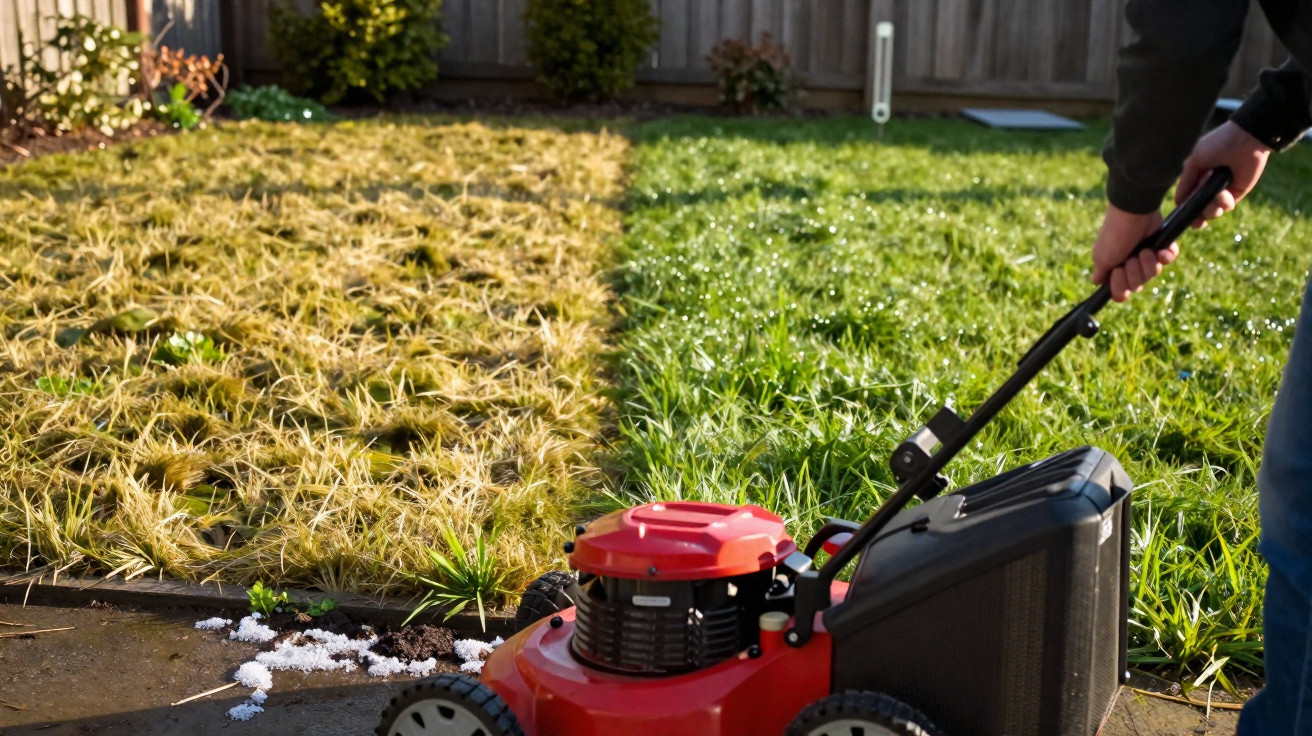
The temptation is understandable: as soon as the ground looks reasonably dry, the lawn is meant to be cut “nice and short” again. Yet this is precisely when the greatest damage can occur. Cutting the lawn too early and too low in spring weakens it for the entire season – even if it initially appears well maintained.
Why the first lawn cut in spring matters so much
During winter, the lawn greatly reduces its metabolism. Grass blades barely grow and primarily act as an energy store, helping the roots survive frost and wet conditions. In spring, the lawn needs these reserves to restart growth, become denser and develop strong new roots.
If the mower is used too soon at this stage, the grass is deprived of exactly that energy. Its roots remain shallow, while the lawn looks tired and sparse – often well into late summer.
Those who wait in spring until the soil and grass are genuinely ready will have a noticeably richer, denser lawn in summer.
There is no fixed calendar week for this. Conditions in your own garden matter, not the date on the calendar.
The most common trap: mowing too early and too low
Many gardeners make the same mistake: as soon as the blades reach a few centimetres, they mow as though it were high summer. For a lawn only just emerging from its winter dormancy, this is far too stressful.
Problem 1: Cold or wet soil
When the soil is still cold, frozen or clearly waterlogged, the mower can cause damage that is difficult to put right later:
- the weight of the mower wheels compacts the ground;
- young, delicate grass blades snap or are pulled out completely;
- gaps form, allowing moss and weeds to spread quickly;
- the lawn develops a yellowish, patchy appearance.
At first, this may merely look “a little worse for wear”. However, much more is happening around the roots: compacted soil lets through less air and water, leaving roots close to the surface and vulnerable to heat and drought.
Problem 2: Cutting height that is too low
The other classic error is to remove “everything” in a single cut. The grass is clipped almost down to ground level. This immediately takes away much of its leaf area – the surface it uses to convert light into energy.
For the first cuts of the year, one straightforward rule applies: never remove more than one third of the current grass length. For example:
- Lawn height before mowing: 9 centimetres
- Maximum amount removed: 3 centimetres
- Desired height after mowing: 6 centimetres
Even so, many people set the mower so low that only 2 to 3 centimetres remain. It may look “tidy” for a few days, but it strips the lawn of all its energy reserves. As a result, it regrows slowly, dries out more quickly and produces hardly any new shoots.
The ideal height for the start of the season
For a healthy start in spring, the lawn should be between 5 and 7 centimetres high after cutting. At first glance, this may seem slightly “long”, but it offers several benefits:
- The grass blades shade the soil, so it dries out less quickly.
- Root growth is encouraged deeper into the ground.
- Moss and many weeds find it harder to spread.
- The lawn looks denser overall because more blades receive light.
A lawnmower set slightly higher is your best insurance against brown patches, gaps and cushions of moss in summer.
How to tell when your lawn is truly ready
Rather than relying on the date, it is worth carrying out a quick check of conditions in your own garden. These signs indicate that it is time for the first cut:
- Daytime maximum temperatures are regularly above 10 degrees.
- No night frost is forecast for the coming days.
- The soil feels neither muddy nor hard-frozen.
- The grass blades have regained a clearly green colour.
- The lawn is roughly 8 to 10 centimetres high.
If you gently lift the lawn or inspect a small piece of soil with a spade, you can judge fairly well whether the ground is still clammy and cold or already loose and slightly warmed.
How to set your mower correctly
Most modern lawnmowers have several cutting-height settings. Many gardeners simply leave the summer setting in place – often a fairly low one. It is worth checking this briefly before the first passes in spring.
| Situation | Recommended cutting height |
|---|---|
| First cut of the year | leave at least 5–7 cm |
| Second and third cuts in spring | leave 4–5 cm |
| Regular cuts in summer | 3.5–4.5 cm, depending on heat and use |
The condition of the blades is equally important. Blunt blades tear the grass rather than cutting it cleanly. The cut edges become ragged and brown, creating entry points for fungal diseases.
A quick sharpening before the season begins is usually enough to achieve a much cleaner cut and place less stress on the turf.
Common misconceptions about the spring lawn
“The shorter it is, the tidier it looks”
The visual impression is misleading. A lawn cut extremely short may resemble a golf course for a few days, but it comes under stress as soon as there is even a brief dry spell. Longer grass blades buffer temperature changes more effectively and improve the microclimate directly at ground level.
“If I mow early, I will have less work later”
That rarely works out. A weakened lawn needs more overseeding, more water and often more fertiliser to return to shape. Starting the season gently saves a number of corrective measures over the course of the year.
What you can do before the first cut
Before the mower is used for the first time, a small amount of hand care is helpful. Use a leaf rake to clear away old leaves, dead grass and small branches. This allows more light to reach the base of the grass and prevents the mower blades from being needlessly obstructed.
If you can see many shallow cushions of moss, you can lightly rake the area first. Larger scarifying jobs should wait until a slightly warmer period, when the lawn is growing actively again and can recover quickly from the strain.
The long-term effect of a sensible start
A carefully planned first cut has an impact far beyond spring. Deep, strong roots make the lawn more resilient to heat, children’s feet, playing dogs and extended dry spells.
Many problems that appear in high summer – brown areas, thin patches and persistent moss – begin with an overly aggressive start to the season. Once you understand this, you will look at the mower differently in March and April.
As an added benefit, watering requirements fall when the lawn gradually roots more deeply and the soil does not dry out constantly. At a time of rising water prices and longer heatwaves, that is a tangible advantage, not merely a matter of appearance.
Anyone who sees their green space as a long-term project should begin spring with patience, sharp blades and a high mower setting. The reward becomes visible a few weeks later: a rich, unbroken carpet of lawn that does not immediately wilt at every spell of sunshine.






Comments
No comments yet. Be the first to comment!
Leave a Comment