
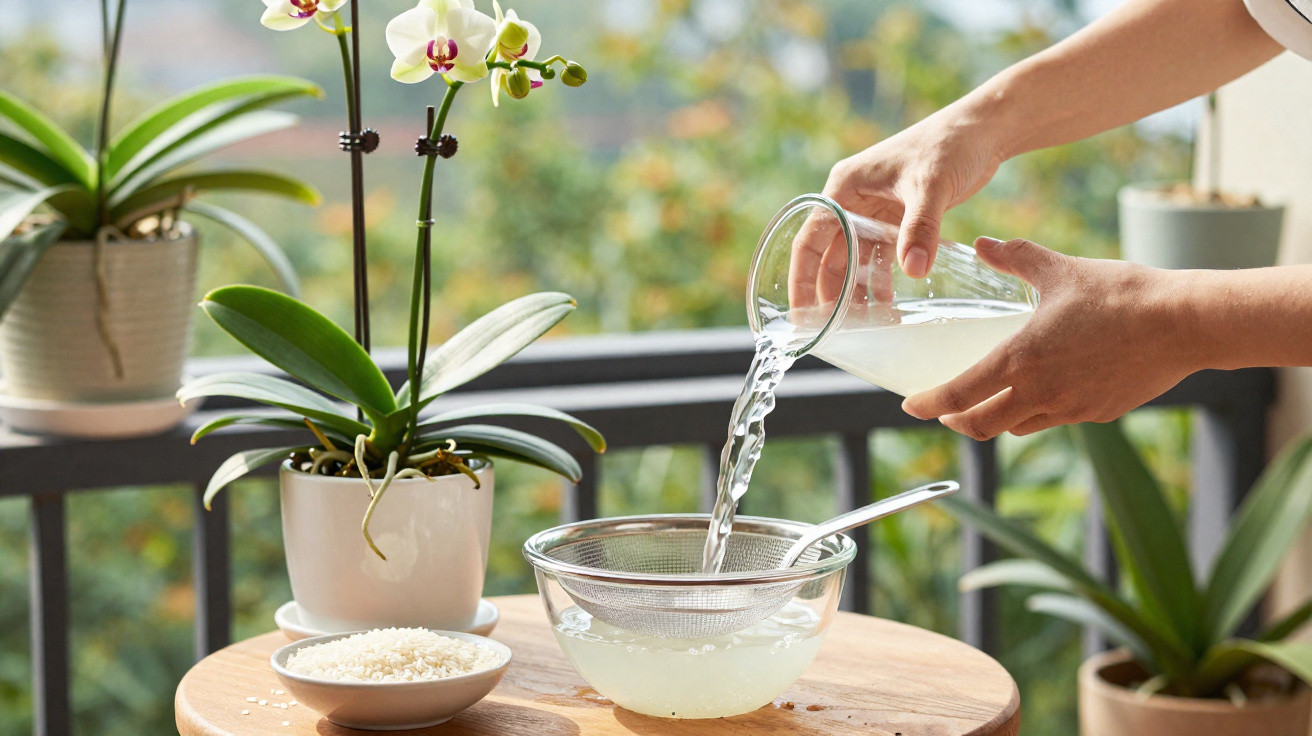
Rice water can support a flowerless orchid as part of its care routine, but it is not a miracle cure. The liquid from rinsing uncooked rice contains starch, small amounts of vitamins and micronutrients, yet it only benefits the plant when the growing medium is airy, the roots are healthy and watering follows the orchid’s natural rhythm.
Why is the orchid green but not flowering?
An orchid with firm leaves but no blooms is usually still alive, though it may lack the energy needed to produce a new flower spike. Insufficient bright indirect light, ageing growing medium, damaged roots and inconsistent fertilising are among the most frequent reasons.
Growing specialists point out that orchids require well-aerated roots, effective drainage and watering only once the growing medium has dried. Overwatering is one of the most common mistakes, and it can prevent recovery long before flowering begins.
How does rice water affect roots and the growing medium?
Rice water acts as a mild source of organic matter and nutritional residue. In a pine-bark growing medium, it may nourish beneficial microorganisms and give active roots a small nutritional boost.
However, it must be used sparingly, as built-up starch can ferment in a poorly ventilated environment. When the pot remains damp for several days, the liquid can cause unpleasant smells, fungal growth and deterioration of the growing medium rather than encouraging the orchid.
How should rice water be prepared correctly?
Use only the water from the first or second rinse of uncooked rice, with no salt, oil, seasoning or cooking water. The best version is weak, milky and at room temperature, with no sour smell.
Follow this safe method:
- place uncooked rice in a clean bowl;
- add filtered or settled water;
- stir for a few seconds until the water becomes slightly cloudy;
- strain the liquid before applying it to the pot;
- use it on the same day rather than storing it for several days.
What is the correct way to use it in weekly watering?
Apply it in the morning, when light and airflow will allow the pot to dry throughout the day. Pour it slowly over the growing medium until the water runs through the drainage holes, then let the pot drain fully before returning it to its decorative outer pot.
Rice water may be used once a week only if the growing medium is already dry. If there is still moisture between the bark pieces, wait a few more days, because a waterlogged orchid loses roots before it produces flowers.
When does this care genuinely help restore flowering?
The flowerless orchid responds best when rice water is combined with strong indirect light, good air circulation and a growing medium in good condition. Dark, soft bark with a musty smell, or brown and hollow roots, show that the plant needs attention before receiving any nutritional boost.
Strategic weekly watering provides gentle encouragement, rather than replacing appropriate fertiliser or correct care. With green roots, a well-drained pot and alternating applications with plain water, the orchid is more likely to regain vigour and prepare a new flower spike without suffering from fungi or excess moisture.
Comments
No comments yet. Be the first to comment!
Leave a Comment