
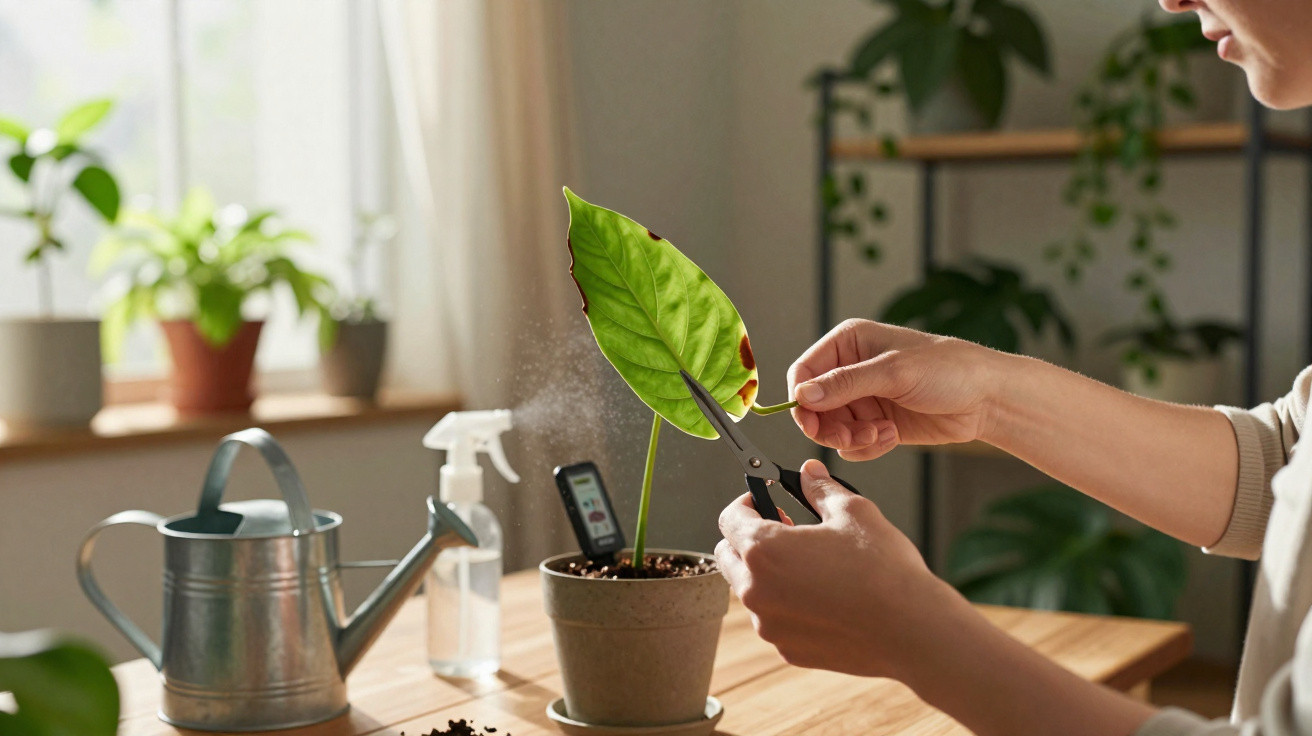
Dry leaf tips are among the most frequent signs that something is out of balance in houseplants and garden plants. This issue usually develops because of inconsistent watering, low humidity, too much sun, a build-up of salts in the growing medium, or roots being unable to take up water and nutrients.
Why do leaf tips dry out first?
Leaf tips sit furthest from the roots, so they are the last areas to receive water. If a plant loses water faster than it can replace it, it starts to sacrifice these outer edges to protect more essential leaves, stems and new growth.
For this reason, dry leaf tips should not be viewed as merely a cosmetic flaw. They are a warning that water movement through the plant has been disrupted by something in the pot, its surroundings or the care routine.
How can you tell whether the problem is too little or too much water?
The same brown tips can be caused by opposite problems. With underwatering, the growing medium remains dry for too long; with overwatering, roots are deprived of oxygen and stop taking up moisture even though the pot is waterlogged.
Several signs can help with the diagnosis:
- dry soil and wilted leaves suggest insufficient watering;
- soil that stays wet for days points to poor drainage;
- yellow leaves with brown tips indicate too much water or fertiliser;
- green, dull and dehydrated leaves suggest dry air or insufficient water;
- a musty smell from the growing medium may reveal damaged roots.
What else causes brown leaves?
As well as watering, low humidity is one of the most common causes in rooms with air conditioning, a fan blowing directly on the plant or heating. Tropical plants, including ferns, prayer plants and peace lilies, quickly react to this dryness.
Tap water may also play a part when it contains high levels of chlorine, fluoride or mineral salts. Over time, these residues build up in the growing medium and make it harder for roots to absorb water, leading to dry leaf tips even when watering appears to be right.
How can you correct the issue without making the plant worse?
Start by feeling the growing medium before watering. If the top 2 centimetres are dry, the plant may need water; if they are still damp, wait a few more days and check that the pot drains properly.
The following adjustments can make a considerable difference:
- water only when the growing medium shows that it is needed;
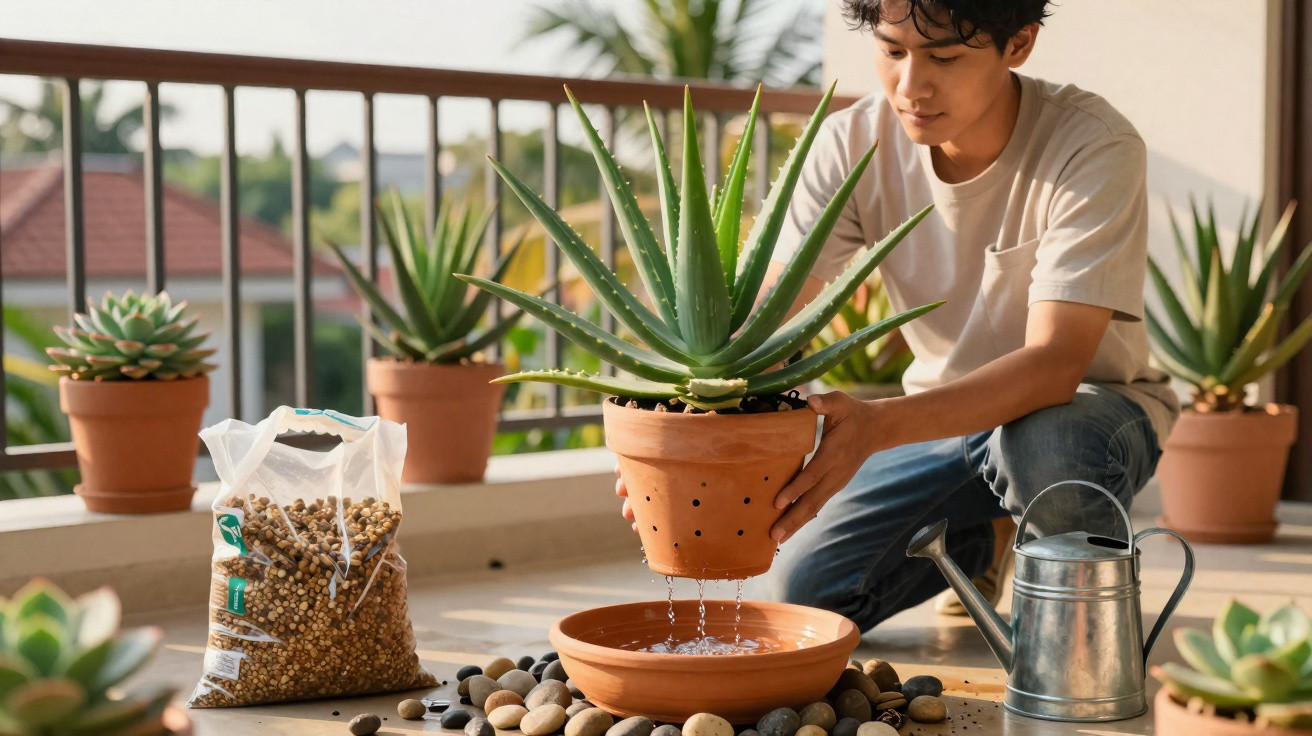
- empty any water collected in the saucer after watering;
- move sensitive plants away from strong direct sunlight;
- use filtered or rested water for delicate species;
- stop fertilising for a few weeks if excess fertiliser is suspected;
- raise humidity with a tray of pebbles and water, without allowing the pot to touch the water.
Should you trim dry leaf tips?
Dry leaf tips will not turn green again, but they can be trimmed with clean, sharp scissors. Follow the leaf's natural shape when cutting, removing only the dead section and keeping the healthy tissue around it intact.
Plant recovery relies less on trimming than on resolving the underlying cause. Once watering, light, drainage, humidity and water quality are balanced, new leaves will grow stronger, greener and without scorched edges.


Comments
No comments yet. Be the first to comment!
Leave a Comment