
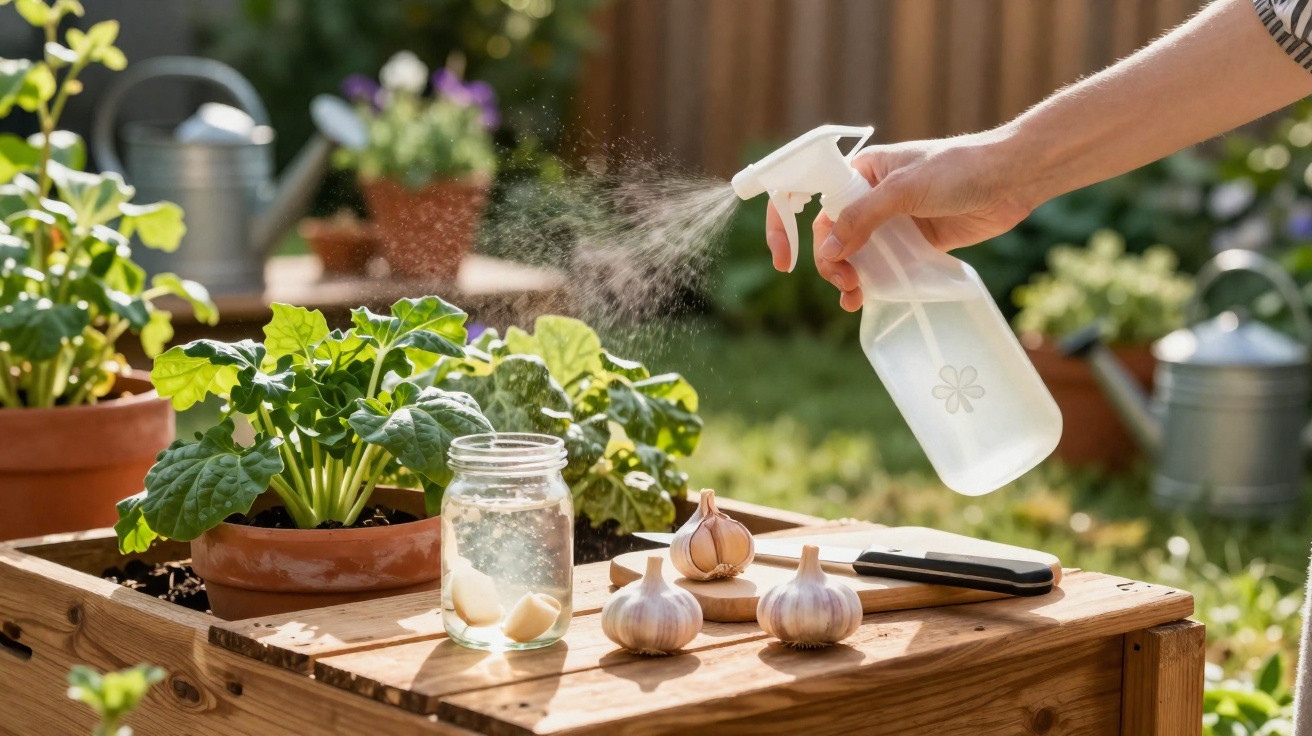
Using a homemade garlic and water repellent for plants has become increasingly popular in home vegetable plots and urban gardens. It offers a straightforward way to deter pests without turning immediately to chemical products, provided it is prepared, applied and used with an understanding of its limitations.
What is homemade garlic repellent for plants and how does it work?
Homemade garlic repellent for plants is a liquid mixture prepared from crushed garlic cloves and water. It releases strongly scented compounds, including allicin, which can irritate a range of insects. Rather than killing pests outright, it forms a scent barrier around leaves and stems, making plants less appealing to them.
It is widely used in home vegetable plots, ornamental gardens and herb pots, particularly to deter aphids, scale insects and other sap-sucking insects. As it is natural and does not remain effective for long, it needs regular reapplication, especially after rain, heavy watering or strong sunshine.
How to make homemade repellent for plants with garlic and water step by step
Making garlic and water repellent involves a simple method, while keeping the garlic-to-water ratio balanced. The basic process below can be increased or reduced to suit the size of the vegetable plot.
Gather the ingredients:
- 1 medium garlic bulb (around 8 to 10 cloves);
- 1 litre of filtered water, or boiled water that has been allowed to cool;
- Optional: 1 teaspoon of mild soap or fragrance-free biodegradable washing-up liquid.
Peel and chop the garlic: remove the skins from the cloves and chop them into small pieces to release the compounds more effectively.
Crush or blend: use a pestle and mortar, food processor or blender with approximately 200 ml of water, until it becomes a paste or concentrated liquid.
Top up with water: place the mixture in a lidded container and add the remaining water until the total volume reaches 1 litre.
Leave it to rest: keep the container sealed in a cool, dark place for 12 to 24 hours so that the smell becomes stronger.
Strain the mixture: pass it through a clean cloth, coffee filter or fine sieve to prevent the spray bottle from becoming blocked.
Add the soap, if using: mix thoroughly, as soap helps the solution adhere to the leaves.
Decant into a spray bottle: pour the liquid into a spray bottle for easier direct application to plants.
How to apply garlic repellent to plants safely
Apply the solution carefully to avoid harming more delicate leaves. Always begin by testing it on a small area of the plant and monitoring it for around 24 hours. If there is no scorching, excessive spotting or wilting, it can then be used on the remaining stems and leaves.
For more effective everyday use in a vegetable plot, follow a few practical precautions and adjust how often it is applied according to the weather and plant type.
- Application time: early morning or late afternoon, when sunlight is less intense.
- Frequency: 2 to 3 times a week for a light infestation, increasing use during rainy periods.
- How to use it: spray the upper and lower surfaces of leaves and the stems, without soaking them.
- Storage: keep refrigerated for up to 5 to 7 days in a tightly sealed bottle.
What are the precautions and limitations of homemade repellent for plants?
Although it is an easy and affordable alternative, garlic repellent mainly works by deterring insects that are more sensitive to its smell. It does not replace broader pest management when infestations are severe. In many situations, the solution will need to be combined with frequent checks, manual pest removal and general good growing practices.
Some plants with very thin leaves may require a more diluted mixture or less frequent application, while its strong odour can be unpleasant indoors. In vegetable plots growing food for fresh consumption, it is advisable to stop applications a few days before harvesting and wash leaves and fruit thoroughly. The repellent should be used as a supplementary measure within balanced garden or vegetable plot care.


Comments
No comments yet. Be the first to comment!
Leave a Comment