
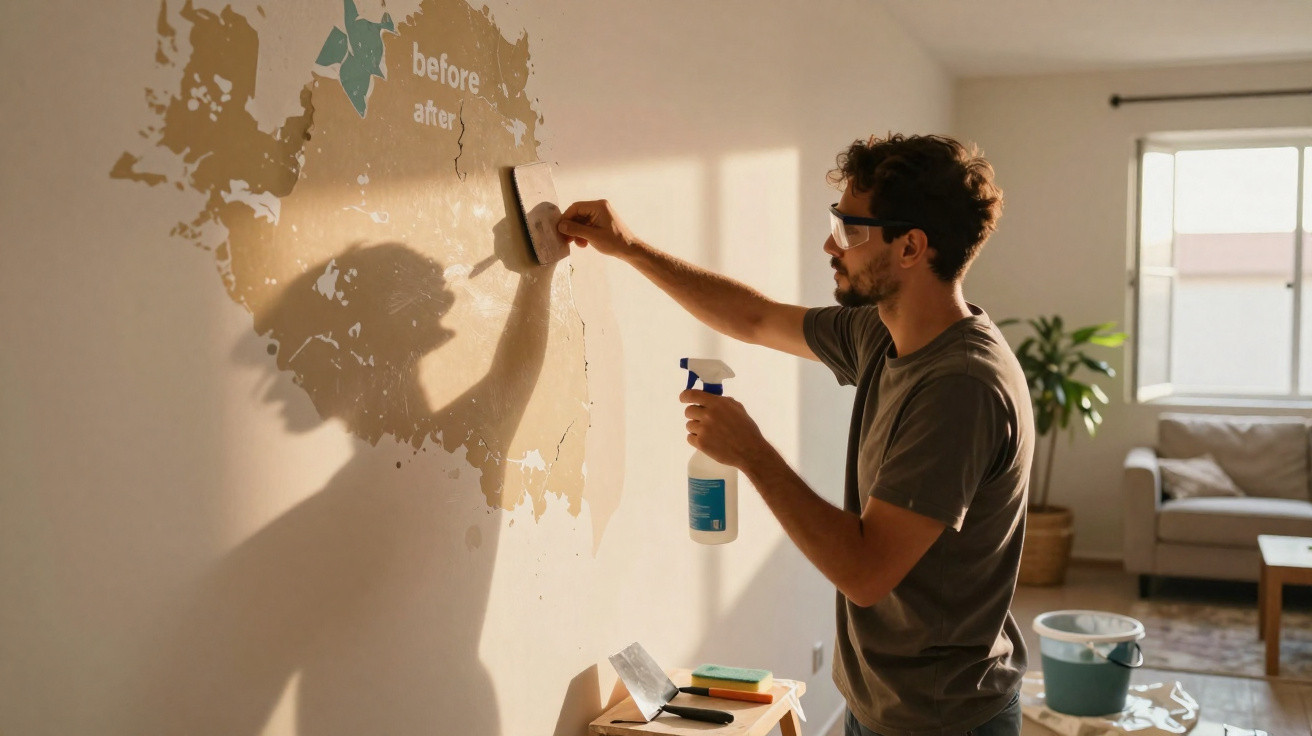
Before repainting any room, many people wonder how to remove old paint from a wall without sanding everything back to square one. Properly stripping deteriorated paint is essential to prevent the fresh coat from peeling or blistering and to ensure it bonds well. It also helps avoid unnecessary repeat work and wasted materials.
How do you choose the best method for removing old paint from a wall?
The right choice between scraping, light sanding, chemical paint stripper and pressure washing will usually depend on the wall material, whether the area is indoors or outdoors, and how worn the existing paintwork is. On interior walls with sound plaster, work can generally be limited to affected sections and completed with less effort.
Preparation is normally more thorough in external or very damp areas, particularly where there are signs of water ingress, mould or blistered paint. In these cases, two or three methods often need to be combined to create a stable base before the new paint is applied.
How to remove paint from a wall without sanding everything back to square one
If you want to remove old paint without producing excessive dust, focus on targeted scraping and, where appropriate, damp or chemical preparation. The aim is not to strip back all the plaster, but to remove loose or weak sections and leave a sound, even surface ready for repainting.
For most masonry walls, a straightforward and practical process can be followed as below:
- Inspect the wall: locate blistered or peeling areas, mould, and damp marks.
- Scrape with a filling knife: remove only paint that comes away easily, without gouging the plaster.
- Carry out an initial clean: brush away dust, wipe with a damp cloth or use a vacuum cleaner to remove loose debris.
- Deal with isolated issues: apply a fungicide or a diluted household bleach solution to mouldy areas, following the product label.
- Fill damaged areas: use a suitable filler, such as all-purpose or acrylic filler, to repair holes, fine cracks and depressions.
- Sand moderately: sand only to level repairs and joins, rather than wearing down the whole surface.
- Use a sealer or stabilising primer: apply it to highly porous sections or exposed plaster to even out absorption.
Which tools and products help remove old paint from a wall?
A few basic tools will deal with a large proportion of jobs, especially when they are used carefully rather than with excessive force. The appropriate equipment depends on the paint type-latex, acrylic, enamel or oil-based paint-the location and the overall condition of the wall.
The following items can make paint removal and surface preparation much easier:
- Filling knife and scraper: for lifting loose flakes, blisters and peeling edges.
- Steel plastering trowel: useful for scraping larger areas more evenly.
- Sandpaper in different grades: coarser grades level repairs, while finer ones are used for finishing.
- Chemical paint stripper: helpful for multiple coats, enamel or oil-based paints; always use PPE.
- Pressure washer: suitable for façades, starting at a lower pressure setting.
- Acrylic sealer and stabilising primer: improve adhesion on uneven or highly absorbent surfaces.
How can you remove paint without damaging wall plaster?
Keeping the plaster intact is one of the main considerations when removing old paint. Heavy-handed scraping or excessive sanding can cause holes, cracks and uneven patches, requiring sections of the masonry to be repaired and increasing both the cost and time involved.
To prevent this, keep the filling knife at a shallow angle, stop scraping once the paint no longer lifts easily, and sand only where there are repairs or raised edges between coats. Once defective areas have been removed, allow any exposed plaster to dry thoroughly and resolve water ingress before repainting. Otherwise, the new coat of paint is likely to develop the same defects again within a short time.


Comments
No comments yet. Be the first to comment!
Leave a Comment