
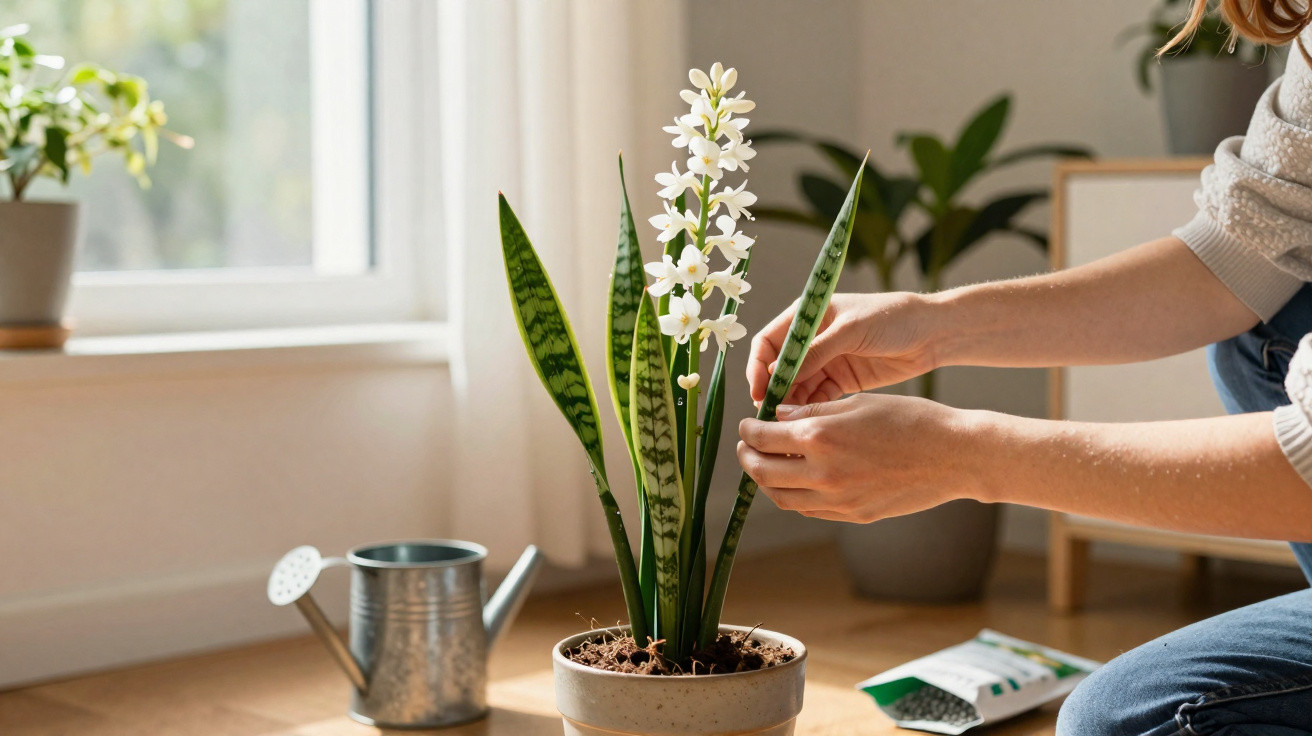
A Saint George’s sword, also known as a snake plant, can flower, although this is unusual indoors. In mature plants, plentiful light, roots that are slightly confined by the pot and widely spaced watering may encourage the development of a tall, fragrant flower stem.
What does a Saint George’s sword need in order to flower?
Flowering is most likely in mature, well-established specimens rather than in plants that have recently been divided or repotted. A small degree of stress can contribute, but this means consistency and controlled watering-not allowing the plant to wilt or harming its roots.
Although the Saint George’s sword copes with dim settings, it generally grows and flowers more successfully in bright indirect light. Positioned near a window and sheltered from the harshest sun, it receives enough energy to support its leaves, stored reserves and the potential production of flower buds.
The conditions most likely to support flowering are:
- Light: abundant bright indirect light close to a protected window.
- Pot: a container only slightly larger than the root mass.
- Watering: water only once the potting mix has dried out.
- Maturity: mature, established plants have a greater chance of flowering.
- Balance: severe stress weakens the plant and does not ensure flowers.
What do Saint George’s sword flowers look like?
Dracaena trifasciata is an African species grown for its stiff, upright leaves. When it does flower, it produces small, pale blooms grouped along a stem that rises from between the leaves, reaches a considerable height and often surprises people familiar only with its foliage.
The flowers are usually white or pale green, with a narrow, delicate form. They release a sweet fragrance that is more noticeable at night and may produce sticky drops of nectar, which can collect on the stem, leaves or a nearby surface.
How can you use a tight pot and sparse watering without harming the plant?
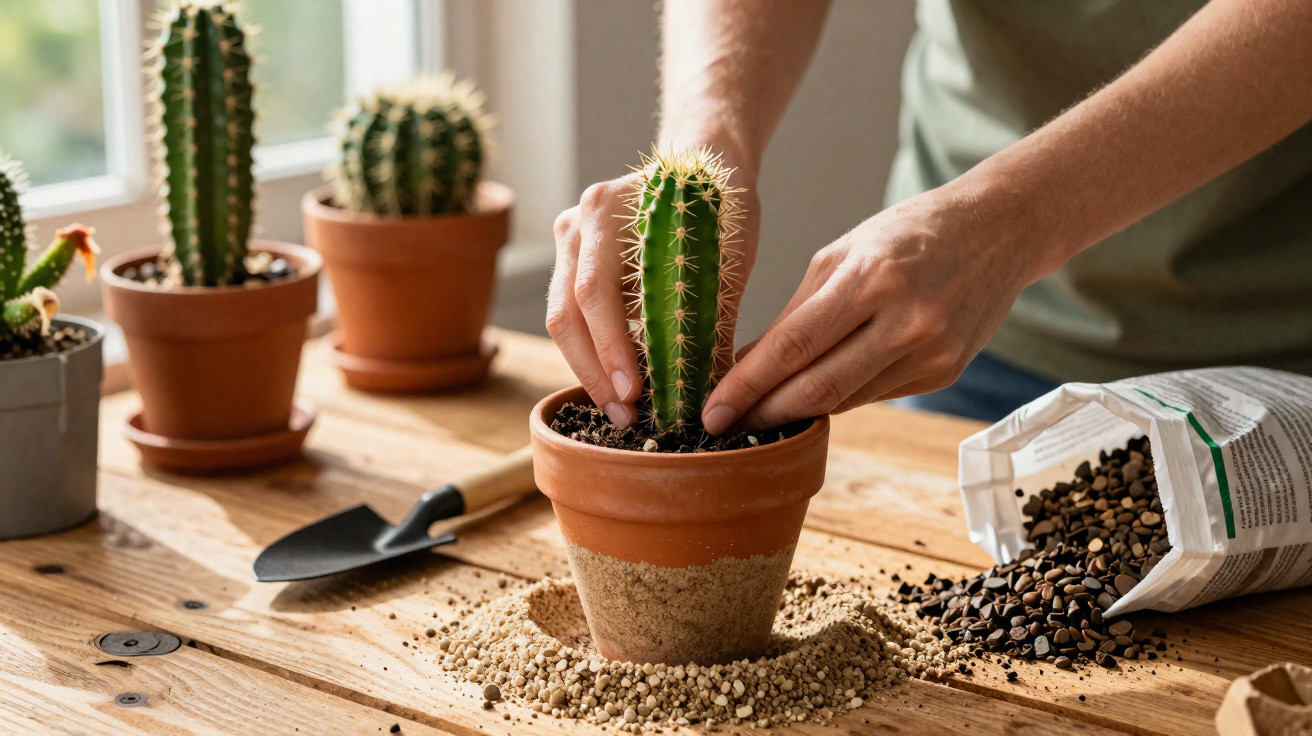
Select a pot with drainage holes that is only slightly bigger than the roots, and use a very free-draining potting mix. The plant may stay slightly pot-bound, but roots distorting the container, slow drainage or halted growth signal that repotting is needed.
Mild stress does not mean neglect
Let the potting mix dry out, but do not mistreat the roots.
A slightly snug pot may benefit mature plants, provided drainage remains unobstructed.
Wilted leaves, rotting roots or a distorted pot are signs of imbalance, not favourable conditions.
Water thoroughly, then wait until the potting mix has dried before watering again, adjusting the frequency for warmth and available light. Keeping the soil constantly damp raises the risk of rot, while extreme drought weakens the plant rather than promoting healthy flowering.
To maintain the right balance:
- use a pot with clear drainage holes and a potting mix formulated for succulent plants;
- water until it runs from the bottom, then discard any excess from the saucer;
- allow the soil to dry before watering again;
- keep the plant near a window with plenty of bright indirect light;
- repot only if the pot becomes distorted or drainage is impaired;
- do not induce severe wilting in an attempt to force flowering.
Why can over-fertilising and frequent repotting be counterproductive?
Too much fertiliser can cause salts to build up in the potting mix and mainly promote new leaves, without ensuring flowers. Frequent repotting or division also disrupts the plant’s period of stability: it must rebuild its roots before it can divert reserves towards reproduction.
Apply a balanced, diluted fertiliser only during active growth, following the label instructions, and stop if leaf tips become scorched or crusts appear on the potting mix. Moderation protects the roots and prevents the search for flowers from becoming a routine of excesses.
To avoid disrupting an established plant:
- avoid concentrated feeds or repeated applications at very short intervals;
- do not apply fertiliser to completely dry potting mix;
- do not change pots simply because the roots fill the container;
- repot when drainage is poor, roots are damaged or the pot is distorted;
- keep care consistent while the flower stem is developing.
What should you do with the stem after the flowers have faded?
Anyone looking for advice on caring for a Saint George’s sword indoors should focus on light, drainage and proper watering. Flowering is an occasional event, so no trick can guarantee that every houseplant will produce flowers regularly.
Once every flower has faded, cut the stem close to its base with clean scissors, taking care not to cut the leaves. Wipe away nectar residue with a damp cloth and continue normal care, allowing the plant to restore its reserves and continue its growth.


Comments
No comments yet. Be the first to comment!
Leave a Comment