
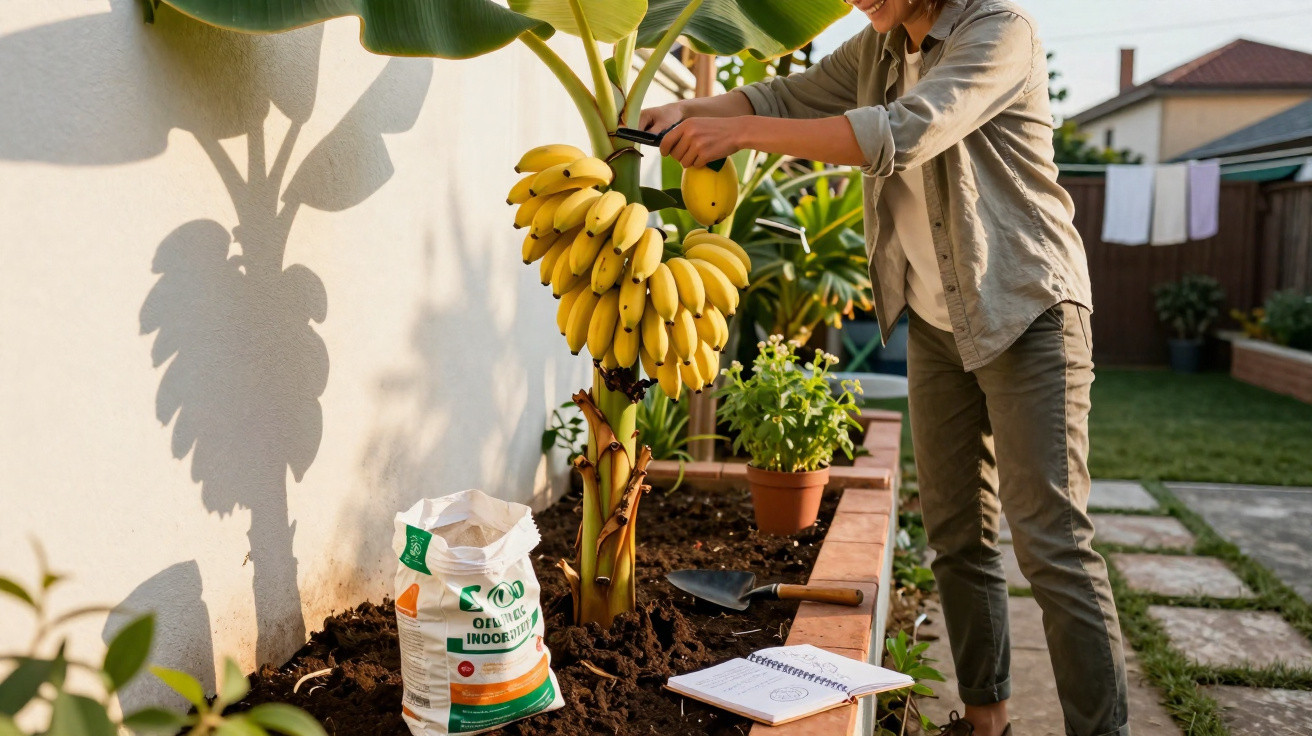
The apple banana is a less common variety at market stalls, yet it is highly sought after for its creamy, sweet and gently fragrant flavour, which many people liken to coconut combined with ripe banana. The plant can fit into a small garden provided it has sunlight, fertile soil and straightforward sucker management. With a healthy plantlet and suitable feeding, it may start producing in just over a year in warm regions.
Why does the apple banana have such a distinctive flavour?
Apple bananas stand out for their firmer flesh, subtle fragrance and sweetness that is less cloying than that of more widespread varieties. Once ripe, they become creamy while still retaining some texture, which accounts for comparisons with coconut, banana and even a faintly tangy note.
This variety is also prized because it is not readily found in large supermarkets. Care is needed when choosing a plantlet, as some apple-type banana plants can be vulnerable to soil-borne diseases. Improved varieties and certified plantlets can therefore make a real difference in a home garden.
How to grow apple bananas in small gardens
Apple bananas require direct sunlight, deep soil and effective drainage. They can still crop well in a compact space, as long as they are not positioned too close to walls, where limited airflow can cause their large leaves to tear or become too enclosed.
For a more reliable start, consider the following:
- Select a healthy plantlet from a trusted nursery, with no dark marks on the rhizome.
- Dig a planting hole measuring roughly 40 cm in width, depth and length.
- Blend well-rotted organic compost into the soil before planting.
- Allow at least 2 metres of clear space around the plant, where the garden permits.
- Avoid waterlogged ground, as banana roots rot in oxygen-starved soil.
Which fertiliser helps produce stronger bunches?
Banana plants have high nutrient demands, particularly for potassium, organic matter and consistent moisture. For an apple banana to develop large leaves and support its fruit bunch, the soil needs regular, modest top-ups rather than fertiliser only on planting day.
A simple routine works well for home growing:
- Spread organic compost or well-rotted manure around the plant every 45 or 60 days.
- Apply wood ash sparingly, only if it is clean and salt-free, as a mild source of potassium.
- Keep a mulch of dry leaves, dried grass or straw to retain moisture.
- Remove old, dry leaves to limit shelter for pests and improve airflow.
- Retain only the main plant and one or two replacement suckers in each clump.
How long does it take to harvest the first fruit?
In warm areas, an apple banana may produce its first bunch between 12 and 18 months after planting, depending on the plantlet, climate and soil fertility. In cooler places or where feeding is limited, this can extend beyond 20 months.
Fruit is ready for harvest when it has filled out, its edges are less pronounced and it has reached a well-developed size. The bunch is usually cut while still green but fully formed, then left to ripen in an airy location. Leaving it on the plant for too long attracts birds and insects, and the fruit may split more easily.
How should the plant be cared for after its first crop?
Once a banana plant has produced a bunch, that pseudostem will not fruit again. After harvesting, it should be cut down at ground level, while a carefully selected side shoot takes its place and prepares for the clump’s next crop.
Growing apple bananas in a small garden works well when the plant receives sunlight, regular watering, rich soil and controlled sucker growth. With this care, the clump takes up less room, produces more balanced bunches and yields sweet, creamy, fragrant fruit at the right stage of ripeness.

Comments
No comments yet. Be the first to comment!
Leave a Comment