
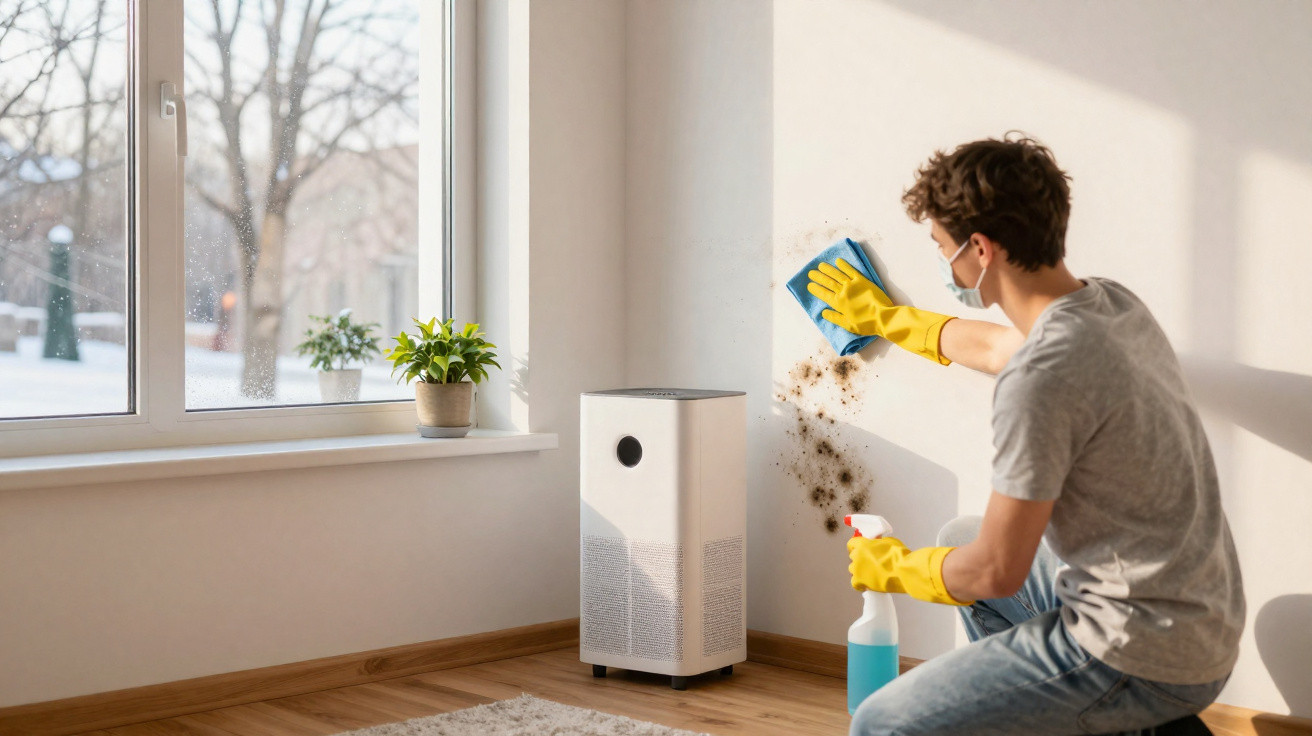
The appearance of mould at home is more common in winter, when cold weather and damp conditions combine indoors. This microscopic fungus is already found in the air and on surfaces, but low temperatures and poor ventilation create favourable conditions for it to grow, leading to marks, unpleasant smells and potential respiratory health risks, particularly for people with allergies or asthma.
What is mould at home and why does it increase in winter?
Mould at home covers several types of fungi that reproduce through invisible spores. They settle wherever they find water, nutrients, oxygen and a suitable temperature, using dust, fabric fibres and traces of dirt as food sources.
During winter, doors and windows tend to remain shut for longer, limiting ventilation. Steam from hot showers, cooking and drying clothes builds up, increasing humidity and encouraging mould growth, especially in bedrooms, bathrooms and utility rooms.
Watch a video from the YouTube channel The Cat’s Leap in Construction, which covers effective homemade mixtures for permanently removing mould from walls and window corners:
https://www.youtube.com/watch?v=qMiwKIn0N7w
How can you prevent mould at home every day?
Prevention starts with lowering moisture levels and cleaning surfaces regularly. Keeping floors, tiles, walls and windows free from dust and grease makes it harder for fungi to establish themselves, while diluted mild washing-up liquid is usually enough for basic cleaning.
It is also important to manage relative humidity and air circulation throughout the home. The following practical daily measures help keep excessive moisture away and delay the appearance of marks.
- Clean walls, ceilings and window frames at least once a year.
- Avoid placing furniture directly against cold, damp walls.
- Keep cupboards ventilated by opening their doors regularly.
- Clean more thoroughly in areas with a history of fungal marks.
- Use dehumidifiers or the air conditioner’s dry mode in very damp areas.
How can condensation and the main sources of moisture be reduced?
Condensation on windows and cold walls is one of the main triggers for mould at home. When warm indoor air reaches chilled surfaces, its vapour turns into droplets that collect on window sills and in poorly ventilated corners, particularly in bedrooms kept closed overnight.
A few straightforward measures can interrupt this cycle: leave internal doors slightly open, manually dry wet surfaces and use extractor fans in bathrooms and kitchens. Checking roofs, gutters and pipes for leaks is equally essential to prevent “hidden” damp within walls.
How should mould be cleaned safely, and when should you seek help?
Once mould has appeared, it should be cleaned carefully to avoid spreading even more spores. For small, recent areas, it is advisable to wear gloves, protective glasses and a P2 or N95 mask, as well as using simple solutions such as diluted washing-up liquid or vinegar mixed with water, always concentrating on physically removing the fungal layer.
Even after it has died, the fungus may still release unwanted substances, so used cloths should be disposed of or washed thoroughly. Where there are extensive marks, a persistent strong smell, recurring water ingress, or people with respiratory conditions in the household, it is worth obtaining a professional assessment and considering registered products that combine cleaning, moisture correction and long-lasting surface protection.




Comments
No comments yet. Be the first to comment!
Leave a Comment