
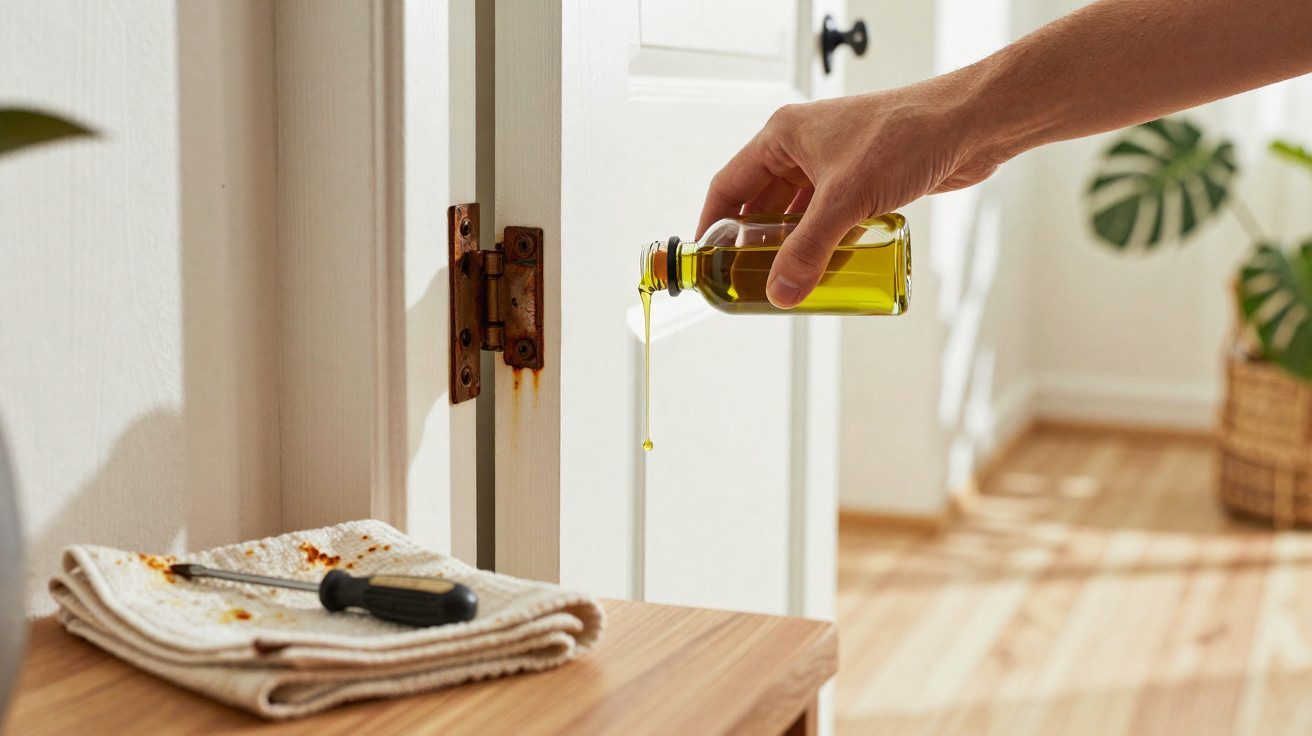
In many homes, a door that repeatedly squeaks is often a sign of a rusty hinge and insufficient lubrication. Before turning to chemical products, olive oil-the everyday kitchen staple-can be a practical option for these minor repairs. It can lessen friction, make visible rust less noticeable and help metal components last longer.
Why is olive oil useful for a rusty hinge?
A rusty hinge is particularly common in damp or poorly ventilated places. When metal is exposed to oxygen and water, it develops oxides: rust. Olive oil does not chemically remove this corrosion, but it leaves an oily film on the surface. This reduces friction and limits the metal's direct exposure to air.
Its consistency offers another benefit. As it is less volatile than many spray products, olive oil stays attached to the hinge for longer. On fittings with light to moderate rust, just a few drops will generally reduce noise, improve movement and slow wear, especially if the hinge has first been cleaned simply.
Watch a video on the Radar Caseiro YouTube channel about household solutions and natural lubricants for stopping squeaky doors and stuck hinges:
https://www.youtube.com/watch?v=9jD8XbclF1A
How to apply olive oil to a rusty hinge step by step
For a longer-lasting result, the amount of olive oil used needs to be controlled. This prevents drips that could stain the door or attract dust. The quick method below helps make the most of olive oil's everyday lubricating properties.
- Initial cleaning: Wipe the hinge with a dry cloth to remove dust, loose paint and surface dirt. Where there is a build-up of visible rust, use a stiff-bristled brush or fine sandpaper, taking care not to damage the door's paintwork.
- Protect the surrounding area: Put kitchen roll or a piece of cardboard beneath the hinge, especially on wooden or painted doors, to prevent splashes.
- Apply the olive oil: Place 2 to 4 drops of olive oil directly into the hinge joint and along the central pin. A dropper, a needle-free syringe or the bottle cap itself can help control the quantity.
- Move the door: Slowly open and close the door several times so that the olive oil works its way between the metal parts. This action spreads the oil and reveals whether any areas still have excessive friction.
- Remove any excess: Finish by wiping around the hinge with a clean cloth, removing oil left on the surface to prevent runs and marks.
With heavier rust, the process can be repeated after a few hours. If the squeak returns very quickly, it may point to advanced corrosion or structural looseness. In that case, purpose-made products or replacing the part will usually be more suitable.
Which types of rusty hinge work best with olive oil?
Olive oil generally performs best on indoor hinges that are sheltered from direct rain and major temperature changes. It can be useful for bedroom doors, well-ventilated bathroom doors and metal cupboards, whereas outdoor conditions break down the oily layer more quickly.
To use this tip effectively, it is worth noting the applications where olive oil is most likely to work well and provide a quick result, particularly while the issue is still at an early stage.
- Indoor hinges on wooden doors;
- Metal hinges on internal windows;
- Doors on steel or aluminium cupboards;
- Wardrobe doors with a metal frame;
- Lids on household chests and safes with metal fastenings.
Where else can olive oil help with household lubrication?
As well as helping with a rusty hinge, olive oil can be useful on other household areas affected by friction or early oxidation. Older locks may operate more smoothly with one drop on the outside latch, while metal chains on roller doors or internal gates can make less noise when it is applied in a controlled amount.
Screws showing early signs of oxidation, shelf brackets and small metal joints can also be protected with a thin coating of olive oil, provided they are properly cleaned and dried first. When used sparingly alongside basic maintenance, olive oil becomes a useful household curiosity: a kitchen product that discreetly helps preserve a range of metal parts around the home.



Comments
No comments yet. Be the first to comment!
Leave a Comment