
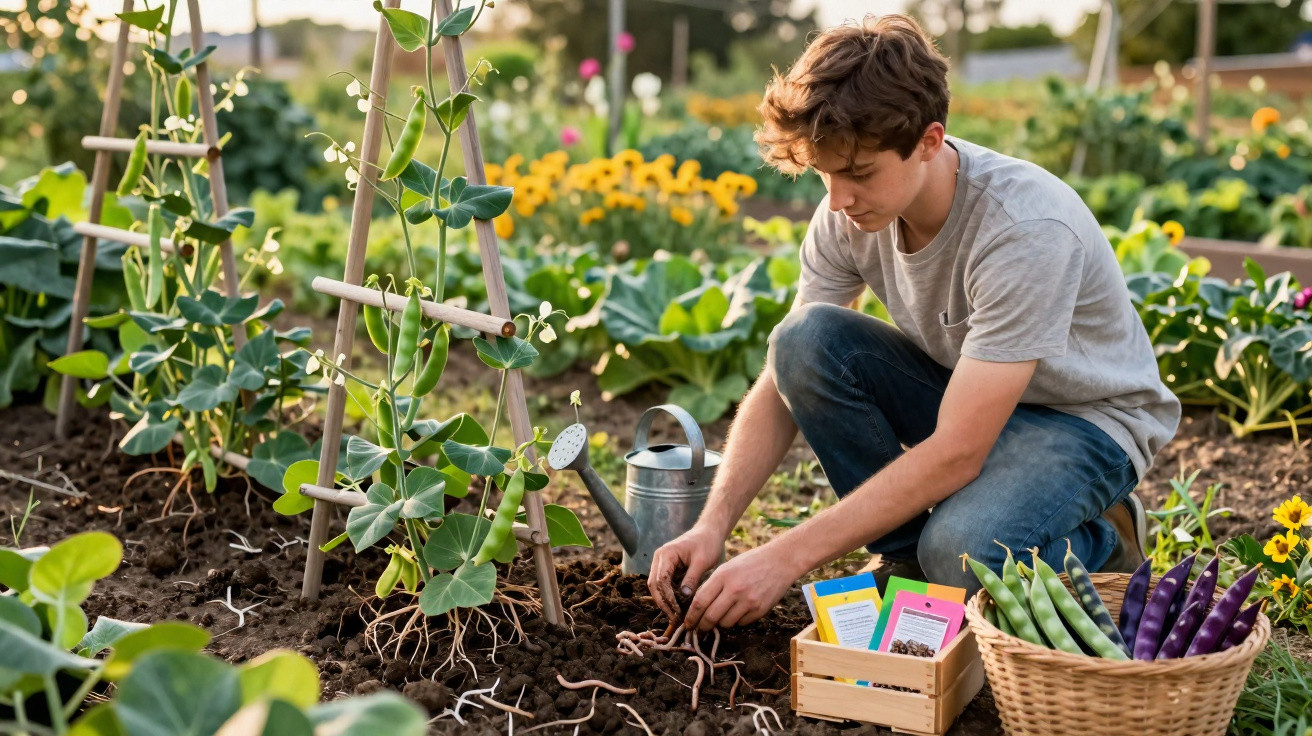
Growing without toxic sprays, saving their own seed and nurturing living soil: many home gardeners are now changing their approach completely – and are surprised by the flavour and yields.
Anyone who has tasted a sun-ripened tomato picked from their own bed quickly realises how bland supermarket produce can seem. The route to deep flavour is not more fertiliser or harsher sprays, but a change in mindset: away from the sterile garden and towards living soils, open-pollinated varieties and thoughtful plant choices. It takes a little time, but the benefits increase with every passing year.
Why open-pollinated varieties make a difference in the vegetable garden
So-called F1 hybrids dominate commercial sales. They often produce high yields and uniform fruit, but cannot be propagated true to type. Saving seed from these plants makes the following season something of a lottery.
Open-pollinated varieties work differently: they produce seed that can be used again year after year. Over time, these lines become increasingly suited to the site, climate and soil. In garden terms, that means:
- more resilient plants that cope better with weather extremes
- a closer relationship with soil life and microorganisms
- far greater variety of flavour instead of uniform catalogue looks
- greater independence from large seed companies
“Anyone who saves their own seed gradually builds up a robust, locally adapted diversity in the garden.”
Many heritage varieties may yield slightly less by weight, yet offer more flavour and resilience. In a home garden, the final extra kilogram of produce matters less than enjoyment, health and a system that can sustain itself over the long term.
Living soil rather than a chemical cocktail
The heart of a garden without toxins lies unseen beneath the surface. Living soil, containing fungi, bacteria, springtails, woodlice and earthworms, feeds plants with nutrients, stabilises the bed and protects against stress. Where soil is constantly dug, fertilised and sprayed, this network breaks down.
Many products permitted in organic growing are not harmless. Copper-based preparations, for example, accumulate in the soil and can damage tiny soil organisms over the long term. Plants may look healthy in the short term, but their foundation is gradually eroded.
“Those who strengthen the soil avoid most of the later ‘rescue operations’ involving sprays.”
Rather than treating away every disease, it is worth looking at the cause: compacted soil, waterlogging, nutrient shortages or insufficient diversity in the bed. Addressing these issues prevents many problems from taking hold in the first place.
How to tell whether the soil is truly alive
Before making major changes, a simple check in the bed is helpful. A small spadeful of soil reveals a great deal:
- Texture: Does the soil crumble easily, or does it stick together like concrete? A crumbly structure indicates active soil life.
- Colour: Darker shades point to humus, while pale soil is usually depleted.
- Smell: Does the soil have a gentle earthy, woodland scent? A rotten smell indicates decay.
- Earthworms: Finding not a single worm when taking a spadeful is a clear warning sign.
These observations alone provide an initial indication of what the soil needs: more air, more organic matter and less disturbance.
Practical steps towards self-sustaining soil
Turn less, loosen more
Deep digging disrupts fungal networks and destroys stable crumb structures. In most gardens, gently loosening the soil with a digging fork or broadfork is enough. The layers largely remain in place, while air and water can still enter.
Green manures as free soil improvers
Bare areas should, wherever possible, not remain uncovered for months. Green manure plants fill gaps, guard against erosion and feed soil life. Proven mixtures include, for example:
- clover mixes: fix nitrogen from the air
- runner beans or field beans: loosen the soil deeply
- lucerne: develops a strong root system and is ideal for heavy soils
- phacelia: attracts pollinators and suppresses weeds
After flowering, these plants are cut down and worked lightly into the surface, or simply left in place. They become humus and food for microorganisms.
Compost as fuel for microbes
Well-matured compost is the most economical soil improver. Crop residues, grass cuttings, leaves and kitchen scraps belong in the cycle rather than the bin. A layer about a finger-width deep each year is often enough to revive exhausted beds.
“Compost supplies not only nutrients, but above all billions of microorganisms that stabilise the system in the soil.”
A step-by-step plan for a garden without toxins
For many people, a complete turnaround is overwhelming. A plan spread over two to three years works better.
- Take stock: Which sprays are stored in the shed? Which of them have a strong effect on soil life and beneficial insects?
- Remove the most aggressive products: Start by stopping products used broadly against fungi and insects.
- Cover the beds: Do not leave empty areas fallow; sow them with green manures instead.
- Try open-pollinated varieties: Each season, plant one or two beds with heritage or regional varieties.
- Save your own seed: Collect seed from robust, healthy plants and store it somewhere dry.
- Observe instead of spraying automatically: First assess how severe an infestation actually is and whether beneficial organisms are already taking action.
A realistic view is important: in the first few years, the occasional cabbage may still be somewhat nibbled. However, the trend clearly changes as soil life and plant diversity increase.
Concrete effects in the bed: fewer pests, more flavour
Experience from working gardens and smallholdings shows that, after two or three years of green manures and compost, soil life noticeably increases. Earthworms return, the soil becomes easier to work and beds do not dry out as quickly.
At the same time, many familiar garden problems diminish. Powdery mildew is less likely to become severe, while slug damage is more spread out because more predators are active. Vegetable plants do not become bulletproof, but they cope better with stressful conditions.
“A living garden never looks perfect, but it remains stable – even when a summer goes completely off the rails.”
Flavour changes too. Tomatoes, carrots and lettuces that grow slowly in nutrient-rich, loose soil develop more flavour compounds. Those also growing open-pollinated varieties will notice the range, from sweet cherry types to savoury, fleshy cooking tomatoes.
Regional seed initiatives as allies
An increasing number of small businesses specialise in propagating open-pollinated varieties. They offer more than packets of seed: there are also young plants and practical advice, such as which tomato copes with wet summers or which bean grows reliably in clay soil.
Visiting a local nursery or seed market often brings more value than hours of online research. Many such initiatives work without synthetic sprays and trial varieties directly outdoors. Buying from them supports structures that promote diversity and resilient varieties.
Key terms explained briefly
- Open-pollinated: Plants whose offspring retain the same characteristics. Seed can be saved afresh every year.
- F1 hybrid: A cross between two lines that is very uniform in the first generation but does not reproduce true to type.
- Green manure: Plants not intended for harvest, but grown to improve and loosen the soil and protect it from erosion.
- Humus: Permanently bound organic matter in the soil, important for water retention and nutrient storage.
Practical examples of resilient combinations
Those just starting out can begin with straightforward combinations. For example, a mixed bed containing:
- a robust open-pollinated tomato in a sunny position
- basil and marigolds planted between it as companion plants
- straw or leaf mulch on the soil instead of a bare, tidied surface
Elsewhere in the garden, a mixed planting of carrots and onions can be tried. The scent of onions confuses carrot flies, while carrots thrive in soil kept loose. Breaking up monocultures makes life considerably harder for specialist pests.
Anyone making the change step by step will notice after several seasons that the garden increasingly works with them instead of needing constant battles. A toxin-free vegetable harvest then ceases to be an ideology and becomes the logical outcome of a system in which soil, plants, animals and people work together.


Comments
No comments yet. Be the first to comment!
Leave a Comment